


An Ancient Maritime Crossroads
For millennia, the Strait of Hormuz was less a barrier and more a bridge. As early as the third millennium BCE, it served as a vital corridor connecting the civilizations of Mesopotamia with the Indus Valley. Archaeologists have found evidence of this
ancient trade: Mesopotamian artifacts in western India and Indus seals in the Tigris-Euphrates delta. Through this narrow passage flowed copper from Oman to fuel the Bronze Age, teak from India for Sumerian temples, and lapis lazuli from Afghanistan on its way to Egypt. It wasn't about oil; it was about the fundamental goods and luxuries that built early civilizations. The Persian Achaemenid Empire was the first to recognize its strategic importance, not just as a route to use, but as an artery to control.
The Jewel of the Medieval World
During the medieval period, the strait's importance coalesced around the island kingdom that gave it its name: Hormuz. This port became one of the most celebrated and wealthiest trading hubs on Earth. Travelers described a cosmopolitan city where merchants from India, Persia, Arabia, and beyond exchanged spices, silks, precious metals, and pearls. The Kingdom of Hormuz produced little itself but thrived by taxing the immense flow of goods passing through its domain. It was a clearinghouse for global trade, a place so rich that one chronicler called it the “ring stone of the world.” This prosperity drew the attention of distant powers, marking the beginning of a new era of foreign intervention.
The Age of European Empires
In the early 16th century, the era of Gulf-led commerce was shattered by the arrival of the Portuguese. Led by the formidable Afonso de Albuquerque, a Portuguese fleet seized Hormuz in 1515, recognizing that controlling this chokepoint meant controlling the flow of wealth between East and West. They established a fortress and turned the kingdom into a vassal state, dominating trade in the Persian Gulf for over a century. The Portuguese were eventually expelled in 1622 by Persian forces aided by the English East India Company, but the pattern was set. The strait was no longer just a regional hub; it was a critical node in the strategic calculations of global empires.
Oil, Conflict, and the Modern Blockade
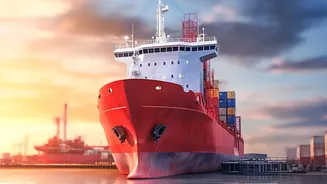
The discovery of oil in Persia in 1908, and later across the Arabian Peninsula, fundamentally transformed the strait’s identity once more. It was no longer just a route for luxury goods but the jugular vein of the industrial world's energy supply. Today, about a fifth of the world's total petroleum passes through this narrow channel daily. This immense strategic value has also made it a major geopolitical flashpoint. The headline's “blockade” refers not to a single event, but to the recurring threat of closure that has defined recent decades. During the Iran-Iraq War in the 1980s, the so-called “Tanker War” saw both sides attacking merchant vessels. Since then, Iran has repeatedly threatened to close the strait in response to international sanctions and military pressure, turning this ancient gateway of commerce into a symbol of global insecurity.