




A Vow for a Marketplace
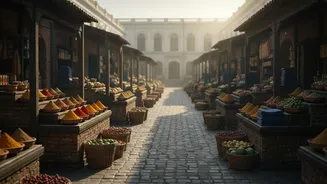
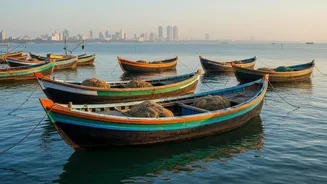
The story of Mumbai's most revered Ganpati idol doesn't begin with grandeur, but with desperation. In 1932, the bustling marketplace at Peru Chawl in Lalbaug was shut down, stripping local fishermen of the Koli community and other vendors of their primary
source of income. Faced with uncertainty, the displaced workers made a 'navas'—a sacred vow—to Lord Ganesha. They prayed for a new, permanent place to ply their trade, promising to establish a Ganpati mandal in gratitude if their wish was granted. Their collective faith, aided by local leaders, paid off. A plot of land was secured for what is now the Lalbaug Market.
The Birth of a King
True to their word, the community fulfilled its promise. On September 12, 1934, the first Ganesh idol was established by the newly formed Lalbaugcha Raja Sarvajanik Ganeshotsav Mandal. In a poignant tribute to its founders, the idol was adorned in the traditional attire of a Koli fisherman. This act cemented the idol's identity as a deity of the common people, one born from their struggles and their faith. It quickly gained the reputation of being the 'Navasacha Ganpati', the one who fulfills wishes, a belief that continues to draw millions of devotees from every walk of life, from celebrities to common citizens who wait for hours in serpentine queues.
A Family's Sacred Duty
A year after its inception, in 1935, the artistic legacy of Lalbaugcha Raja was entrusted to the Kambli family of sculptors, a tradition that continues unbroken for over eight decades. What started with the late Madhusudan D. Kambli has been passed down through generations, with his son Ratnakar and now grandson Santosh leading the creation. The family holds the patent for the idol's unique design, which depicts a human-like figure seated on a throne. The process is shrouded in reverence; the parts are sculpted at the Kambli workshop and assembled at the pandal. The final, most sacred act is when the family patriarch paints the idol's eyes, an act believed to breathe life into the 'Raja'.
The Unseen Community Army
While the Kambli family shapes the idol, an army of volunteers ensures the 11-day festival runs smoothly. The Lalbaugcha Raja Sarvajanik Ganeshotsav Mandal has grown from a small group of vendors into a massive organisation with a core committee and over 1,200 volunteers. These individuals, many of whom grew up in the area, manage everything from crowd control in queues that can stretch for kilometres to distributing food and water. This spirit of community service extends beyond the festival. The Mandal utilises the crores of rupees in donations received each year for extensive social work, including disaster relief, medical aid camps, and educational initiatives, keeping the founding principle of community upliftment alive.