



A Landmark Trial Commences
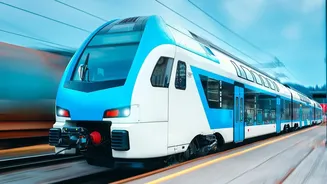
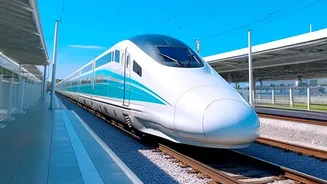
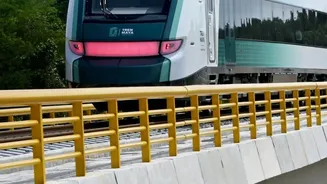
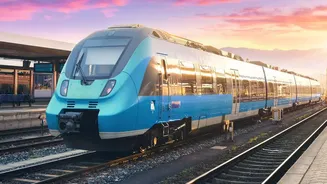
Indian Railways has officially begun crucial field trials of a specially modified Vande Bharat Express on the challenging Sakleshpur-Subrahmanya Road ghat section. On the morning of August 12, a 20-car rake, built by the Integral Coach Factory in Chennai,
departed Sakleshpur to navigate the treacherous 55-kilometre stretch. This marks a significant step towards launching the much-anticipated Vande Bharat service connecting the state capital, Bengaluru, with the coastal hub of Mangaluru. Personnel from the Research Designs and Standards Organisation (RDSO) are on board, meticulously examining every parameter of the train's performance, from braking to stability, in a series of tests scheduled to continue until August 20.
The Notorious Ghat Section
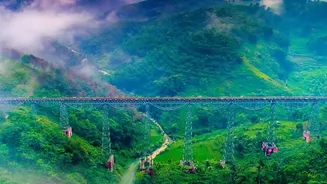
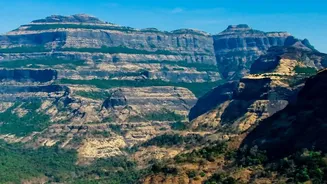
So, what makes this particular stretch of railway so formidable? The Sakleshpur-Subrahmanya line, which cuts through the dense Western Ghats, is an engineering marvel and a constant operational challenge. The route features a steep gradient of 1 in 50, meaning the track rises one metre for every 50 metres travelled. It twists through an astonishing 57 tunnels and crosses 226 bridges, all while navigating 108 sharp curves. This complex terrain, combined with heavy monsoon rains that make the area prone to landslides, has traditionally required conventional trains to be attached to special 'banker' locomotives to safely ascend and descend the slopes. For safety, a strict speed limit of 30 kmph is enforced on all trains traversing this section.
A Custom-Built Vande Bharat
The Vande Bharat Express, with its integrated design, cannot easily use banker engines like conventional trains. To overcome this, the rake being tested is a special variant equipped with an Automatic Emergency Braking (AEB) system. This crucial safety feature is designed to automatically apply the brakes if the train exceeds the 30 kmph speed limit on the ghat, providing an essential safeguard against the steep inclines. The launch of the service, originally anticipated for June 2026, was delayed precisely because a rake with this mandatory AEB system was not yet available. The current trials are designed to prove that this custom-built train can handle the unique demands of the ghat section safely and efficiently.
What This Means for Travellers
For commuters and travellers, a successful trial run is the harbinger of a new era of connectivity. The journey between Bengaluru and Mangaluru by train has historically been slow and arduous, precisely because of the time taken to navigate the ghat section. A Vande Bharat service promises to significantly enhance speed and comfort, boosting tourism, business, and general passenger movement between the tech capital and the coastal districts. With the entire Bengaluru-Mangaluru route now fully electrified, the introduction of this modern, semi-high-speed train is the final piece of the puzzle. The service would offer a faster, cleaner, and more reliable travel option for thousands of people.
The Road Ahead
While the trial runs are a massive step forward, a commercial launch is not yet imminent. After the trials conclude, the RDSO will compile a detailed report on the train's performance. This report will be thoroughly reviewed by both the Railway Board and the Commissioner of Railway Safety, who must give the final authorisation before passenger services can begin. Only after these critical safety certifications are secured will Indian Railways announce a final route, schedule, and launch date. However, the sight of the Vande Bharat successfully navigating the scenic but treacherous Shiradi Ghat has raised hopes that a new, modern chapter in Karnataka's railway history is about to begin.