



What is Colour Blocking, Really?
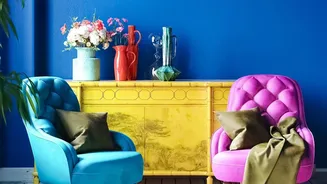
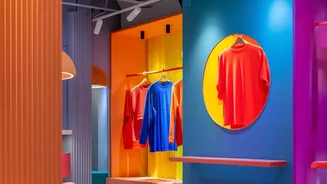
At its heart, colour blocking is simply the technique of pairing two or more solid blocks of colour together to make a statement. Originating in the art world with painters like Piet Mondrian, it has become a popular and surprisingly easy way to transform
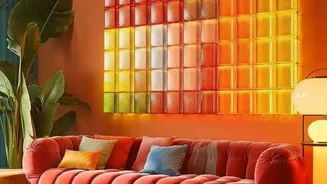
a room. The goal is to create a striking visual impact by using distinct, unbroken planes of colour next to each other. Think of it as creating shapes and structure with paint itself. This could be as simple as painting the bottom half of a wall a different shade from the top, creating a two-tone effect, or as complex as painting a series of overlapping geometric shapes. One of the best things about this trend is its affordability; with a bit of painter's tape and a few sample pots of paint, you can create a high-impact feature wall without a huge budget.
The Secret Weapon: Negative Space
This is the term that often trips people up, but the concept is straightforward. Negative space—also known as white space—is simply the empty or unoccupied area around and between the main subjects of a design. In a room, it's the blank wall around a piece of art, the floor visible around a rug, or the air between pieces of furniture. Far from being wasted, negative space is a powerful tool. It gives your eyes a place to rest, preventing a room from feeling cluttered and chaotic. It helps to create balance and can make key features, like a bold colour-blocked shape, truly stand out. By intentionally leaving some areas empty, you give the “positive” elements (your furniture, art, and colour blocks) room to breathe and shine, which is often the secret to a professional-looking space.
Harmony in Simplicity: How They Work Together
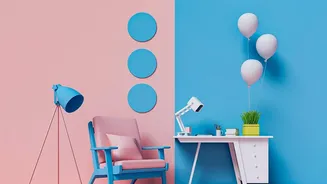
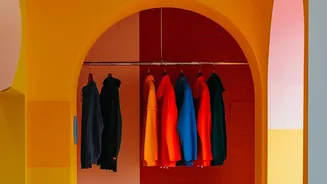
Colour blocking and negative space are a perfect pair. The boldness of a colour-blocked feature needs the quiet support of negative space to be effective. Without it, the design can feel overwhelming. For instance, a single, dramatic arch of colour painted behind a headboard becomes a stunning focal point precisely because of the neutral wall space surrounding it. The negative space frames the colour block, drawing your attention to it. This combination is also a clever way to define zones in a room. You could paint a large circle or square in a corner to visually designate a reading nook, using the block of colour to anchor the chair and lamp, while the surrounding negative space keeps it from blending into the rest of the room. The interplay between the bold shape and the empty space around it creates a balanced, intentional, and harmonious composition.
Getting Started: Practical Tips for Your Walls
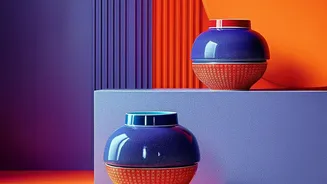
Ready to try it yourself? Start with a plan. Sketch your idea on paper first to decide on shapes and colours. For your first project, consider a simple horizontal split on a wall. Painting a darker colour on the bottom half and a lighter one on top can create the illusion of height. To ensure clean, crisp lines, good quality painter's tape is your best friend. Apply it firmly along your pencil-drawn guidelines. When choosing colours, you can either pick shades that sit opposite each other on the colour wheel for a high-contrast look (like blue and orange) or select different tones from the same colour family for a more subtle, tonal effect. Don't be afraid to paint more than just walls; the back of a bookshelf, a door, or even the ceiling can become canvases for your colour-blocking experiments.
DIY Ideas to Try This Weekend
If a full wall feels too ambitious, start smaller with DIY wall art. Buy a blank canvas and use tape to create your own geometric, colour-blocked masterpiece. This allows you to play with colour combinations and the balance of negative space on a smaller scale. Another simple idea is to create a faux headboard by painting a large rectangle or arch behind your bed. This adds architectural interest and a pop of colour without any construction. You can also highlight existing features; paint a colourful block around a light switch or a doorway to turn a functional element into a fun design feature. The key is to see your walls as a canvas for creative expression, using both colour and the space around it to craft a look that is uniquely yours.