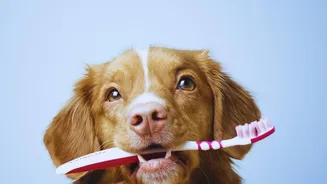




Why A Healthy Mouth Matters
It’s easy to overlook what you can’t easily see, but a pet's oral health is a powerful indicator of their overall well-being. According to the American Veterinary Dental Society, over 80 percent of dogs and 70 percent of cats show signs of gum disease
by the age of three. When bacteria in the mouth form plaque and harden into tartar, it causes inflammation and infection of the gums and surrounding tissues. This isn't just a cosmetic issue or a case of bad breath. The bacteria from untreated dental disease can enter the bloodstream and spread to vital organs, contributing to serious health problems affecting the heart, kidneys, and liver. Prioritizing dental care is not just about preventing tooth loss; it's about protecting your pet's entire body from chronic pain and systemic illness.
Spotting the Warning Signs
Pets are masters at hiding pain, which means dental disease can progress silently until it becomes severe. As a pet owner, you are the first line of defense. Knowing what to look for can lead to early intervention. The most common and obvious sign is persistent bad breath (halitosis). While 'doggy breath' is a common complaint, a truly foul odour often points to an underlying bacterial problem. Other key symptoms include red, swollen, or bleeding gums; brownish-gold tartar buildup on the teeth, especially near the gumline; and changes in eating habits. You might notice your pet dropping food, chewing on only one side of their mouth, or showing a new reluctance to eat hard foods or play with chew toys. Pawing at the face, excessive drooling, and loose or missing teeth are also clear indicators that a veterinary visit is needed.
The Gold Standard: At-Home Brushing
The single most effective thing you can do at home to combat dental disease is to brush your pet's teeth regularly. Daily brushing is ideal for disrupting the plaque cycle before it hardens into tartar, but brushing several times a week still provides significant benefits. The key is consistency and patience. Start slowly, especially with an older pet. Let your pet lick some pet-specific toothpaste from your finger to create a positive association. Never use human toothpaste, as ingredients like fluoride can be toxic if swallowed. Gradually progress to touching their gums with your finger, then introduce a soft-bristled pet toothbrush or finger brush. Focus on the outer surfaces of the teeth with gentle, circular motions, paying special attention to the gumline where disease often starts. Make it a positive experience with praise and rewards, not a wrestling match.
Beyond the Brush: Other Home Care Options
While brushing is the gold standard, it's not always possible for every pet. Thankfully, there are other effective tools to supplement your routine. Specially formulated dental diets, chews, and treats can help scrape away plaque. When selecting these products, look for the Veterinary Oral Health Council (VOHC) seal of approval, which indicates the product has been proven to reduce plaque or tartar. Water additives and oral rinses are other easy-to-use options that can help reduce bacteria and freshen breath with minimal effort. These methods are particularly useful for pets who resist brushing, and while they may be less effective than direct mechanical cleaning, they are far better than doing nothing at all. A layered approach, combining a few different methods, can provide comprehensive protection.
The Crucial Role of Professional Cleanings
At-home care is essential for maintenance, but it cannot replace professional veterinary dental care. Just like with humans, pets need periodic professional cleanings to remove hardened tartar, especially from below the gumline where most dental disease occurs. These procedures are performed under general anesthesia, which allows the veterinary team to conduct a thorough examination, take dental X-rays to see problems below the surface, and safely clean and polish the teeth without causing stress or injury to the pet. Anesthesia-free cleanings are not recommended as they only address the visible tartar and can't treat the underlying disease. Your veterinarian can advise on the appropriate frequency for cleanings based on your pet’s age, breed, and overall oral health.