




A Wheel Inspired by Ancient Art
Engineers at the Korea Advanced Institute of Science and Technology (KAIST), in partnership with the Unmanned Exploration Laboratory (UEL), have created a wheel that looks like something out of science fiction. Inspired by the principles of origami and Leonardo
da Vinci's self-supporting bridge designs, the wheel is airless and transformable. It is constructed from woven strips of flexible, high-carbon steel that allow it to change shape without any complex, jam-prone mechanical joints. This is crucial for space missions, where dust and extreme temperatures can easily cause conventional mechanisms to fail. The wheel can shrink down to a compact 230 millimetres (about 9 inches) for transport inside a lander and then expand to more than double its size—500 millimetres (about 20 inches)—once deployed on the lunar surface. This unique capability allows a small, lightweight rover to navigate obstacles that would stop much larger vehicles in their tracks.
Built for an Unforgiving World
The Moon may look smooth from Earth, but it is an incredibly hostile environment for any machine. The surface is covered in a fine, talc-like powder called regolith, which can clog gears and cause rovers to get stuck, much like a car in deep sand. Furthermore, scientists are most interested in exploring locations like deep, permanently shadowed craters and ancient lava tubes, which are thought to harbour water ice. These geological features offer natural protection from radiation and extreme temperature swings, making them ideal locations for future human bases. However, they are almost impossible to access with current rover technology due to their vertical drops and jagged, rocky floors. The KAIST wheel is specifically designed to tackle these challenges. Its flexible, metallic structure provides excellent traction on loose soil, and its remarkable shock-absorbing properties mean a rover could potentially be dropped directly into a crater without needing a complex and risky crane system.
From the Lab to the Lava Tube
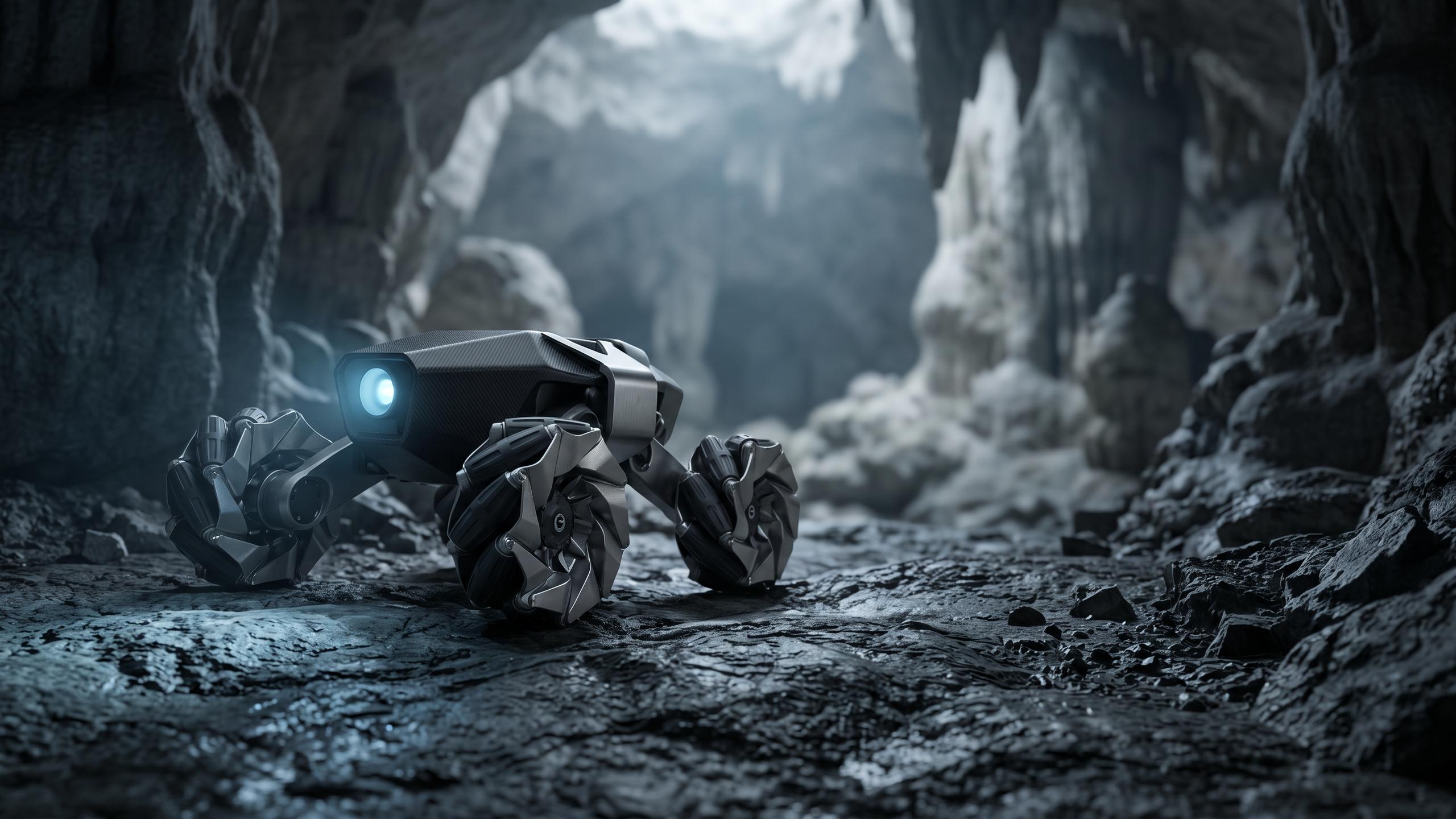
Before a piece of technology can be trusted millions of kilometres from home, it must first prove its worth on Earth. To that end, the KAIST team put their transformable wheel to the test in a location that mimics the lunar environment: the volcanic caves and lava tubes of Jeju Island in South Korea. Here, a prototype rover equipped with the wheels demonstrated its ability to climb over significant obstacles, drive effectively on simulated lunar soil, and maintain its structural integrity. In controlled tests, the wheel withstood drop impacts equivalent to a fall of 100 meters under the Moon's lower gravity. It also remained functional in a vacuum and at temperatures soaring to 150 degrees Celsius, proving its resilience for the extreme conditions of space. These successful ground tests represent a critical milestone, moving the concept from a promising idea to a validated piece of engineering.
So, Why Not the Moon Yet?
The headline's mention of ground testing 'Rather Than A Moon Mission' isn't a sign of failure, but a description of the necessary, painstaking process of space exploration. No space agency would risk a multi-million dollar mission on unproven hardware. This rigorous testing is a mandatory step on the path to flight readiness. The timing, however, is significant. South Korea has an ambitious space program and has recently accelerated its timeline to land an uncrewed robotic probe on the Moon from 2032 to 2030. The mission is planned to be a private-led effort launched on the country's domestically developed Nuri rocket. Technology like KAIST's transformable wheel is exactly the kind of innovation that could be selected for such a mission, with researchers reportedly targeting a 2030 deployment to explore lunar lava tubes. The ground testing isn't a detour; it's the direct route to being included in that future flight.
The Future of Off-World Exploration
This innovative wheel is part of a broader shift in thinking about planetary exploration. Instead of relying on a single, large, and expensive rover, the future may involve deploying swarms of smaller, more agile robots. This approach dramatically reduces risk; if one rover gets stuck or fails, the mission can still continue. This is a challenge Indian space scientists know well from the celebrated Chandrayaan missions, where navigating the lunar surface proved to be a formidable task. The development of robust, adaptable mobility systems is a global priority. The KAIST wheel, with its unique blend of simplicity and high performance, represents a significant contribution to this effort. As nations around the world, including India, set their sights on sustained presence on the Moon and eventually Mars, technologies that enable greater access and resilience will be paramount.