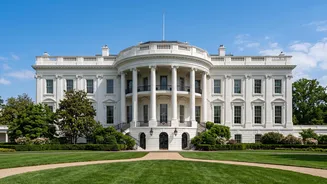

The 2026 US midterm elections have reshaped the political landscape in Washington, placing a sharp focus on one of the presidency's most formidable tools. Understanding the presidential veto is key to seeing how the next two years will unfold.
What Is a Presidential Veto?
The presidential
veto is a power granted to the President of the United States by the Constitution, allowing them to refuse to sign a bill passed by Congress, thereby preventing it from becoming law. Derived from the Latin for 'I forbid', it serves as a crucial part of the system of checks and balances, designed to prevent any single branch of government from becoming too powerful. The veto is not an absolute power but a reactive one; it allows the president to stop new legislation but not to create it. Historically, it was seen as a tool to protect the Constitution or block poorly crafted laws, but it has evolved into a powerful instrument for policy negotiation and political leverage.
The Veto Process Step-by-Step
When a bill passes both chambers of Congress—the House of Representatives and the Senate—it is sent to the president's desk. The president then has ten days (excluding Sundays) to act. There are a few possible outcomes. The president can sign the bill, at which point it becomes law. They can issue a 'regular veto' by refusing to sign it and sending it back to Congress with a message explaining their objections. If the president does nothing while Congress is in session, the bill automatically becomes law after the ten-day period. However, if Congress adjourns during this ten-day window and the president does not sign the bill, it is considered a 'pocket veto' and does not become law.
Congress's Ultimate Check: The Override
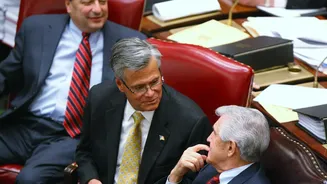
A presidential veto is a major hurdle, but it's not always the final word. The Constitution gives Congress the power to override a regular veto. This requires a two-thirds majority vote in both the House and the Senate. Achieving this supermajority is intentionally difficult and politically rare. It demands significant bipartisan consensus, as the president's own party members would have to vote against him. Throughout US history, only about 7% of regular presidential vetoes have been successfully overridden by Congress. A pocket veto, however, cannot be overridden; Congress must reintroduce the bill and start the legislative process all over again in its next session.
A Tool of Negotiation and Power
The true power of the veto often lies not in its use, but in its threat. A president can signal their intention to veto a bill long before it reaches their desk, a tactic known as 'veto signaling'. This forces Congress to negotiate with the White House and consider the president's policy preferences from the beginning. In a politically divided government, where the president's party does not control both chambers of Congress, the veto becomes an even more critical bargaining chip. It can be used to extract concessions, shape the details of legislation, or simply block the opposing party's entire agenda, sometimes leading to political gridlock.
Trump's Record and the New Reality
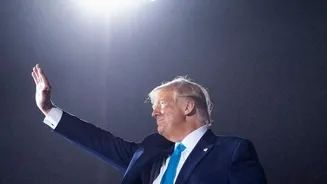
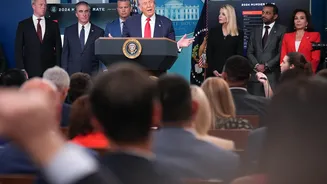
During his first term in office (2017–2021), Donald Trump used the veto 10 times. These vetoes covered issues ranging from a resolution to end US involvement in the war in Yemen to his declaration of a national emergency to fund a border wall. Congress successfully overrode one of his vetoes, which was for the annual defence spending bill in early 2021. The results of the 2026 midterm elections, which saw Democrats take control of both the House and the Senate, create a new dynamic. With a Congress controlled by the opposition party, President Trump is now positioned to rely heavily on the veto to block legislation passed by Democrats, making it a central feature of his executive power.