


The Galaxy's Favourite Planet
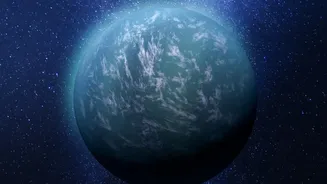
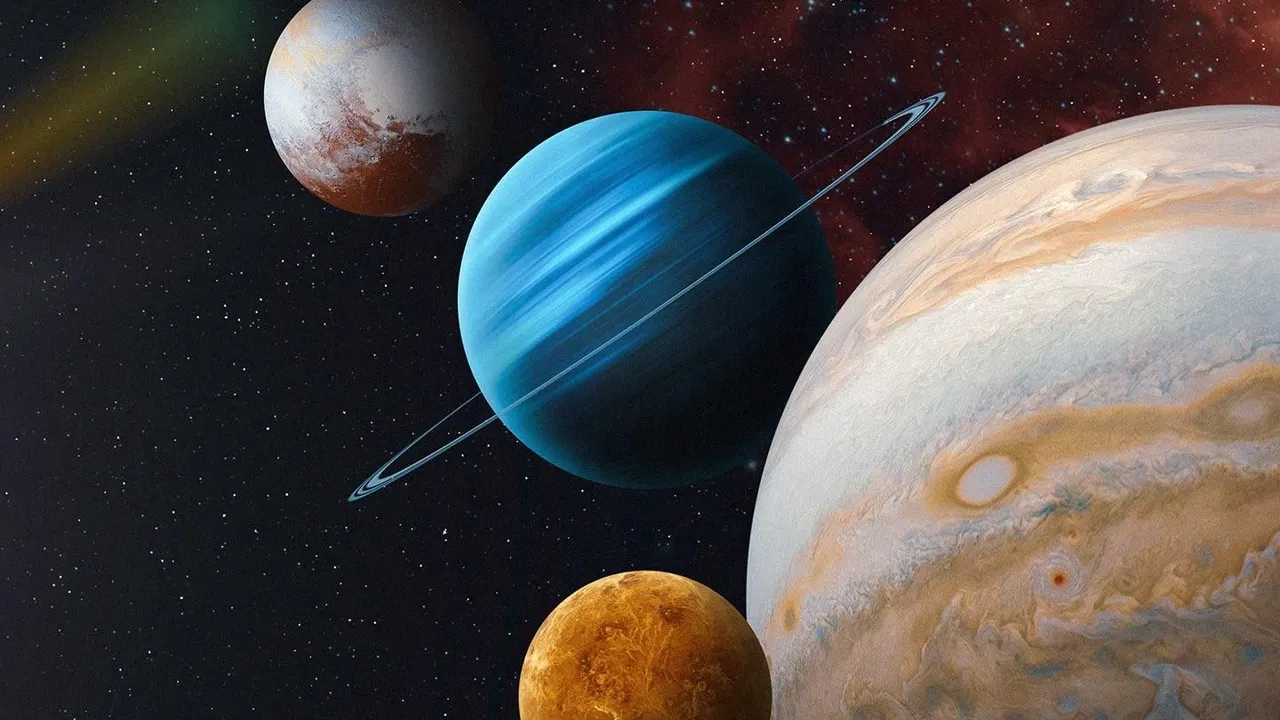
First, what exactly is a super-Earth? The term refers to a planet with a mass greater than Earth's but substantially less than that of our smaller gas giants, Uranus and Neptune. These can be rocky worlds, water worlds, or have dense atmospheres, and data
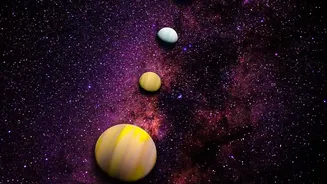
from missions like NASA's Kepler Space Telescope have shown they are incredibly common. In fact, about a third of all sun-like stars are estimated to host at least one super-Earth, often in tight orbits much closer than Mercury's. This makes their absence in our inner solar system a profound puzzle. For decades, astronomers have wondered if we are the exception to a galactic rule, and if so, what made our planetary nursery so different.
The Wrecking Ball Hypothesis
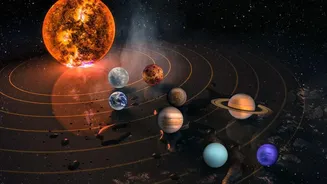
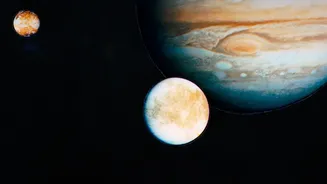
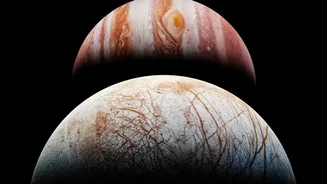
One of the longest-standing theories for our super-Earth deficiency involves Jupiter, the king of our solar system. The "Grand Tack" hypothesis, proposed over a decade ago, suggests that a young Jupiter migrated inward toward the sun before being pulled back out by the gravitational influence of a newly-forming Saturn. During this chaotic journey, Jupiter would have acted like a gravitational wrecking ball, disrupting the orbits of any early planets forming in the inner solar system. This gravitational stirring could have triggered a cascade of collisions, sending debris spiralling into the sun and preventing any would-be super-Earths from ever reaching their full potential size. In this scenario, the rocky planets we see today—Mercury, Venus, Earth, and Mars—are essentially a second generation of planets, formed from the leftover debris after Jupiter's destructive march.
A New Twist: Pressure Bumps
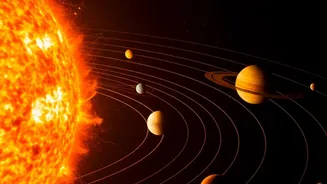
More recent models, however, introduce a more nuanced mechanism involving structures called "pressure bumps" in the protoplanetary disk—the vast pancake of gas and dust that surrounded our young sun. These bumps are zones of high pressure that can act as barriers, trapping dust and pebbles. According to some theories, our solar system may have had distinct rings of material separated by these pressure bumps. These rings would have limited the amount of mass available in the inner solar system, effectively starving the region where a super-Earth might have formed. Instead of one large zone of material, our system was divided, with the inner ring having just enough material to form smaller, rocky worlds like Earth and Venus, while the outer regions went on to build the gas giants. This suggests our planetary architecture was determined not just by gravity, but by the very structure of the disk itself.
The Key Qualification: Timing is Everything
Herein lies the key qualification from the new models: the formation of super-Earths may depend on whether a giant planet like Jupiter forms quickly enough to create and maintain these dividing pressure bumps. In systems that form super-Earths, material flows steadily inward, accumulating into large planets close to the star. But if a gas giant forms early and far enough out, its immense gravity can carve a gap in the disk. This gap acts as a massive dam, preventing the flow of material to the inner regions and essentially halting the growth of any planets forming there. The presence of Jupiter, therefore, didn't necessarily destroy super-Earths; its early arrival may have simply prevented one from ever forming in the first place by cutting off its supply of building materials. Only about 10% of sun-like stars host a Jupiter-like giant, making our configuration relatively rare.
Did the Sun Eat a Planet?
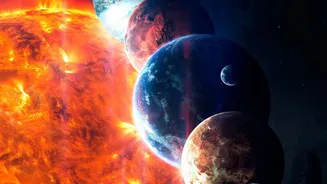
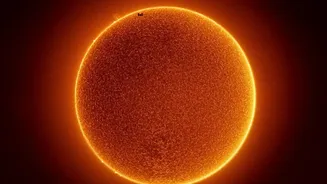
A more dramatic, though speculative, new model suggests our solar system did form a super-Earth, but it didn't survive. Recent research published in September 2026 proposes that this primordial planet could have spiralled inward and been swallowed by the young sun billions of years ago. Scientists suggest this cosmic meal may have left a chemical fingerprint on our star. For example, the sun's surface has significantly less lithium than expected for a star of its type. An engulfed rocky planet, rich in heavier elements but poor in lithium, could have dragged the star's original lithium deeper into its super-hot core where it would be destroyed, potentially explaining the discrepancy we see today. This jaw-dropping idea suggests the evidence for our missing planet may be hidden within the sun itself.