






The G1 Mission: A Comprehensive Overview
The G1 mission is the first of two planned uncrewed flights designed to validate every single system required for India's first human spaceflight. Scheduled for late 2026, the mission will see the Gaganyaan spacecraft launch into a low Earth orbit of up
to 400 km. Onboard will be a humanoid robot named Vyommitra, who will simulate human functions and monitor the spacecraft's internal environment. The primary goal is simple but incredibly complex: to demonstrate that India can safely send a craft into orbit and bring it back to Earth, proving the technology is reliable and safe for a future crew. This mission will test the performance of the entire system, from the launch vehicle to the crew module's splashdown.
The Human-Rated Launch Vehicle (HLVM3)
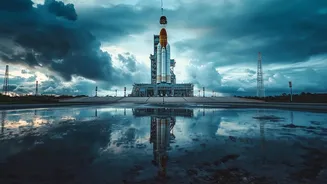
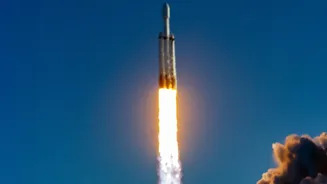
At the heart of the mission is the powerful, human-rated LVM3 rocket, an upgraded version of ISRO's most reliable launch vehicle. 'Human-rated' means the rocket has undergone rigorous testing and includes specific modifications to ensure astronaut safety, which is of paramount importance. One of the most critical additions is the Crew Escape System (CES). This system is designed to rapidly jettison the crew module away from the rocket in case of an emergency during launch or ascent, carrying the astronauts to a safe distance. The G1 mission will serve as the final proof of the HLVM3's reliability in a real-world flight scenario before it's cleared to carry humans.
Validating the Orbital Module
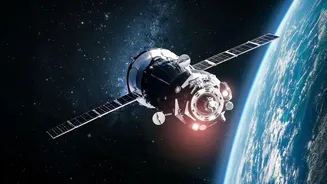
The Gaganyaan spacecraft itself, known as the Orbital Module, consists of two main parts: the Crew Module (CM) and the Service Module (SM). The CM is the habitable space where astronauts will be housed, while the SM provides power, propulsion, and other essential support in orbit. During the G1 mission, ISRO will test the integrated performance of these modules. Key systems under scrutiny include the propulsion systems for orbital manoeuvres, avionics for navigation and control, and an engineering model of the Environmental Control and Life Support System (ECLSS). While the G1's crew module may not be fully pressurised, it will carry Vyommitra to collect vital data on how the cabin environment performs.
The Fiery Return: Re-entry and Recovery
Perhaps the most challenging part of any human spaceflight mission is the safe return to Earth. The G1 flight will be a crucial test of the Crew Module's ability to survive re-entry. The module's thermal protection system must withstand the extreme heat generated while travelling through the atmosphere. Following this, a complex sequence involving ten parachutes of different types will deploy to slow the module's descent. This deceleration system, jointly developed by ISRO and DRDO, has undergone extensive ground and air-drop tests. Finally, the mission will test the Crew Module Up-righting System (CMUS), which uses floats to ensure the capsule is correctly oriented after its planned splashdown in the Indian sea, allowing for safe recovery.
Why This Uncrewed Flight is Crucial
Every successful test, from engine firings on the ground to parachute deployments in the air, has built confidence in the Gaganyaan system. However, the G1 uncrewed mission is the only way to test all these systems working together in the actual environment of space. It's an end-to-end verification of everything ISRO has developed over more than a decade. The data gathered from G1 will be invaluable, providing insights that can only be gained from a full-scale orbital flight. A successful mission will pave the way for a second uncrewed flight and, ultimately, the historic crewed mission that will make India the fourth nation in the world to have independent human spaceflight capability.