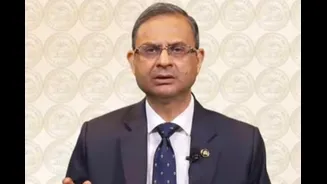




The RBI's Steady Hand
On August 5, the RBI's Monetary Policy Committee (MPC) announced its decision to keep the benchmark repo rate unchanged at 5.25%. This marks the fourth consecutive time the central bank has opted for a pause. The decision was unanimously made by the six-member
committee, reflecting a united front on the current economic strategy. This move was widely anticipated by market experts and economists, who see it as a prudent measure in a complex economic landscape.
What is the Repo Rate Anyway?
Think of the repo rate as the interest rate at which the Reserve Bank of India lends money to commercial banks like SBI, HDFC, or ICICI. It is one of the most powerful tools in the RBI's toolkit to manage money supply and fight inflation. When the RBI wants to curb inflation and reduce the amount of money in the system, it raises the repo rate, making borrowing more expensive for banks. Conversely, when it wants to stimulate economic activity, it lowers the rate, making borrowing cheaper.
The Link to Your Fixed Deposits
The repo rate has a direct, albeit not instantaneous, impact on the interest rates your bank offers on FDs. When banks can borrow cheaply from the RBI (i.e., when the repo rate is low), they have less incentive to offer high interest rates to attract deposits from the public. When the repo rate is high, banks need to attract funds to lend, so they often raise FD rates to encourage people to save with them. Since the repo rate is currently stable, banks are not under immediate pressure to either increase or decrease their FD rates. This means the attractive rates seen in recent months may have peaked for this cycle.
Why the Pause? Balancing Growth and Inflation
The RBI's decision to hold the rate is a delicate balancing act. Governor Sanjay Malhotra noted that while domestic economic activity remains resilient, there are significant global and domestic challenges. The primary concerns are rising food and fuel prices, which have pushed headline inflation up. At the same time, the central bank wants to support economic growth, which it has forecast at 6.7% for the financial year. Geopolitical tensions, such as the conflict in West Asia, and volatile crude oil prices add another layer of uncertainty, making a 'wait and watch' approach the most sensible option for now.
What Should Savers and Depositors Do?
For individuals with fixed deposits, the RBI's pause brings a degree of predictability. It means that the current interest rates, which are considered to be at a high, are unlikely to fall in the immediate future. If your existing FDs are maturing, you can likely renew them at similar rates. For those looking to make new deposits, this could be an opportune moment to lock in funds, especially in longer-term FDs, before the interest rate cycle eventually turns. However, it's crucial to remember that FD rates are not solely dependent on the repo rate; factors like a bank's own liquidity needs and overall credit demand also play a significant role. Savers may find that some banks still adjust their rates on specific tenures to manage their fund flows.