






The Reactive Challenge of Roller Skating
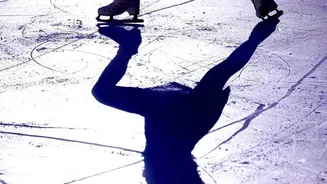
Roller skating is an exercise in constant motion. To stay upright on wheels, your body must make thousands of tiny, rapid adjustments. This is the essence of dynamic core work. Unlike static exercises like planks, where you hold a single position, skating forces
your core muscles—including your abdominals, obliques, and lower back—to engage and react continuously. Every push, glide, and turn requires your midsection to stabilize your body, acting as the crucial link between your upper and lower body movements. This constant state of alert activation builds not just strength, but also endurance and coordination within your core. It's a workout that happens almost subconsciously; as you focus on the fun of gliding, your core is firing nonstop to maintain your balance and posture. This dynamic engagement is what makes skating such a surprisingly effective, full-body workout.
The Controlled Power of Tai Chi
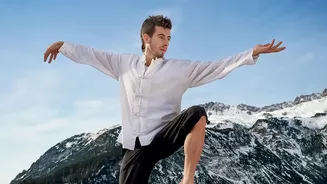
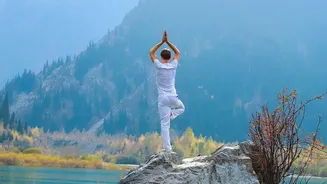
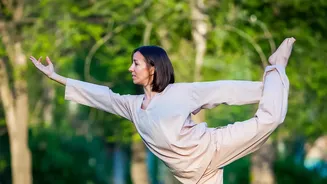
Tai Chi, often described as 'meditation in motion', builds core strength through a completely different philosophy. This ancient Chinese martial art involves slow, deliberate, and flowing movements that emphasize control and mind-body connection. Core strength in Tai Chi is generated from the body's center, as practitioners learn to maintain stability while shifting their weight with precision. The slow, sustained postures deeply engage the stabilizing muscles of the abdomen and lower back. Studies have shown that long-term Tai Chi practice improves proprioception—the body's awareness of its position in space—which is fundamental to balance and stability. Rather than reacting to external instability like in skating, Tai Chi practitioners create and control their stability from within, leading to profound improvements in postural control and functional strength.
A Tale of Two Cores: Dynamic vs. Deliberate
So, how do these two methods stack up? It’s not a question of which is better, but which style of strength you are looking to build. Roller skating develops a reactive, agile core. It trains your muscles to respond instantly to unpredictable changes, which is fantastic for improving reflexes and stability during fast-paced activities. Think of it as training your core for the chaos of real-world movement. Tai Chi, on the other hand, cultivates a deep, deliberate core strength. It builds foundational stability and teaches the body to move with grace and efficiency, generating power from a solid center. This type of strength is more about conscious control and can lead to better posture and a reduced risk of falls, particularly as we age. One builds a core ready for action and reaction, while the other builds a core rooted in control and awareness.
Beyond the Core: The Full-Body Benefits
Of course, both activities offer benefits that extend far beyond the core. Roller skating is a fantastic low-impact cardiovascular workout, burning a significant number of calories while being gentler on the joints than running. It’s a powerful way to build strength in the legs and glutes, and its social, fun-loving nature makes it an easy habit to stick with. Tai Chi is renowned for its stress-reducing benefits, lowering blood pressure and enhancing mental focus through its meditative qualities. Its slow, gentle movements improve flexibility, joint health, and overall body awareness, making it an accessible and highly beneficial practice for people of all ages and fitness levels. A study on patients with knee osteoarthritis showed that Tai Chi significantly improved pain, stiffness, function, and balance.