






What Exactly is the ITMS?
At its core, the Intelligent Traffic Management System is a new brain for Delhi's roads. The Union Cabinet has approved the ₹1,789.52 crore project, which aims to replace the city's largely static, fixed-timer traffic signals with a dynamic, AI-powered
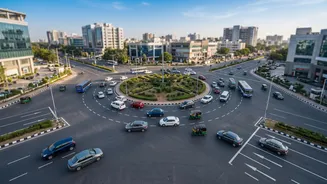
network. Instead of manual intervention and pre-set signal timings, the ITMS will use real-time data to manage vehicle flow, reduce congestion, and automate enforcement. Implemented by the Delhi Police, this system is designed to make the existing road network work smarter, not just harder, to handle the city's roughly 71 lakh active vehicles. It integrates traffic signals, AI cameras, and sensors into a unified command-and-control centre.
How It Works: AI, Sensors, and Smart Signals
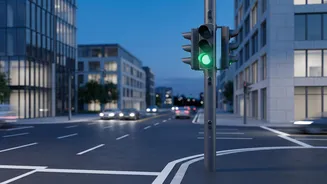
The ITMS will deploy Adaptive Traffic Control Systems (ATCS) at over 1,000 intersections. These smart signals will use data from roadside sensors and cameras to analyse traffic density, vehicle speed, and queue lengths in real-time. Based on this information, algorithms will automatically adjust signal timings to optimise traffic flow. For commuters, this means signals can coordinate to create 'green waves', reducing unnecessary stops. The system will also use AI-powered cameras for automated enforcement at over 1,000 locations, detecting violations like red-light jumping, speeding, wrong-way driving, and even riding without a helmet or using a mobile phone while driving.
Mapping the Change: The 42 Corridors
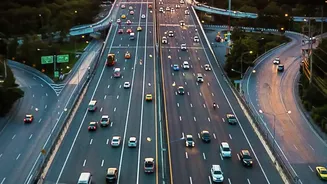
The project will be rolled out across 42 of Delhi's most critical traffic corridors. While a complete official list has not been released with the initial announcement, key arteries expected to be covered include stretches of the Ring Road, Outer Ring Road, NH-48, NH-9, Mathura Road, and Mehrauli-Gurgaon Road. The implementation is planned in three phases over 24 months. The first phase, to be completed within 12 months, will target five corridors. This phased approach ensures that each stage is tested and commissioned before the next one begins, allowing for a more controlled and effective rollout.
The Promised Gains: Smoother Flow and Safer Streets
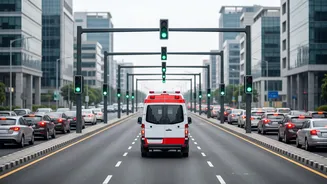
The primary goal of the ITMS is to reduce traffic congestion and make daily commutes more efficient. Beyond smoother traffic, a major benefit will be the creation of priority 'green corridors' for ambulances and other emergency vehicles, which the system can automatically detect and clear a path for. For the general public, the ITMS will provide real-time traffic information via Variable Message Signs and digital platforms, alerting drivers to congestion, diversions, and even parking availability. Furthermore, the system will be integrated with police databases like the Crime and Criminal Tracking Network and Systems (CCTNS) to help identify and track stolen or blacklisted vehicles, adding a significant layer of security.
Challenges and the Road Ahead
While the plan is ambitious, its success hinges on flawless execution. The project will be managed by a Master System Integrator selected through competitive bidding, with technical support from the Centre for Development of Advanced Computing (C-DAC). The two-year implementation timeline is aggressive for a project of this scale, which involves significant on-ground installation and system integration. After the rollout, a five-year operation and maintenance period will follow to ensure the system continues to function effectively. The real test will be how well the technology adapts to Delhi's unpredictable traffic patterns and whether it can deliver on its promise to bring long-awaited relief to the city's commuters.