


The Lake as the Starting Point
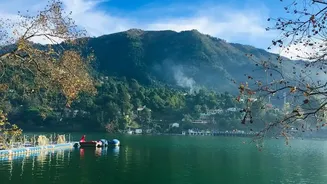
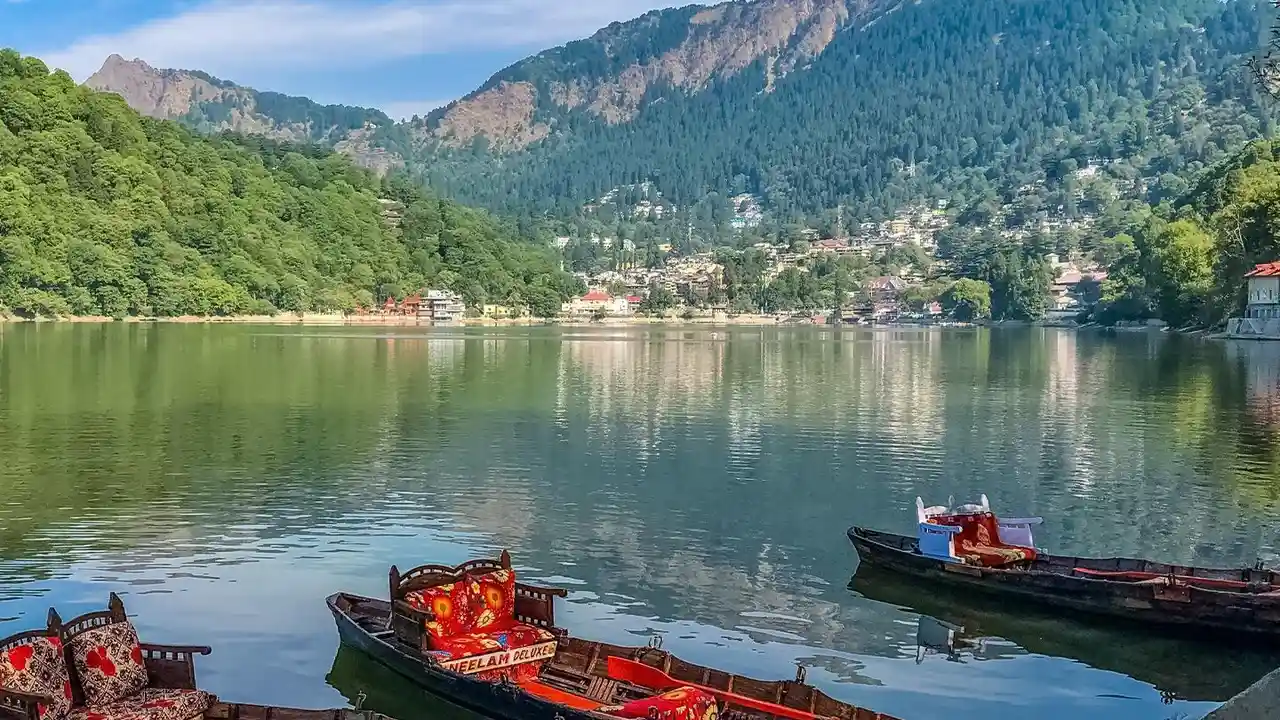
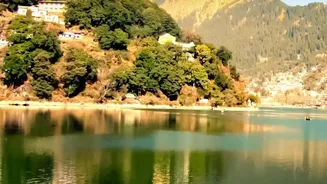
Every journey in Nainital begins and ends at the Naini Lake. This emerald-green body of water, shaped like an eye, is not just the town's geographical centre but also its mythological heart. Legend holds that it is one of the spots where the charred remains
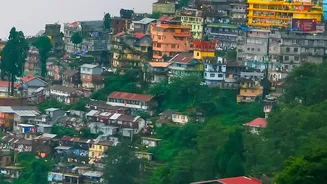
of the goddess Sati fell. It was this serene landscape that captivated P. Barron, a British sugar trader who chanced upon it in 1839 and founded the modern town in 1841. Once a quiet Kumaoni domain, Barron’s ‘discovery’ turned it into a favoured summer retreat for British officials escaping the heat of the plains. The famous Mall Road, connecting the upper (Mallital) and lower (Tallital) ends of the town, serves as the main artery of our walk, tracing the edge of the lake where history lines the promenade.
Stones of Faith and Empire
A short walk from the lake's northern shore takes us to one of Nainital's earliest structures, the Church of St. John in the Wilderness. Established in 1844, its neo-Gothic spire rises amidst a forest of deodars. The church was named by the Bishop of Calcutta, Daniel Wilson, who, upon falling ill, had to stay in an unfinished cabin in the woods while visiting to lay the foundation. Inside, a brass plaque quietly remembers the 151 Indian and European lives lost in the devastating landslide of 1880, a catastrophe that reshaped the town and led to stricter building codes. The original Naina Devi temple was also destroyed in this landslide and later rebuilt on the now-stable ground known as 'The Flats'. These two structures, a temple and a church, stand as testaments to both faith and the formidable power of the Himalayan landscape.
The Grandeur of the Raj Bhawan
No heritage walk is complete without visiting the magnificent Raj Bhawan, formerly the Government House. Built between 1897 and 1899 as the summer residence for the governor of the United Provinces, this imposing structure is a masterpiece of Victorian Gothic architecture, designed to resemble a Scottish castle. Designed by architect F.W. Stevens, the two-storeyed mansion features 113 rooms, intricate woodwork with Burma teak, and sprawling grounds with a golf course. Its castellated turrets and stone facade were meant to project the power and permanence of the British Raj in this idyllic setting. After independence, it became the official residence for the Governor of Uttar Pradesh, with Sarojini Naidu being its first Indian occupant, and now serves as the summer retreat for the Governor of Uttarakhand.
A Hunter's Haven, A Writer's Memory
Further up in the Ayarpatta hills lies Gurney House, a much more modest but equally significant dwelling. This was the home of the legendary hunter-naturalist and writer, Jim Corbett. The charming colonial-style cottage was constructed in 1880, built from the salvaged materials of another house destroyed in the great landslide. Corbett lived here until he left for Kenya in 1947, and the house, now a private residence, preserves much of his furniture and possessions. A visit here, often possible by appointment, feels like stepping into the pages of his books. It connects the grand narrative of empire with the personal memory of a man who understood the surrounding wilderness better than anyone, transforming the landscape from a mere backdrop into a living, breathing character.