







Understanding Your 'Social Jetlag'
Most of us live with two different clocks. There's the one on the wall, dictated by work or school schedules. Then there’s your internal body clock, or circadian rhythm, which governs everything from sleepiness to hunger. When your weekday alarm forces
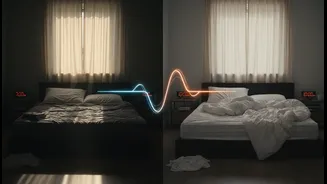
you to wake up earlier than your body wants, and you then sleep in late on weekends to 'catch up', you create a mismatch. Scientists call this 'social jetlag'. This discrepancy between your biological and social clocks can do more than just make Monday mornings feel rough. It can disrupt the hormones that control hunger, namely ghrelin (which tells you to eat) and leptin (which tells you you're full). This hormonal confusion can lead to increased cravings, a preference for high-calorie foods, and a greater risk of metabolic issues over time.
The Two-Day Wake-Up Experiment
The experiment is refreshingly simple and requires just one weekend. The goal is to eliminate social jetlag and listen to what your body tells you in its absence. Here’s how you do it: for one weekend, commit to waking up at the exact same time on both Saturday and Sunday as you do on a typical weekday. If your alarm rings at 6:30 AM from Monday to Friday, it rings at 6:30 AM on the weekend, too. The key is consistency. This single change removes the confusing variable of a shifting sleep schedule, allowing your body’s natural appetite and energy rhythms to surface. Think of it as hitting a reset button, giving you a clean slate to observe how your body truly operates without the disruptive influence of sleeping in.
What to Track During Your Test
To get the most out of this experiment, a little observation goes a long way. You don’t need a complicated spreadsheet; a simple notebook or a note on your phone will do. Over the two days, pay attention to a few key things. First, your appetite: when do you first feel genuinely hungry? Is it an hour after waking, or three? Second, your cravings: when you do feel hungry, what kind of food does your body seem to want? Are you craving something light and fresh, or are you reaching for sugary or fatty foods? Third, your energy levels: note when you feel most alert and productive, and when you experience a slump. Finally, record when you eat your meals and snacks. This data will help you see patterns that are normally hidden by a chaotic weekend schedule.
Interpreting Your Appetite Signals
After the weekend, look at your notes. You might discover that your body’s ideal breakfast time is 9 AM, even though you force down a meal at 7 AM on weekdays. Or you may find that your energy naturally dips around 3 PM, explaining your usual craving for a sugary snack at that time. The field of chrononutrition explores this very idea—that when you eat can be as important as what you eat. If you felt your hunger was more predictable and your cravings were more manageable during the experiment, it’s a strong sign that your body thrives on a consistent schedule. You may be a 'night owl' whose body isn't ready for food early in the morning, or an 'early bird' who performs best with a substantial breakfast soon after waking. This self-knowledge is the first step toward aligning your lifestyle with your biology.
Syncing Your Clock for Better Eating
The goal isn't to eliminate weekend lie-ins forever, but to reduce the gap between your weekday and weekend schedules. If your experiment reveals a major disconnect, consider making gradual changes. Try waking up just 30 minutes earlier each weekend. Studies show that even small steps toward a more consistent wake-up time can lead to lower body fat and better metabolic health. Use your findings to adjust your meal timing. If you learned you’re not hungry first thing, perhaps a lighter, later breakfast on weekdays is a better fit. If you found your energy crashed in the afternoon, a protein-rich lunch instead of a carb-heavy one could help. The idea is to work with your body’s natural rhythms, not against them, leading to more intuitive eating and sustained energy.