




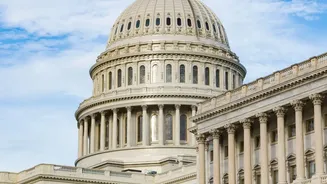
The 2026 US midterm elections are over, and the result is a newly divided government. With Democrats taking control of both the House and Senate, President Donald Trump now faces a formidable opposition for his final two years in office.
A Government Divided by the People
A divided government
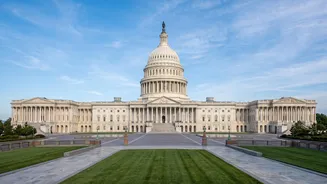
occurs when one political party controls the White House while another controls one or both chambers of Congress. Following the November 2026 elections, Democrats have secured majorities in both the House of Representatives and the Senate, creating a significant shift in the balance of power in Washington. This outcome sets the stage for a period of intense negotiation, potential gridlock, and a test of the constitutional system of checks and balances. For the remainder of his term, President Trump will need to navigate a legislative branch led entirely by his political opponents, a dynamic that history shows can lead to either hard-won compromises or political stalemate.
The President's Strongest Political Weapon
In this new political landscape, the presidential veto becomes one of President Trump’s most critical tools. As outlined in Article I, Section 7 of the U.S. Constitution, the president has the power to refuse to sign a bill passed by Congress, preventing it from becoming law. This power is not just a procedural formality; it is a fundamental check on the legislative branch. When a president vetoes a bill, they must send it back to Congress with a written message explaining their objections. This act can halt legislation in its tracks and force lawmakers to reconsider their approach, making the veto a powerful instrument for shaping policy and asserting executive authority.
How the Veto and Override Process Works
The process is straightforward. Once both the House and Senate pass a bill, it goes to the president's desk. The president then has 10 days (excluding Sundays) to act. He can sign it into law or issue a 'regular veto' by returning it unsigned to Congress. Congress then has a choice: it can amend the legislation to satisfy the president's objections or attempt to override the veto. To successfully override a veto, a two-thirds majority vote is required in both the House and the Senate. This is a deliberately high bar and is difficult to achieve, especially in a politically polarized climate. Historically, Congress has only overridden about 7% of all presidential vetoes.
The Strategic 'Pocket Veto'
There's another, more final type of veto: the 'pocket veto'. This occurs if Congress adjourns during the 10nday period the president has to review a bill. If the president takes no action and simply lets the clock run out, the bill dies automatically. Unlike a regular veto, a pocket veto cannot be overridden by Congress. This makes it a powerful strategic move, especially at the end of a legislative session, as it effectively kills a bill without any chance for Congress to respond. The only recourse for lawmakers is to reintroduce the legislation from scratch in the next session.
Gridlock, or a Path to Compromise?
With Democrats in control of Congress, President Trump is likely to use his veto power to block legislative priorities he opposes. This could lead to significant gridlock, where major policy initiatives stall due to the inability to find common ground. However, divided government doesn't always mean total paralysis. On essential 'mustpass' legislation, such as bills to fund the government and avoid a shutdown, both sides are often forced to the negotiating table. President Trump himself has suggested he might use vetoes as a tactic to bring Democrats to the table for dealmaking. History shows that some of the most significant reforms have been enacted during periods of divided government, born out of necessity and compromise.