


A 'Once-in-a-Century' Discovery
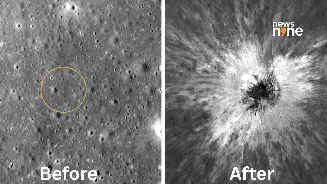
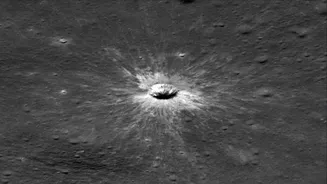
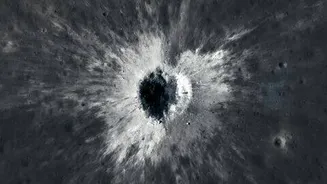
During a routine scan of lunar maps, a NASA-affiliated image specialist noticed an unusually bright spot surrounded by a dark halo. It was a telltale sign that the surface had been recently disturbed. By comparing 'before' and 'after' images from NASA's
Lunar Reconnaissance Orbiter (LRO), the team confirmed the existence of a brand-new crater. Officially named McGetchin crater, after pioneering lunar scientist Tom McGetchin, the impact is believed to have occurred sometime between April and May of 2024, though it was only identified in late 2025. An event of this magnitude is estimated to happen only about once every 100 to 132 years, making it an incredibly rare and valuable scientific opportunity.
Sizing Up a Colossal Impact
The McGetchin crater is staggering in scale. It measures about 728 feet (222 meters) across—roughly the length of two football fields—and is 141 feet (43 meters) deep. To put that in perspective, it's bigger than the Roman Colosseum and deep enough to swallow three school buses stacked vertically. It is the largest newly formed crater ever identified in our solar system. Scientists believe the object that created it was an asteroid or comet fragment the size of a three- to six-story building. The impact was so powerful that it flung rock and dust, known as ejecta, hundreds of meters from the rim and disturbed the lunar surface more than 60 miles away.
A Window into Lunar Processes
Because the crater is so fresh, it provides a pristine natural laboratory. Scientists can study the immediate effects of an impact before space weathering—the constant bombardment of micrometeorites and solar radiation—begins to erase the evidence. One of the most fascinating findings came from LRO's Diviner instrument, which measures temperature. It detected a 4-mile-wide 'cold spot' around the crater that is about 16 degrees Fahrenheit cooler than its surroundings at night. Researchers believe the impact 'fluffed up' the lunar soil, or regolith, making it less dense and less able to retain heat, a process some have compared to gardening.
Implications for the Future of Moon Exploration
This discovery is more than just a scientific curiosity; it has practical implications for humanity's return to the Moon. Understanding the frequency and effects of such impacts is crucial for planning the safety of future lunar bases. The data shows that the top layer of lunar soil is being overturned by impacts far more quickly than previously estimated—every 80,000 years or so. This suggests the lunar surface is more dynamic than once thought and challenges the idea that the Apollo astronauts' footprints will last forever. Studying the ejecta patterns and the widespread disturbance will help engineers design structures that can withstand the debris from distant impacts, ensuring the safety of future lunar inhabitants.