


What Are Hanging Glaciers?
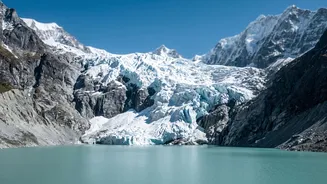
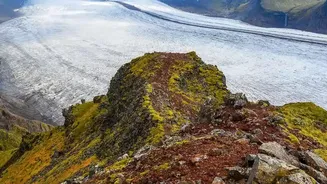
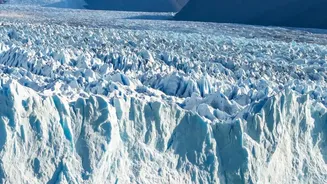
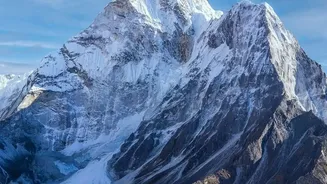
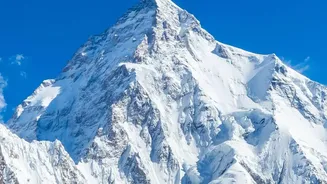
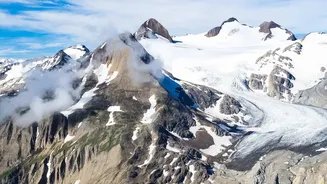
Imagine a river of ice that doesn’t flow neatly into a valley but instead clings precariously to a steep mountainside or cliff edge. This is a hanging glacier. Unlike larger valley glaciers, they are often smaller and situated on extremely steep slopes.
This perilous positioning makes them inherently unstable. The force of gravity constantly pulls on them, and their very existence is a delicate balance. When this balance is disturbed, a section can break off and come crashing down in a massive ice avalanche, a process that is becoming alarmingly more frequent.
The Climate Change Connection
The primary culprit destabilising these frozen giants is climate change. The Himalayas are warming faster than the global average, a phenomenon that has profound consequences. Rising temperatures weaken the ice, causing it to melt and lose its grip on the underlying rock. The freeze-thaw cycles that happen more frequently in a warmer climate can create and expand cracks within the glacier, further compromising its structural integrity. This accelerated melting not only shrinks the glaciers but makes them more brittle and prone to sudden, catastrophic failure, turning a natural feature into a ticking time bomb.
A Cascade of Catastrophe
The danger from a hanging glacier collapse isn't just the initial ice avalanche. It's the deadly chain reaction that follows, known as a multi-hazard cascade. When millions of cubic metres of ice and rock fall into a narrow river valley, the impact can generate a massive amount of heat, instantly melting the ice and creating a torrential slurry of water, mud, and debris. This destructive flow can block the river, forming a temporary dam. When this unstable dam inevitably bursts, it unleashes a Glacial Lake Outburst Flood (GLOF), a wall of water that scours everything in its path. The 2021 Chamoli disaster in Uttarakhand was a tragic example, where a collapse from Ronti Peak triggered a debris flow that killed over 200 people and obliterated two hydropower projects.
India's Himalayan Hotspots
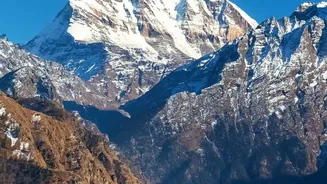
For India, this is not a distant threat. The Indian Himalayas, particularly in states like Uttarakhand, Himachal Pradesh, and Sikkim, are dotted with these unstable glaciers. A recent study identified 219 hanging glaciers in Uttarakhand's Alaknanda basin alone, with many deemed highly unstable. These glaciers loom over densely populated valleys, pilgrimage routes, and critical infrastructure like dams and highways. Unregulated construction and a surge in human activity in these high-risk zones have dramatically increased the potential for a natural hazard to become a human catastrophe. Projections show that exposure to these risks is set to grow significantly, with more buildings and people located in harm's way.
The Path Forward: Monitoring and Preparedness
While predicting the exact moment of a glacier collapse is nearly impossible, mitigating the risk is not. The key lies in shifting from a reactive to an anticipatory approach. This requires a robust, satellite-based monitoring system to track changes in high-risk glaciers and glacial lakes in real-time. Several Indian agencies, including the National Disaster Management Authority (NDMA) and the Central Water Commission (CWC), are already monitoring hundreds of glacial lakes. However, the challenge is immense, given the remote and treacherous terrain. Strengthening early warning systems, creating risk-informed land-use plans, and raising community awareness are crucial steps to protect vulnerable downstream populations from these escalating Himalayan hazards.