



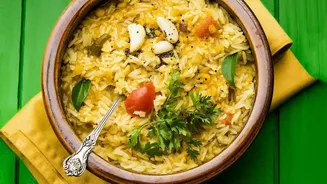

Bhoger Khichuri: The Divine Offering
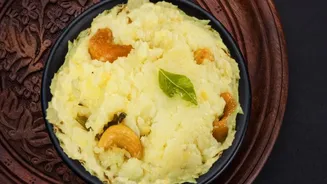
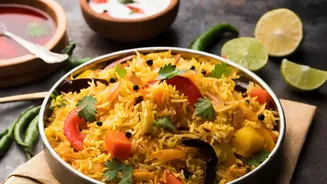
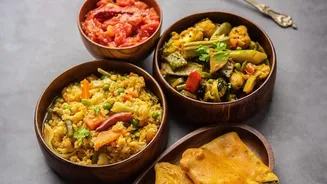
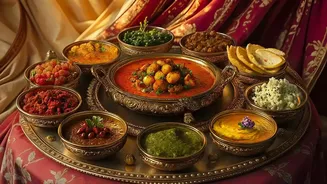
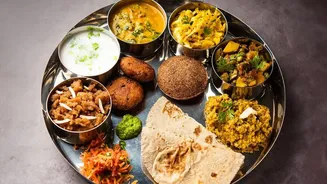
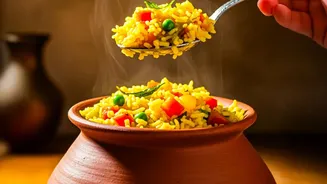
No Durga Puja experience is complete without partaking in bhog, the blessed food offered to the Goddess and then distributed to devotees. At the centre of this sacred meal is Bhoger Khichuri, a soul-soothing medley of roasted moong dal and fragrant gobindobhog
rice. Unlike everyday khichdi, this version is purely vegetarian, made without onion or garlic, and gets its divine aroma from ginger, ghee, and a delicate blend of spices. Often cooked in massive cauldrons in community kitchens, this dish is typically served with labra, a mixed vegetable curry, and beguni (brinjal fritters). More than just a meal, Bhoger Khichuri represents community, devotion, and the spirit of sharing that defines the festival.
Luchi and Alur Dom: The Timeless Indulgence
A quintessential Bengali breakfast, the combination of Luchi and Alur Dom becomes a festive staple during Durga Puja. Luchis are soft, fluffy, deep-fried breads made from maida (all-purpose flour) that puff up into golden orbs. They are the perfect vehicle for scooping up Alur Dom, a flavourful and often spicy potato curry. While recipes vary from household to household, the bhog version is typically milder and cooked without onions or garlic. Whether enjoyed as a leisurely morning meal before pandal hopping or as a satisfying snack from a street-side stall, this combination is pure comfort food that embodies the celebratory mood of Pujo.
Sondesh: The Art of Sweetness
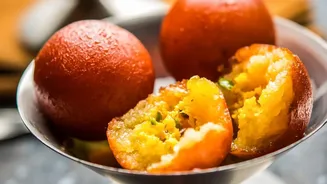
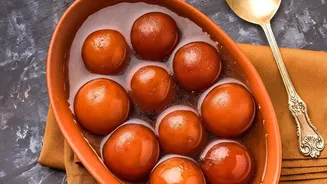
In Bengal, no celebration is sealed without mishti (sweets), and Sondesh is often considered the queen of Bengali desserts. Made from fresh chenna (cottage cheese), which is kneaded with sugar or nolen gur (date palm jaggery) until smooth, Sondesh is a delicate, melt-in-the-mouth sweet. During Durga Puja, sweet shops display an incredible variety, from the simple, soft Kanchagolla to intricately designed sweets pressed into beautiful moulds. This sweet is not just a dessert but a cultural emblem, often exchanged as a gift among friends and family to share joy and good wishes.
Mishti Doi: The Sweet Curd Finale
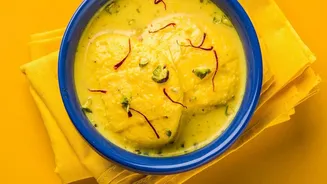
Mishti Doi, or sweet yogurt, is another iconic Bengali dessert that is a must-have during Durga Puja. Unlike regular yogurt, it is prepared by fermenting sweetened milk, which gives it a distinct, mildly caramelized flavour and a thick, creamy consistency. Traditionally, it is set and served in earthen pots, which help absorb excess water and give the doi its characteristic texture and subtle earthy aroma. A festive meal, especially during celebrations like Durga Puja, often concludes with a serving of this chilled, delightful sweet, providing a perfect, cooling end to a rich feast.
Patishapta: The Festive Crepe
While enjoyed throughout the year, Patishapta holds a special place in festive menus. These are thin crepes, similar to pancakes, made from a batter of rice flour, semolina, and refined flour. The magic lies in the filling, which is traditionally a sweet mixture of grated coconut and jaggery, or sometimes kheer (thickened, sweetened milk). The crepe is delicately rolled around the filling to create a soft, sweet treat. Though strongly associated with the winter harvest festival of Poush Sankranti, these delightful rolls are also prepared in many homes during Durga Puja, representing the rich tradition of homemade 'pithe' (rice-based sweets).