







In times of global uncertainty, the allure of prophecy is strong. The idea of an 'American Nostradamus' making sensational claims about future conflicts has captured public attention, but what are these predictions and who is making them?
Identifying 'America's Nostradamus'
Unlike the singular
French astrologer Nostradamus, the title 'America's Nostradamus' isn't held by one person. Instead, it's a label a few figures have earned, often from media or followers. Recently, the name has been strongly associated with John Hogue, an author and expert on the original Nostradamus's works. For decades, Hogue has interpreted 16th-century prophecies for modern audiences, and his recent forecasts have been particularly dramatic. Other figures, such as historian Allan Lichtman, have been called a 'Nostradamus' for their accurate political predictions, though their methods are based on historical modeling, not psychic visions. The term often surfaces to describe anyone whose predictions, whether analytical or mystical, gain significant public notice.
The Alarming Conflict Predictions
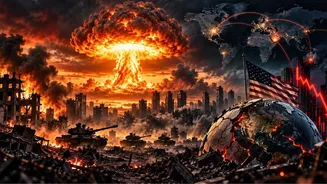
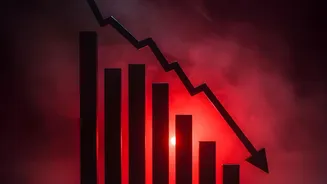
Recent claims tied to 'America's Nostradamus' point to a period of intense global crisis. Hogue, interpreting Nostradamus's writings, has warned of a potential 27-year global war sparked by the demise of a figure he identifies as 'Mabus'. His predictions include the possibility of nuclear strikes, particularly involving Iran, and major disruptions to global energy supplies. These sensational forecasts also point to a significant decline in American economic and global power by 2028, driven by factors like extreme inflation and debt. While Hogue states his intention is to warn humanity, the catastrophic nature of these claims generates significant buzz. These themes of escalating conflict are echoed by other psychics and prophets, like the late Baba Vanga, who also predicted a major global conflict for 2026.
Why We Are Drawn to Prophecy
The popularity of such dire predictions isn't new. In periods of anxiety, war, and political instability, humans naturally seek patterns and meaning. Prophecies, even frightening ones, can provide a sense of order in a chaotic world by framing current events as part of a larger, pre-written story. Psychologically, these narratives offer a sense of moral clarity, dividing the world into good and evil, and can make believers feel they have a special role to play as witnesses to a 'grand finale'. This deep-seated need for certainty and significance helps explain why, generation after generation, doomsday predictions find a willing audience, regardless of their track record.
A Long History of Misses
While the predictions are specific and alarming, it's crucial to consider the history of prophecy. So far, every single doomsday prediction in history has been wrong. Yet, belief often persists. The psychological theory of cognitive dissonance offers an explanation: when a deeply held belief is proven false, it creates intense mental discomfort. To resolve this, believers may double down, reinterpreting the failure as a 'test of faith' or claiming the prophecy was fulfilled in a spiritual, rather than literal, way. This phenomenon was famously documented in Leon Festinger's classic study, 'When Prophecy Fails', which showed how a group of believers became more fervent after their predicted apocalypse didn't arrive.
The Danger of Vague Warnings
Many prophecies are constructed with intentionally vague language. Phrases like 'a great war in the East' or 'a leader will fall' are so broad they can be retroactively fitted to a wide range of events. This makes them appear far more accurate in hindsight than they actually are. The original Nostradamus's writings are famously cryptic, allowing for endless reinterpretation to match current events. Hogue's own work is based on interpreting these centuries old ambiguous quatrains. This ambiguity is a key feature not a flaw of many prophetic traditions as it ensures the prophecies can never be definitively proven wrong.