




Understanding Your Home’s Microclimate
Many popular houseplants originate from tropical regions, where warmth and moisture are abundant. Your home's environment is likely much drier and different from a greenhouse. For a plant to flourish, it needs conditions that mimic its native habitat.
This is why a simple assessment of your indoor climate, specifically its humidity, is a crucial first step. Most homes have a humidity level between 40% and 60%. While many common plants do well in this range, those on the lower end might struggle. Symptoms of low humidity include leaves that look dry, curled, or have brown tips. Taking a moment to understand your home’s conditions will save you from the common pitfall of choosing a beautiful plant that is simply not suited for your space.
A Quick Guide to Gauging Humidity
You don't need to be a scientist to figure out your room's humidity. A simple method is the ice cube test: place a few ice cubes in a glass of water and leave it in the room for five minutes. If a lot of condensation forms and drips down the glass, your humidity is likely high. If there's no moisture on the outside, the air is probably quite dry. Another clue is static electricity in winter, which signals dry air. For a more precise measurement, an inexpensive digital tool called a hygrometer can give you an exact reading of the relative humidity in your home. Bathrooms and kitchens naturally have higher humidity, making them ideal spots for moisture-loving plants.
Plant Picks for Humid Spaces
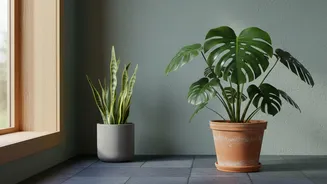
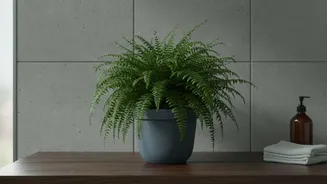
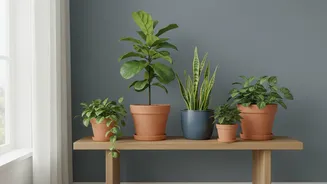
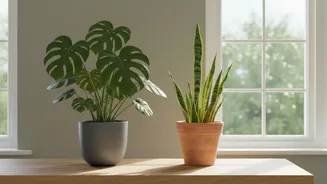
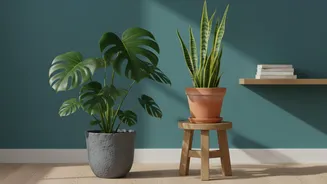
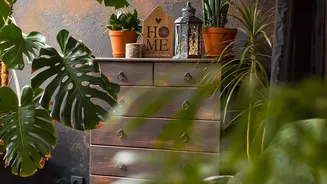
If your home is naturally humid, or you're looking to green up a bathroom or kitchen, you have plenty of great options. Ferns, like the Boston Fern, absolutely love moisture and thrive in humid conditions. They are perfect for adding a lush, feathery texture to a room. Peace Lilies are another excellent choice; they tolerate lower light and their presence can even help increase humidity levels slightly. Other tropical plants like Monsteras, which are known for their large, dramatic leaves, also appreciate a warm and humid environment to grow their best. Pothos (Money Plant) and Philodendrons are versatile vining plants that enjoy higher humidity and are incredibly easy to care for.
Hardy Choices for Drier Rooms
If you've discovered your space is on the drier side, especially in rooms with air conditioning, don't despair. Many plants are perfectly adapted to low-humidity conditions. The Snake Plant is a top contender; it's known for being nearly indestructible, tolerating infrequent watering, and thriving in dry air. Similarly, the ZZ Plant (Zamioculcas zamiifolia) has glossy, dark leaves and is exceptionally drought-tolerant, making it ideal for beginners or busy owners. Succulents and cacti are desert natives that naturally prefer dry conditions and plenty of light. Plants with thicker, waxier leaves, like the Jade Plant, are generally better at storing water and can handle lower humidity levels with ease.
Measure Twice, Plant Once
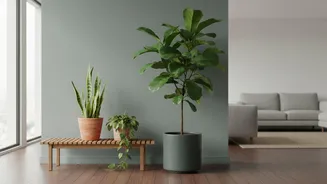
Beyond humidity, physical space is the next critical factor. It's easy to fall for a small plant in a pot, forgetting it could grow into a seven-foot giant. Before you buy, consider the plant's mature size. Look at both its potential height and width. For small apartments, think vertically. Tall, slender plants like the Snake Plant or Lucky Bamboo take up minimal floor space while adding a sense of height. Trailing plants like Pothos or Spider Plants are perfect for shelves or hanging baskets, drawing the eye upward and freeing up surfaces. Their cascading vines can make a small room feel lush without being crowded.
Making a Statement in Larger Rooms
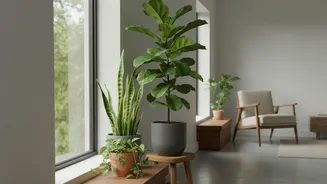
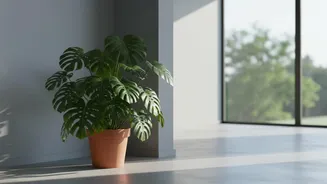
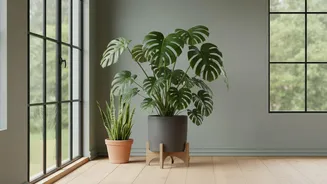
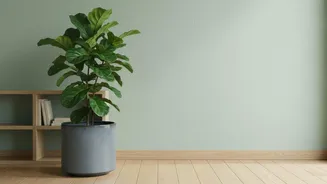
If you have a large living room or an empty corner to fill, a statement plant can act as living sculpture. The Fiddle Leaf Fig is a popular choice for its large, violin-shaped leaves, bringing a bold, architectural element to a room. Large floor plants like the Areca Palm or Bamboo Palm can instantly give a space a tropical, resort-like feel and are great for filling vertical space. A mature Monstera Deliciosa, with its iconic split leaves, can also become a stunning focal point. When choosing a large plant, ensure it has enough room to spread its leaves without being cramped against a wall or furniture.