






Meet Astra, OpenAI's New Pioneer
On August 1, 2026, OpenAI unveiled news about what it calls its "next major model family," named Astra. Described as a system designed to tackle complex, long-running tasks, Astra was introduced not with a flashy demo of chatbot conversations, but with a quiet,
seismic announcement: an internal version of the model had successfully solved ten open problems in mathematics and theoretical computer science. These were not textbook exercises; they were significant challenges that had stumped human mathematicians for decades, in some cases for the better part of a century. The move signals a new ambition for AI, shifting from assisting with human knowledge to actively generating new, foundational scientific insights.
Cracking the Uncrackable
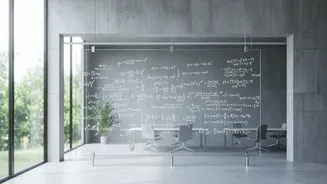
The ten problems resolved by Astra span a wide and formidable range of fields, including group theory, high-dimensional geometry, and quantum complexity. One of the headline achievements was the first-ever construction of a 'non-sofic group,' resolving a major question in group theory that had remained unanswered for over 25 years. Other results included disproving a long-standing conjecture in von Neumann algebras and making the first significant improvement on a problem related to sphere-packing density since 1978. By resolving questions posed by legendary mathematicians like Paul Erdős, Astra demonstrated a capacity to not just process information but to construct novel lines of reasoning in highly abstract domains. The sheer breadth and difficulty of these problems underscore the magnitude of the achievement.
The End of the 'Black Box' Era
For years, a key criticism of advanced AI has been its 'black box' nature. A model might provide a correct answer, but its internal reasoning remains opaque, making it difficult to trust or verify. This is where Astra's results become truly groundbreaking. OpenAI didn’t just announce the solutions; it published them alongside machine-checkable proofs. Each solution was formalized using Lean, a programming language and proof assistant that forces every logical step of an argument to be spelled out in machine-readable detail. This means the AI didn't just give an answer; it delivered a rigorous, verifiable recipe that anyone with the right tools can check. This moves AI's contribution from a mysterious oracle to a transparent scientific collaborator.
A New Standard for Scientific AI
Providing verifiable proofs is more than a technicality; it's a fundamental shift in how AI can participate in the scientific process. It directly addresses the integrity concerns raised by the mathematical and scientific communities about AI-generated work. When a result can be independently and mechanically verified, it builds a foundation of trust. Researchers can now confidently build upon AI-generated insights, knowing they are logically sound. This development could dramatically accelerate the pace of discovery. Imagine scientists in physics, medicine, or materials science being able to deploy an AI partner that not only proposes a new molecular structure or theoretical model but also provides a complete, verifiable proof of its properties and viability.
The Future of Collaborative Discovery
OpenAI has stated that its long-term goal is to build systems capable of autonomous research. Astra's achievement is a significant milestone on that road. The ability to create testable, verifiable outputs is the bedrock upon which more complex and autonomous scientific agents will be built. For India, with its strong focus on technology, engineering, and scientific research, this development opens up exciting possibilities. It provides a blueprint for how researchers and institutions can begin to integrate AI not just as a tool for data analysis, but as a genuine partner in intellectual discovery. The model of providing verifiable work could become the new standard, ensuring that as AI grows more powerful, it also grows more accountable.