


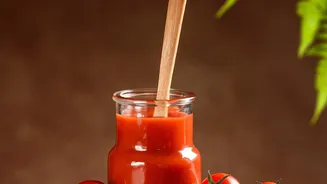
The Secret Science of Tomato Flavour
The magic of a tomato lies in its complex chemistry. Tomatoes are naturally rich in glutamic acid, the compound responsible for the savoury, meaty taste known as umami. This is the same element that makes aged cheeses and cured meats so satisfying. As
a tomato ripens on the vine, its glutamate levels increase along with its natural sugars, creating a perfect balance of savoury, sweet, and tart. Cooking amplifies this. When you simmer tomatoes, the water content reduces, concentrating these flavours. Furthermore, the heat triggers chemical reactions like the Maillard reaction, which creates hundreds of new aroma and flavour compounds, adding depth and complexity that you simply can't get by adding a pinch of this or that.
Choosing Your Star Ingredient
Not all tomatoes are created equal when it comes to sauce. While you can make a sauce with almost any ripe tomato, some varieties are better suited for the task. Paste tomatoes, such as the famous San Marzano or the more common Roma, are ideal. They have dense, meaty flesh, fewer seeds, and a lower water content, which means they cook down into a thick, rich sauce more quickly. This low moisture content is their superpower. If you're using larger, juicier tomatoes, you'll still get great flavour, but you will need to simmer the sauce for longer to allow the excess water to evaporate. The most important factor is ripeness. A sun-ripened, in-season tomato will always have more natural sugar and deeper flavour than one picked green and ripened in transit. So, for the best results, start with the best tomatoes you can find.
The Power of Patience and Heat
The key to transforming tomatoes into a flavourful sauce is simple: a slow simmer. This is not a process to be rushed. As the sauce gently bubbles away uncovered, water evaporates, and the natural tomato flavours become intensely concentrated. But it's more than just reduction. The prolonged, gentle heat allows flavour compounds to develop and meld. This is where the Maillard reaction, a browning process that happens between amino acids and sugars, really gets to work, creating savoury, roasted notes even without high heat. While true caramelization requires very high temperatures, the slow cooking process does caramelize some of the tomato's natural sugars, adding a subtle sweetness that balances the acidity. Aim for a simmer time of at least 60 to 90 minutes, or until the sauce has thickened considerably and darkened in colour.
Technique Over Ingredients
A great sauce is built on a foundation of good technique. Start by gently sautéing a simple aromatic base, like finely chopped onion or garlic, in a good quality olive oil. Cook them slowly over low heat until they are soft and translucent, but not browned; this coaxes out their sweetness without adding any bitterness. Once the aromatics are ready, add your tomatoes. Whether you've blanched and peeled them or are using them skin-on, crushing them by hand as you add them to the pot can release their juices and create a more rustic texture. Salt is crucial, so season the tomatoes as soon as they go into the pot to help draw out their moisture and start building layers of flavour. From there, let the simmer do the work, stirring occasionally to prevent sticking. The only other ingredients you truly need are a final tasting for salt and perhaps some fresh basil stirred in at the very end.