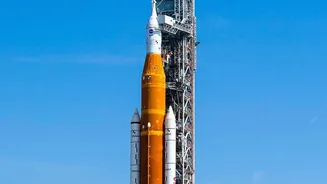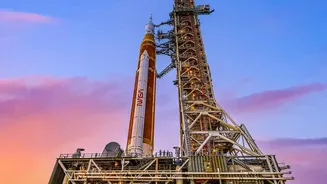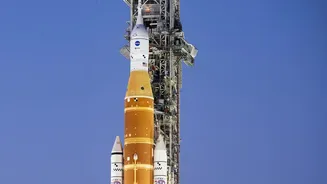








NASA has reshuffled its ambitious plans for returning humans to the Moon, confirming a major change: Artemis IV, not III, is now slated to be the mission that puts astronaut boots back on the lunar surface for the first time in over 50 years.
A Major Shift in Lunar Strategy
In a significant
strategy update, NASA has officially redesignated the Artemis IV mission as the next crewed lunar landing, now targeting early 2028. This move alters the sequence of one of the most anticipated space exploration endeavors of the modern era. Originally, Artemis III was set to carry the historic distinction of returning humans to the Moon. Instead, that mission will now serve as a complex, high-stakes dress rehearsal in low Earth orbit in mid-2027. The change reflects the immense technical challenges of the program and a strategic decision to de-risk the eventual landing by proving out critical systems closer to home first. Agency officials have framed the adjustment not as a simple delay, but as a tactical pivot to increase the chances of a safe and successful landing in 2028.
So, What Is Artemis III Now?
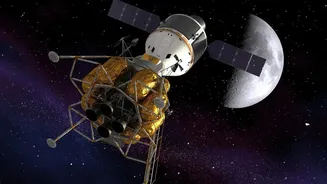
The mission once hailed as the grand return is now an essential but Earth-bound prelude. In 2027, the Artemis III crew will launch aboard the Orion spacecraft and perform a series of crucial tests in low Earth orbit. The main event will be practicing rendezvous and docking procedures with test versions of the two commercial Human Landing Systems (HLS) being developed by SpaceX and Blue Origin. This complex orbital ballet will involve three separate rocket launches in quick succession: a Blue Origin New Glenn rocket carrying a Blue Moon lander test article, a SpaceX Super Heavy-Starship, and NASA's own Space Launch System (SLS) carrying the four astronauts in Orion. The crew will enter the Blue Moon lander to test its life support and control systems but will only perform a docking test with the Starship. According to NASA's Artemis program manager, Jeremy Parsons, every part of this mission is designed to reduce risk before attempting the actual lunar landing.
The Logic Behind the Change
The decision to re-scope Artemis III was driven by the immense complexity and developmental hurdles of the Human Landing Systems. Rather than flying these unproven landers all the way to lunar orbit for their first crewed tests, NASA opted for a more cautious, Apollo 9-style approach, where key systems are validated in the relative safety of Earth orbit. This change was announced in early 2026, following recommendations from safety panels and internal reviews that flagged the original plan as potentially too ambitious. By inserting this orbital test flight, NASA can gather invaluable data on how the landers perform and interact with the Orion capsule, giving them time to resolve any issues before committing to a full-scale landing mission. This also allows NASA to keep both SpaceX and Blue Origin in the running, fostering competition and providing redundancy for the critical 2028 landing attempt.
The Ambitious Goals of Artemis IV
With the timeline reset, Artemis IV is now the main event, targeted for early 2028. This mission will mark the first human landing on the Moon since Apollo 17 in 1972. The plan involves launching four astronauts on an SLS rocket, traveling to lunar orbit, and having two crew members transfer to either a SpaceX Starship or a Blue Origin Blue Moon lander. They will then descend to the lunar South Pole, a region believed to hold deposits of water ice, a critical resource for future longterm habitation and rocket fuel production. The astronauts are expected to spend about a week on the surface conducting scientific experiments and technology demonstrations before returning to the Orion capsule for the journey home. NASA officials have stated that they may even attempt a second landing, Artemis V, later in any same year if all goes well.