


What Exactly Is Colour-Blocking?
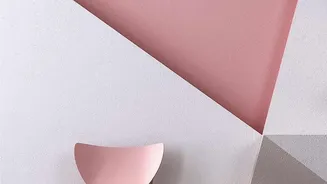
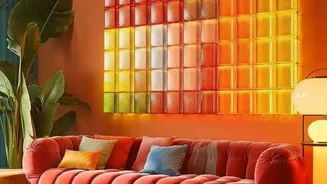
First seen on fashion runways, colour-blocking has confidently moved into interior design. The technique involves using distinct, solid blocks of colour, often in geometric shapes, placed next to each other to create a striking visual impact. Instead
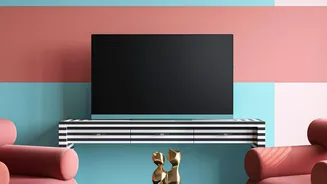
of patterns or gradients, it relies on the clean lines and deliberate placement of contrasting or complementary hues to define a space, highlight an architectural feature, or create a vibrant focal point. Think of it as using colour to build structure and rhythm in a room, where the shades themselves become the art. This approach can be as simple as a single, bold accent wall or as complex as a multi-coloured geometric mural.
The Genius of Removable Panels
This is where the trend becomes a game-changer for modern living, especially for renters or the design-indecisive. Instead of painting directly on your walls, you apply colour to large, lightweight panels that can be mounted and removed without a trace. This eliminates the fear of damaging walls or losing a security deposit. The panels offer total creative freedom with zero long-term commitment. You can experiment with daring colour combinations, and if you grow tired of the look or decide to move, you simply take the panels down. This approach makes a high-impact style accessible, affordable, and entirely reversible.
Getting Started: Your DIY Toolkit
Creating your own colour-blocked panels is a straightforward DIY project. First, choose your panels. Lightweight MDF boards, plywood sheets, or even large art canvases are excellent choices. You will also need your selection of paints—sample pots are often perfect for this—along with brushes or small rollers for a smooth finish. The most crucial component is your mounting solution. High-quality removable adhesive strips are ideal, as they provide a strong hold without damaging paint or drywall when it's time for a change. A measuring tape, pencil, and a spirit level will ensure your geometric designs are precise and perfectly aligned on the wall.
Choosing Your Perfect Palette
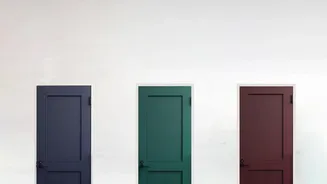
The success of colour-blocking lies in your colour choices. For a harmonious feel, you can use an analogous scheme with colours that sit next to each other on the colour wheel, like blue and green. For a more dynamic and high-contrast look, opt for complementary colours, which are opposites on the wheel, such as orange and blue. A popular design principle is the 60-30-10 rule: 60% of your space features a dominant colour, 30% a secondary colour, and 10% an accent shade. Don't be afraid to incorporate neutrals like white, grey, or black to balance out bolder hues and give the eye a place to rest.
Design and Layout Inspiration
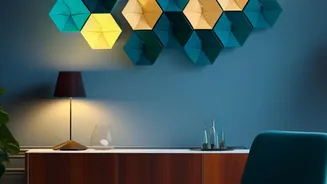
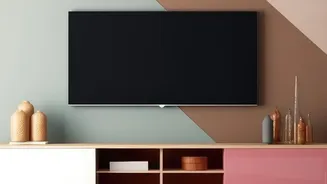
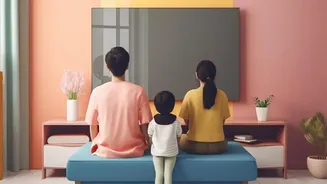
Once you have your painted panels, the creative part begins. You don’t have to stick to simple squares. Consider creating a series of vertical rectangular panels to give the illusion of height, or arrange different shapes in an asymmetrical cluster for an abstract, artistic feel. You can use panels to fake architectural features, like creating a colourful, oversized headboard behind your bed or framing a doorway to make a grand entrance. Another popular idea is to create a two-tone wall effect by aligning panels horizontally across the middle of the wall. The key is to see your wall as a blank canvas and the panels as your tools for building a unique composition that reflects your personal style.