






A Message of Continuity
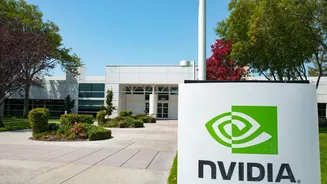
In a public statement that rippled through the tech industry, Nvidia's board announced that iconic founder and CEO Jensen Huang would be taking a temporary leave of absence for a personal health matter. While the company offered no specific timeline for his
return, the board moved swiftly to project stability, appointing Executive Vice President and Chief Financial Officer Colette Kress as Interim CEO. The statement emphasized the board's 'full confidence' in Kress and the existing leadership team to execute on the company's ambitious roadmap. For investors and the thousands of companies in India and worldwide that rely on Nvidia's technology, the message was clear: the mission has not changed. The AI engine that powers much of the modern digital economy is intended to keep running at full speed.
Who Is Colette Kress?
While not as publicly recognized as the leather-jacket-clad Huang, Colette Kress is a formidable figure in the tech world and a seasoned Nvidia veteran. She joined the company as CFO in 2013 after an extensive career in senior finance roles at giants like Microsoft, Cisco, and Texas Instruments. During her more than a decade at Nvidia, she has been instrumental in managing the company's finances through its explosive transformation from a gaming hardware specialist into a multi-trillion-dollar AI behemoth. Kress is known for her deep understanding of the company's operations and financial strategy, having worked closely with Huang to navigate its period of astronomical growth. Her appointment signals a choice for a steady and experienced hand on the tiller, someone who knows the company's intricate strategy inside and out, rather than an external disruptor.
Doubling Down on the AI Roadmap
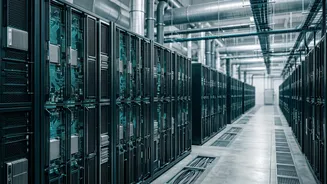
The core of the board's message is that Nvidia's strategic focus remains laser-sharp on dominating the AI computing landscape. The company's entire business model is built on providing the foundational hardware and software that enables the AI revolution, from massive data centres to generative AI applications. This is powered by its CUDA software platform, which has created a powerful ecosystem locking developers into Nvidia's hardware. The company's strategy involves a relentless, year-over-year improvement in performance, compelling customers to continually upgrade. In the days following the announcement, the company has reportedly reaffirmed its commitment to its product roadmap, including the rollout of its next-generation AI accelerators and continued investment in its Omniverse platform for creating 'digital twins'. This push is meant to assure partners and customers that no operational cadence will be missed.
Why This Matters for India and the World
Nvidia's stability is not just a concern for Wall Street; it's critical for the global tech ecosystem. The company's GPUs are the essential machinery for countless startups and established enterprises building AI products, including a burgeoning sector in India. Any perceived wobble at the top could have a cascading effect, creating uncertainty around supply chains and future technology access. So far, the market has reacted with caution but not panic, viewing the transition as a test of Nvidia's corporate maturity. The calm appointment of Kress, a respected internal leader, suggests a well-governed company with a deep leadership bench. It demonstrates that Nvidia may have evolved beyond being a company solely defined by its founder into an institution with resilient operational structures.