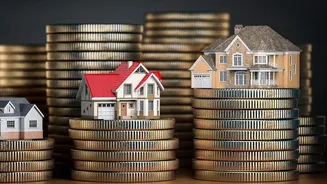








It’s the timeless dilemma for every Indian homebuyer: a spacious house on the outskirts or a compact flat in the heart of the city? This choice isn't just about square feet versus convenience; it's about designing your entire lifestyle.
The Case for a Bigger Home
The desire for
more space is a powerful motivator. For many, a larger home represents comfort, privacy, and the luxury of room to grow. This is especially true for joint families or those with growing children who need their own space. With the rise of hybrid work models, an extra room for a dedicated home office has shifted from a want to a need for many professionals. A bigger property often comes with the added perk of outdoor space—a balcony, a terrace, or even a small garden, offering a private retreat from the urban hustle. This appeals strongly to buyers who prioritise a certain quality of life and plan to live in the home for the long term. For them, the comfort and functionality that size provides can outweigh the benefits of a central address.
The Hidden Costs of Size
While a larger home in a developing area might seem like a bargain based on its price per square foot, the initial cost is only one part of the equation. Bigger spaces come with higher recurring expenses. Utility bills for electricity and water are naturally higher. Maintenance costs, from cleaning to repairs, also increase with size. Furnishing a large house can be a significant one-time expense that many buyers overlook. Then there's the 'time cost'. If the property is located on the city's periphery, daily commutes to work, schools, or for social engagements can become long and draining, eating into valuable family time. These ongoing financial and lifestyle costs need to be factored in to understand the true price of that extra space.
The Power of a Prime Location
Real estate experts have a mantra: 'you can change a house, but you can't change its location'. A prime location offers unparalleled advantages. The most obvious is connectivity—short commutes to business districts, airports, and railway stations save time and reduce stress. These areas typically have superior social infrastructure, including access to top-tier schools, hospitals, shopping centres, and entertainment options. From a financial perspective, properties in well-established locations tend to appreciate faster and hold their value better, even during market downturns. They also offer better liquidity, meaning they are easier to sell or rent out due to constant demand. For investors, this translates to higher rental yields and a more secure asset.
Thinking Beyond Price Per Square Foot
Focusing solely on the price per square foot can be misleading. It's a useful starting point but fails to capture the full picture of a property's value. Instead, homebuyers should consider a wider range of metrics. Look at the 'walkability score' and proximity to public transport like metro lines. Investigate the area's future development plans—new infrastructure projects can significantly boost a location's value over time. For investment purposes, calculating the potential rental yield (annual rent divided by property cost) is a much better indicator of performance than size alone. Finally, a property’s resale value is heavily tied to its location. A smaller home in a desirable, well-connected neighbourhood will often find a buyer much faster than a larger home in a less accessible area.
How to Make the Right Choice for You
There is no single correct answer in the size versus location debate; the right choice is deeply personal. Start by analysing your family's current and future needs over the next 5–10 years. If you have a large family or work from home frequently, size might be your non‑negotiable priority. However, if you're a young professional or a couple with a busy social life and long work commutes, the time and convenience saved by a prime location might be worth more than an extra bedroom. Create a checklist and rank your priorities: Is a short commute more important than a garden? Is proximity to good schools a must‑have? Is this a long‑term family home or a short‑term investment? Answering these questions honestly will provide a clear framework for your decision.