



What the New Policy Entails
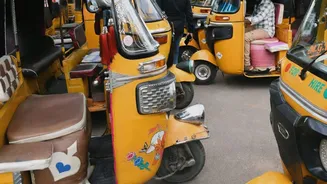
The Telangana state government has rolled out the 'Telangana Auto-Rickshaw Electric Conversion Scheme 2026', a ₹200 crore initiative designed to transform a significant portion of its urban transport fleet. The scheme specifically targets 18,766 petrol
and diesel-powered auto-rickshaws currently operating within Hyderabad's Core Urban Region Economy (CURE) area. Under this policy, eligible drivers will receive substantial financial aid to either convert their existing vehicles to electric or purchase new e-autos. The move is a key part of the state's 'Telangana Rising Vision-2047' and aims to steer Hyderabad towards becoming a net-zero carbon emissions city.
A Major Boost for Drivers' Wallets
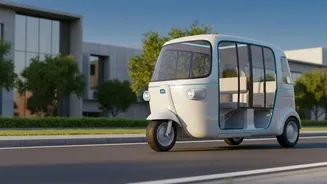
For the thousands of auto-rickshaw drivers navigating city streets daily, this scheme offers significant financial relief. The government is providing a subsidy of up to ₹1.5 lakh per vehicle. This financial assistance can be used in two ways. Drivers can opt to retrofit their current auto with an approved electric conversion kit, with the subsidy covering up to ₹1.5 lakh or the actual cost of the kit and installation, whichever is lower. Alternatively, a driver can choose to scrap their old petrol or diesel vehicle and purchase a brand new, factory-built electric auto-rickshaw, receiving a fixed subsidy of ₹1.5 lakh that will be deducted directly from the on-road price by the dealer. This directly tackles the high upfront cost of EVs, making the switch economically viable and helping drivers save significantly on daily fuel expenses.
How the Conversion Works
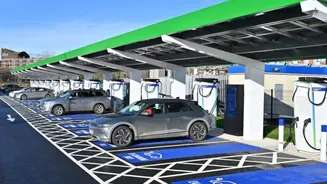
The process, known as retrofitting, involves removing the internal combustion engine (ICE), fuel tank, and exhaust system. In their place, certified technicians install an electric motor, a battery pack, a controller, and a charging system. The government has mandated that only AIS-123 approved electric kits from empanelled vendors can be used, ensuring safety and performance standards. Beneficiaries have the flexibility to choose between fixed or swappable battery systems, allowing them to either charge the vehicle at home or quickly swap out a depleted battery at a designated station, minimizing downtime. This structured approach ensures that the converted vehicles are safe, reliable, and legally compliant.
Driving Towards a Greener Hyderabad
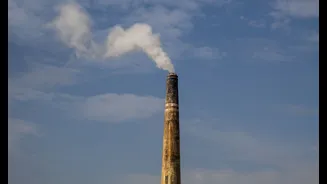
The environmental implications of this policy are substantial. The target fleet includes 11,254 diesel and 7,512 petrol autos, all of which are high-mileage vehicles contributing to urban air and noise pollution. By converting them to electric, the city can expect a marked reduction in tailpipe emissions, including harmful pollutants like nitrogen oxides and carbon monoxide. Auto-rickshaws are the backbone of last-mile connectivity in Hyderabad, and electrifying such a large number at once is a powerful step towards cleaner air and a reduced carbon footprint for the entire city. The scheme is a clear signal of the government's commitment to sustainable urban development.
Funding and Implementation
To ensure the scheme's successful implementation, a robust monitoring system has been proposed. A three-tier mechanism involving a State-Level Steering Committee, a Scheme Implementation Committee, and District Sanction Committees will oversee the process from approval to execution. The ₹200 crore budget for this initiative will be pooled from four different government departments, with the SC, ST, BC, and Minority Welfare departments each contributing ₹50 crore. This cross-departmental funding approach underscores the policy's broad social and economic objectives, ensuring that the benefits are accessible to eligible vehicle owners across all communities.