





A Ghost From the Pyramid Age
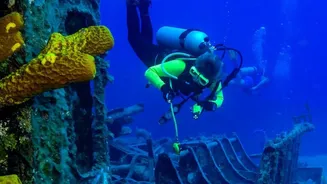
For nearly five millennia, the contents of a small merchant ship lay scattered and forgotten on the seabed. While the vessel's wooden hull has long since disintegrated, its precious cargo remained. Underwater archaeologists from Akdeniz University, led
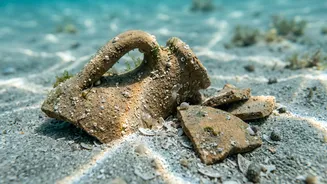
by Associate Professor Hakan Öniz, have been carefully excavating the site, which was first documented in 2024. What they have uncovered is staggering: the remains of what is potentially the world's oldest known shipwreck, dating back to a time when the Great Pyramid of Giza was being built in Egypt. The find, located in the hazardous but historically rich waters near Kekova, consists of more than 30 ceramic storage jars, known as amphorae, and three large stone anchors. This isn't just another wreck; it's a direct glimpse into a formative era of human civilization.
Unpacking an Ancient Cargo
The key to this discovery lies in the pottery. By analysing the shape, style, and decorative features of the flat-bottomed, two-handled jars, experts were able to date them to the Early Bronze Age, between 2700 and 2400 BCE. The style strongly resembles pottery found at other ancient sites across the Eastern Mediterranean, including in Egypt and the Levant. Preliminary analysis of the clay even suggests some of the jars were manufactured in workshops in the Jordan Valley. Even more remarkably, some of the amphorae still contain a viscous, glossy residue of what they once carried. While tests are ongoing, researchers speculate the cargo was likely valuable commodities such as olive oil or wine, crucial components of a bustling trade network that connected distant cultures long before the great empires of Greece and Rome.
Rewriting Maritime History
This discovery is significant because it provides rare physical proof of sophisticated, long-distance sea trade much earlier than previously thought. Most famous Bronze Age wrecks, such as the Uluburun shipwreck also found off Turkey, date to the Late Bronze Age, more than a thousand years later. The Kekova wreck pushes the timeline for organised maritime commerce back centuries. It suggests a 10-metre-long merchant ship was navigating a perilous route, possibly from the Levantine coast toward major hubs like Troy or Minoan Crete. The find proves that complex trade networks were thriving during the third millennium BCE, connecting cultures and economies across the sea. It fills a major gap in our understanding of how these ancient societies interacted and flourished.
Life at Sea, 4,700 Years Ago
Beyond trade goods, the wreck offers tantalising clues about the daily lives of its sailors. One unusual ceramic vessel was found with nine distinct markings and two holes in its body. Archaeologists have hypothesised that this might not have been for cargo but could have served as a churn for making butter or cheese. This theory opens the fascinating possibility that ancient mariners may have brought live animals, such as goats, on long voyages to provide a source of fresh milk and dairy. While this interpretation requires more evidence, it provides a potentially invaluable glimpse into shipboard routines and the resourcefulness of the world's earliest long-haul sailors.