





What Exactly is Nordic Walking?
Originating in Finland as a summer training method for cross-country skiers, Nordic walking is much more than just walking with poles. It involves a specific technique where specially designed poles are used to propel you forward. Unlike hiking or trekking
poles, which are primarily for stability, Nordic poles are an active part of the workout. The movement mimics cross-country skiing, with your arms and legs moving in opposition: as your right leg steps forward, your left arm swings to plant its pole behind you, pushing you onward. This simple addition transforms a lower-body activity into a comprehensive, total-body exercise.
A True Full-Body Workout
The key advantage of Nordic walking is its incredible muscle engagement. While regular walking primarily uses the muscles in your lower body, adding poles actively involves your upper body with every stride. Research shows that Nordic walking engages up to 90% of your body's muscles, compared to about 50% with regular walking. As you push off the poles, you recruit muscles in your arms, shoulders, chest, and back. It also activates your core as you work to maintain balance and posture, providing a much more holistic workout than a simple walk in the park.
More Power, Less Impact
One of the most significant benefits is its low-impact nature. For those with joint pain, arthritis, or who are recovering from lower-body injuries, high-impact activities like running can be challenging. The poles help to distribute your body weight, reducing the stress on your hips, knees, and ankles. This allows you to increase your workout intensity and reap cardiovascular benefits without the punishing impact on your joints. Studies show it can be an excellent cardio option for people who deal with joint pain, providing support and stability while still building strength.
Boost Your Calorie Burn
Activating more muscles requires more energy, which translates to a higher calorie burn. Depending on the intensity and your technique, studies have found that Nordic walking can burn anywhere from 20% to over 45% more calories than regular walking at the same pace. This means you can get a more efficient workout in the same amount of time. Interestingly, many people report that despite the increased energy expenditure, their perceived level of exertion doesn't feel significantly higher. You work harder and burn more calories without necessarily feeling like you are.
Gearing Up and Getting Started
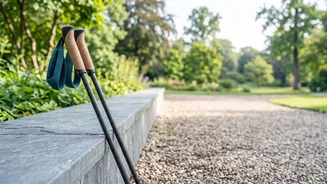
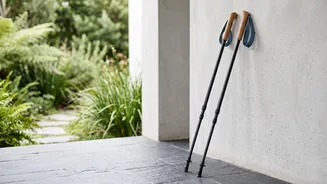
To begin, you'll need the right equipment. It's crucial to use poles specifically designed for Nordic walking, not trekking or ski poles. Nordic poles are lighter and feature a special glove-like strap system that allows you to push off through the strap without maintaining a tight grip. The basic technique involves maintaining good posture and coordinating your opposite arm and leg. Plant the pole at an angle behind you and push off to propel yourself forward. To ensure you learn the correct form and maximise the benefits, consider looking for a certified instructor or local walking group in your area.