






Valuing Vision Over Spreadsheets
At the heart of the discussion is a framework that prioritizes long-term, transformative potential over conventional financial metrics. Instead of focusing solely on present-day revenue, profits, or cash flow, this valuation model looks at a company’s
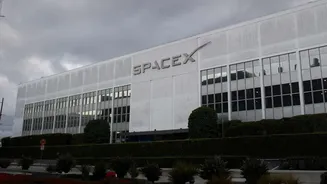
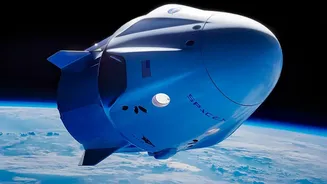
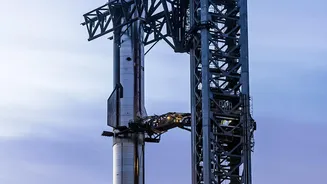
progress toward audacious, industry-defining goals. For a company like SpaceX, this means its value is tied less to its current launch contracts and more to its progress in developing fully reusable rockets like Starship or making humanity a multi-planetary species. Musk has stated that space-based industries could eventually exceed the value of Earth's entire economy, a belief rooted in the potential to harness vast off-world resources and energy. This is a fundamental departure from how Wall Street typically assesses a company's worth, swapping near-term certainty for a bet on a paradigm-shifting future.
A Break from Traditional Metrics
Traditional valuation relies on quantifiable data. Analysts look at price-to-earnings (P/E) ratios, discounted cash flows, and enterprise value to EBITDA multiples to ground a company's worth in its current and projected financial health. These methods work well for established industries with predictable growth. However, proponents of the new space economy argue these metrics fall short when applied to companies building entirely new markets. The space industry is characterized by massive upfront capital costs and long, uncertain payback periods. Valuing a company on its ability to reduce the cost of launching mass to orbit or to build a self-sustaining city on Mars requires a different kind of calculus—one that treats vision and engineering milestones as key performance indicators.
Fuel for Ambitious, Long-Term Goals
The primary advantage of this forward-looking valuation is that it attracts patient capital. When investors buy into the long-term vision, it liberates companies from the pressure of delivering quarterly profits at the expense of groundbreaking research and development. This allows them to undertake generational projects, like building lunar habitats or asteroid mining infrastructure, that would be untenable under a more conservative financial model. It creates a financial environment where the goal is not just to build a successful business, but to build the foundational infrastructure for an entire off-world economy. By pricing in the potential of future markets, from orbital data centers to in-space manufacturing, this model provides the financial fuel needed to turn science fiction into reality.
The Inherent Risks of a 'Vision-Driven' Bubble
However, this approach raises serious questions and carries significant risks. The main criticism is that it's highly speculative. Valuations based on a 50-year plan to colonize Mars are inherently subjective and difficult to verify, creating the potential for a massive investment bubble. If key technological milestones are not met on time, or if the projected markets fail to materialize, these sky-high valuations could collapse, potentially harming the entire sector. Critics, including famed short-seller James Chanos, have sarcastically noted that this framework implies a nearly infinite total addressable market, a classic red flag for overvaluation. Furthermore, it creates immense pressure, as a company's valuation becomes less about its current operational stability and more about maintaining belief in a distant, unproven future.
Shaping the Future of the Space Economy
Regardless of its risks, this valuation philosophy is already shaping the space industry. It sets a precedent for how startups and established players alike communicate their ambitions to investors. The global space economy is projected to grow into a multi-trillion-dollar market, moving from around $630 billion in 2023 to an estimated $1.8 trillion by 2035. Companies that can successfully sell a long-term vision may find it easier to secure funding compared to those with more modest, predictable business plans. This could accelerate innovation but also lead to a market where grand narratives are rewarded more than solid, incremental progress. The debate over how to properly value these enterprises will ultimately determine the pace, scale, and stability of humanity's economic expansion into the final frontier.