








A New 'Eye in the Sky'
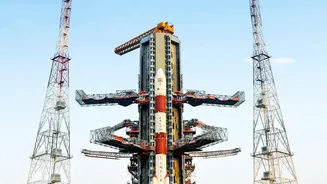
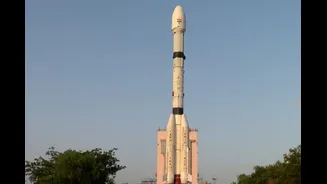
In the early hours of September 4, 2026, ISRO's Geosynchronous Satellite Launch Vehicle (GSLV-F17) lifted off from the Satish Dhawan Space Centre in Sriharikota. The rocket successfully placed the EOS-05, an advanced Earth observation satellite, into
its intended sub-geosynchronous transfer orbit. Weighing 2,367 kg, EOS-05 is a state-of-the-art satellite that marks ISRO's first successful launch of 2026, providing a much-needed morale boost after a few setbacks. The mission's success is a testament to the reliability of the GSLV, once nicknamed the “naughty boy,” which has now proven its capability to handle heavy and complex payloads.
What Makes EOS-05 Special?
Unlike most Earth observation satellites that circle the planet in low-Earth orbits, EOS-05 is destined for a geosynchronous orbit approximately 36,000 km above the Earth. This high perch allows the satellite's orbital period to match Earth's rotation, enabling it to continuously monitor a large portion of the Indian subcontinent. Scientists have described it as an 'eye in the sky' for its ability to provide near-real-time imagery. This is a significant leap for India, placing it among a select group of nations with the capability for geostationary imaging. This mission finally delivers on a capability that faced delays and a previous launch failure in 2021, making this success even more meaningful.
Tangible Benefits for India
The data from EOS-05 is expected to have a wide range of applications that benefit the nation. Its ability to provide continuous, high-resolution imagery will be invaluable for disaster management, allowing for the real-time tracking of cyclones, floods, and forest fires. The satellite will also be a major asset for agriculture, helping monitor crop health and water resources. Furthermore, the mission enhances India’s capabilities in urban planning, infrastructure development, and national security, as the dual-use nature of such technology provides strategic data for various national activities.
The Bigger Picture: ISRO's 2026 Agenda
The EOS-05 launch is the first of many planned for ISRO in a packed 2026 schedule. The agency is reportedly planning up to 27 missions this year, a signal of its operational maturity and ambition. A key highlight for the year is the first uncrewed flight of the Gaganyaan mission, India's human spaceflight programme. This critical test will validate the launch vehicle and crew module before astronauts are sent into orbit. Other planned launches include commercial missions using the workhorse PSLV and the deployment of navigation satellites to bolster the NavIC constellation, reinforcing India's position as a reliable and cost-effective player in the global space market.