
The Blackout Problem
For decades, communicating with missions on or around the Moon has relied on a direct line of sight to Earth. If you can't see Earth, you can't talk to it. This creates major problems. The far side of the Moon is in a perpetual communication blackout,
making exploration there incredibly difficult. Even at the lunar South Pole, a key target for future Artemis missions due to potential water ice, the Earth hangs low on the horizon. Hills, craters, and the Moon's own rotation can easily block the signal, creating intermittent and unreliable contact. For missions involving astronauts living and working on the surface, these blackouts are not just an inconvenience; they are a significant safety risk. This old method simply can't support the ambition of a permanent human presence.
Building a 'Lunar-Net'
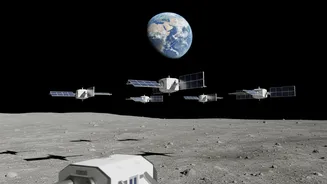
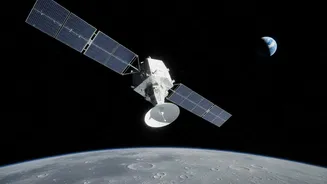
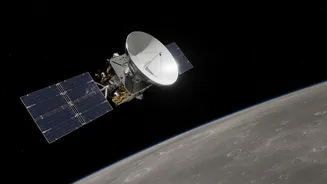
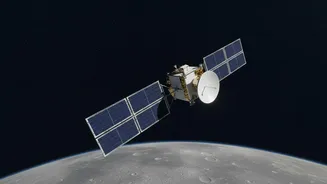
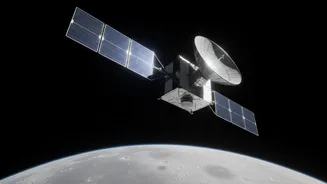
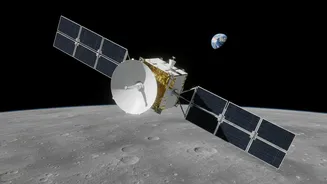
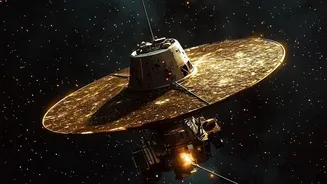
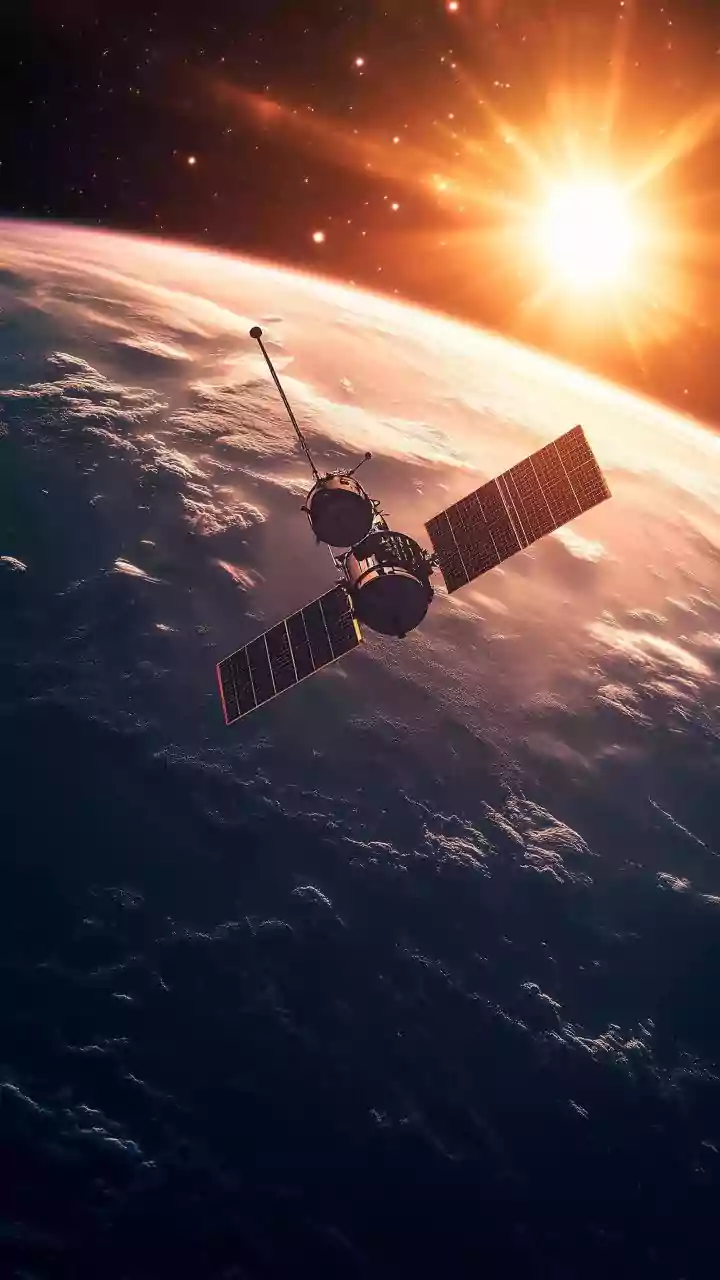
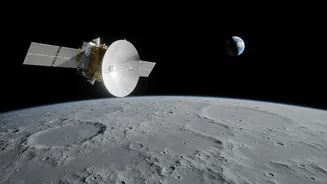
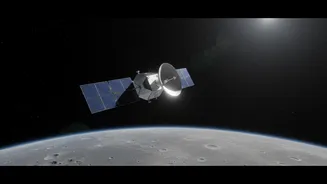
NASA's solution is to create a dedicated communications and navigation network around the Moon, much like the satellite networks we rely on for GPS and mobile data on Earth. The initiative, part of a framework called LunaNet, involves placing a constellation of relay satellites in lunar orbit. These satellites will act as go-betweens, bouncing signals from lunar missions back to Earth and vice versa. This new approach is being managed by the Lunar Communications Relay and Navigation Systems (LCRNS) project. Instead of building and operating the entire system itself, NASA is partnering with commercial companies to provide these services, creating a new pillar of the emerging lunar economy. The goal is a robust, interoperable network that any mission, whether governmental or commercial, can use.
How the System Works
The core of the plan involves commercial partner Intuitive Machines launching a series of small satellites to form this vital network. These relays will ensure that no matter where an astronaut or rover is on the Moon, at least one satellite is in view and able to connect them back to Earth. This eliminates the far-side blackout and provides continuous coverage at the poles. Beyond just communication, the network will also provide PNT (Positioning, Navigation, and Timing) services, essentially a GPS for the Moon. This will allow astronauts and rovers to navigate the challenging lunar terrain with unprecedented precision. While initial systems will use tried-and-true radio frequencies, NASA is also looking ahead to optical laser communications, which can transmit far more data—think streaming high-definition video from the lunar surface.
The Artemis Game-Changer
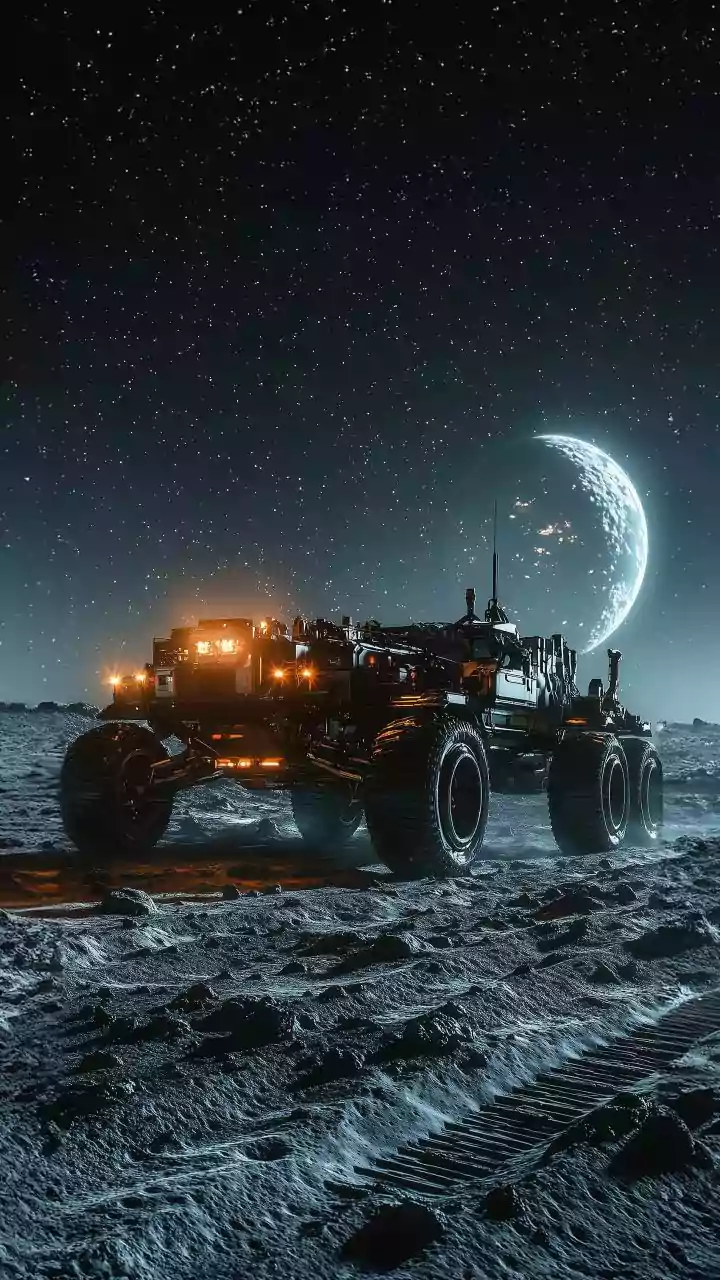
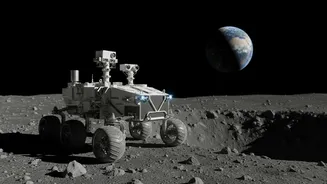
This lunar network is a foundational element for the success of NASA's Artemis program. For astronauts living in a future moon base, it means constant, reliable contact with Mission Control, access to critical data, and even the ability to make calls home. For scientists, it means a firehose of data from rovers and experiments, rather than a trickle. Missions like the Cooperative Autonomous Distributed Robotic Exploration (CADRE) will test how small rovers can use a local mesh network to communicate with each other, autonomously exploring an area without constant human input—a capability that relies on a stable connection to a lander, which in turn will connect to the larger relay network. Ultimately, this infrastructure transforms the Moon from an isolated outpost into a connected, operational base for science and exploration.
Blueprint for Mars
The technologies and strategies being developed for the Moon are not just for lunar exploration. NASA explicitly views this lunar network as a dress rehearsal for an even greater challenge: Mars. A similar relay network will be essential for supporting astronauts on the Red Planet, where the communication delays are much longer and the challenges far greater. By partnering with commercial industry to build the lunar network, NASA is creating a sustainable and scalable model that can be adapted for future deep-space destinations. This incremental approach—proving the technology and the business model at the Moon first—is a crucial and cost-effective way to build the infrastructure needed for humanity to become a multi-planetary species.