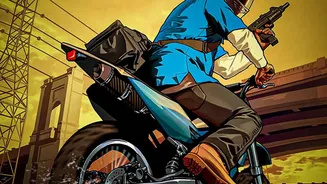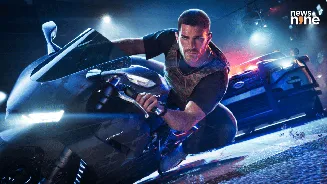







It's the most anticipated game in a generation, and the wait has felt endless. But the thirteen-year gap between GTA V and GTA VI wasn't empty. Here's a behind-the-scenes look at the monumental effort that went into building a modern masterpiece.
A Legacy of Sky-High Expectations
To understand
the journey of Grand Theft Auto VI, you first have to appreciate the shadow cast by its predecessor. Grand Theft Auto V, released in 2013, wasn't just a game; it was a cultural phenomenon that sold over 230 million copies and generated billions, becoming one of the most profitable entertainment products of all time. Following that kind of success created immense pressure. Rockstar Games couldn't just release another sequel; they had to deliver a generational leap forward. This set the stage for a development cycle that would be defined by unprecedented ambition, scale, and a relentless pursuit of quality that would test the limits of modern game creation.
More Than a Decade in the Making
While the game officially launched on November 19, 2026, its origins trace back much further. Preliminary work and research trips to Miami began as early as 2015 under the codename 'Project Americas'. However, full-scale production didn't ramp up until after 2018, once Rockstar's other mammoth project, Red Dead Redemption 2, was completed. Many of the resources and developers from that game were then transitioned to GTA VI. This means that while thirteen years passed between titles, the core development spanned roughly eight years of intensive, large-scale production involving a global team that swelled from around 2,400 to nearly 5,000 people.
The Unprecedented 'Behind-the-Scenes' Leak
In September 2022, the game's secretive development was thrust into the spotlight by one of the largest leaks in video game history. Unfinished footage of the game flooded the internet, confirming the Miami-inspired setting of Vice City, the dual protagonists Jason and Lucia, and various new gameplay mechanics. While a nightmare for Rockstar, the leaks gave the public an unauthorized and raw glimpse into the game's intricate systems, from advanced NPC behavior to more realistic physics. The footage, though from an early build, revealed a level of detail that only fueled the already massive hype. It also confirmed that the development was as ambitious as the rumours suggested, with features like a 'greet and antagonise' system returning from Red Dead Redemption 2.
Building the World of Leonida
Creating the fictional state of Leonida, with Vice City at its heart, was a colossal task. The initial plan for 'Project Americas' was even larger, envisioning large parts of North and South America before being scaled back to focus on a more detailed and rich single region. The goal was extreme realism. Developers went on research trips to Miami, riding with police and taking aerial shots to capture the city's essence. The level of detail extended to every aspect of the world. According to one report, creating the sheer number of unique nonplayer characters (NPCs) initially 'horrified' management. In response, Rockstar established a dedicated studio in Los Angeles just to work on NPCs, ensuring they had individual identities, varied body types, and realistic behaviours, a significant leap from the more generic crowds of past games. The team art-directed over 600,000 animations, a massive increase from GTA V's 55,000, to make the world feel alive.
A Shift in Culture and Production
The long development was also shaped by internal factors. After the departure of cofounder Dan Houser, the project's leadership was divided among three key figures, which at times led to slower decisionmaking. Furthermore, Rockstar reportedly made a conscious effort to move away from the intense 'crunch culture' that had been alleged during the development of Red Dead Redemption 2, offering better overtime compensation and a more sustainable work environment. This cultural shift, combined with disruptions from the COVID‐19 pandemic, contributed to a longer but healthier development cycle. The game saw two official delays, moving from an initial 2025 window to its final November 2026 release, with Rockstar consistently stating the extra time was needed to achieve the level of polish fans expect.