






India's New Space Dreamers
While the Indian Space Research Organisation (ISRO) has long been the nation's pride in space exploration, a new wave of private companies is now entering the arena. Among the most ambitious is Bengaluru-based EtherealX Exploration Guild, founded in 2022
by Manu J. Nair, Shubhayu Sardar, and Prashanth Sharma. Unlike many startups focused on smaller satellites or components, EtherealX has its sights set on one of the industry's biggest challenges: building a reliable, medium-lift rocket that can be used over and over again. Their goal is to break the dependency on a few dominant global players and create an indigenous, cost-effective solution for launching satellites into orbit. This vision has attracted significant investor attention, with the company raising over $28 million in funding from notable firms to fuel its development.
The Razor Crest Mk-1: A Game-Changing Rocket
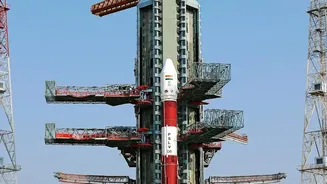
The centerpiece of EtherealX's strategy is its launch vehicle, named Razor Crest Mk-1. This isn't just another rocket; it's designed to be the world's first fully reusable medium-lift launch vehicle. While companies like SpaceX have mastered reusing the first stage of their rockets, the upper stage is typically discarded after each flight. EtherealX aims to recover both stages, a feat that could dramatically lower the cost of accessing space. The Razor Crest Mk-1 is being engineered to carry significant payloads—up to eight tonnes or more—to various orbits, including Low Earth Orbit (LEO) and even trans-lunar injection orbits. This capability positions it to serve the growing demand for deploying large satellite constellations and other commercial and institutional missions.
The Tech That Makes It Possible
Achieving full reusability is an immense technical challenge, primarily due to the extreme heat generated when a vehicle re-enters Earth's atmosphere. EtherealX believes it has a novel solution with its proprietary Full-flow Segregated Cooling Cycle (FSCC) engine architecture. In simple terms, this system uses the rocket's own propellant as a coolant during re-entry. This innovative approach is designed to manage the intense thermal stress without relying on heavy, traditional heat shields, thus making the vehicle lighter and more efficient. According to the company, this unique engine design is a critical element in making the recovery and reuse of the upper stage economically and technically feasible, a hurdle no one has commercially cleared before.
The Economics of an Indian Space Race
The primary driver behind the push for reusable rockets is economics. Traditional, expendable rockets make space launches incredibly expensive. By reusing the most costly components, EtherealX aims to drastically slash the cost per kilogram to orbit, potentially lowering it to a range of $500 to $1,000 per kilogram. This would be a significant reduction from current averages and would make India a highly competitive player in the global launch market, which is projected to grow substantially. With a vision to operate a small fleet of rockets capable of 60 to 80 launches a year, the startup is not just building hardware; it's building a high-cadence launch service designed to offer reliable and affordable access to space.
Challenges and the Road Ahead
The path EtherealX is on is fraught with challenges. Developing a new rocket engine from scratch is a monumental task, and the company has acknowledged the risks involved in its ambitious approach. The startup is competing in an ecosystem that includes other fast-moving Indian players like Skyroot Aerospace and Agnikul Cosmos, as well as established global giants. However, EtherealX is moving forward with a clear timeline, targeting engine tests in late 2026 and a potential technology demonstrator flight in 2027. The company has already reported signing launch Memoranda of Understanding (MoUs) with potential customers, indicating early market confidence in its vision. The journey of EtherealX is more than just a corporate story; it represents a pivotal moment for India's private space sector, a testament to the nation's growing prowess in deep-tech innovation and its ambition to claim a larger stake in the final frontier.