






The Changing Face of Lung Cancer
For decades, lung cancer was overwhelmingly considered a smoker's disease. In Delhi's clinics, however, that narrative is rapidly and tragically changing. Doctors across the National Capital Region are reporting a dramatic surge in lung cancer diagnoses
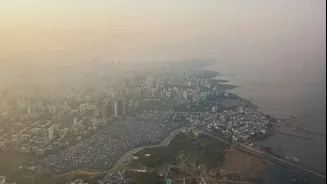
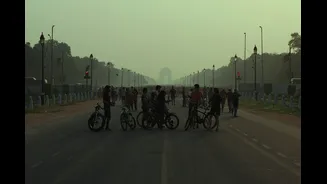
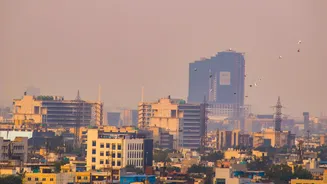
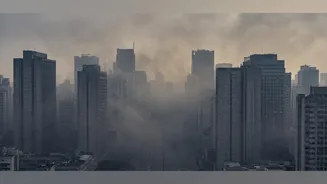
among patients who have never touched a cigarette in their lives. Where smokers once made up nearly 90 percent of patients, some hospitals now report that non-smokers account for up to half of their lung cancer cases. This disturbing trend is affecting younger people and a disproportionate number of women, fundamentally altering the patient profile for one of the deadliest cancers. The one common factor linking these new patients is a lifetime spent breathing some of the world's most polluted air. The conclusion from the medical community is becoming unavoidable: breathing the air in Delhi now carries a significant risk for developing lung cancer.
From Smog to Cell: The Scientific Link
The primary culprit is a microscopic pollutant known as PM2.5 — particulate matter so fine it is about 30 times smaller than the width of a human hair. Sourced from vehicle exhaust, industrial emissions, and construction dust, these particles are too small for the body's natural defences to filter out. They penetrate deep into the lungs and can even enter the bloodstream. Groundbreaking research has revealed exactly how this exposure can initiate cancer. Scientists have found that these pollutant particles don't necessarily cause damage by directly mutating DNA, as tobacco smoke does. Instead, they act as a trigger, causing inflammation that 'wakes up' dormant, pre-existing mutations in lung cells. Specifically, air pollution has been shown to promote the growth of cells with EGFR mutations, which are commonly found in lung cancers affecting non-smokers. The pollution-driven inflammation causes these cells to multiply uncontrollably, eventually forming a tumour.
A 'Smoker's Disease' No More
The type of cancer increasingly seen in Delhi's non-smoking patients, known as adenocarcinoma, further strengthens the link to pollution. This specific subtype is more commonly associated with environmental factors rather than smoking. The International Agency for Research on Cancer has classified outdoor air pollution as a Group 1 carcinogen, placing it in the same high-risk category as asbestos and tobacco smoke. For Delhi's residents, this is more than a statistic. Some health experts have drawn a shocking comparison, estimating that on a high-pollution day, breathing the city's air can be equivalent to smoking 10 cigarettes. While the analogy is a way to communicate risk rather than a direct equivalence, it underscores the severe, cumulative damage being inflicted on the lungs of millions who have made a conscious choice to avoid smoking.
An Urgent Public Health Crisis
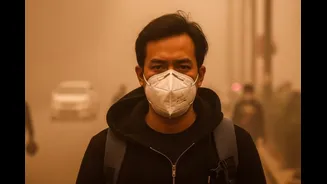
The medical community's warning is clear: Delhi is facing a public health emergency that extends far beyond seasonal respiratory illnesses. While individual measures like wearing N95 masks and using indoor air purifiers can reduce personal exposure, doctors stress these are temporary, personal solutions to a systemic crisis. The rising tide of lung cancer among non-smokers is a stark symptom of a much larger environmental problem that cannot be solved at the individual level. Experts are calling for urgent and sustained policy action to curb pollution at its source, arguing that without significant government intervention, the health of the city's residents will continue to be jeopardised. The focus needs to shift from simply managing the annual pollution season to implementing year-round strategies that ensure clean air for all.