

A Tale of Three Pairs
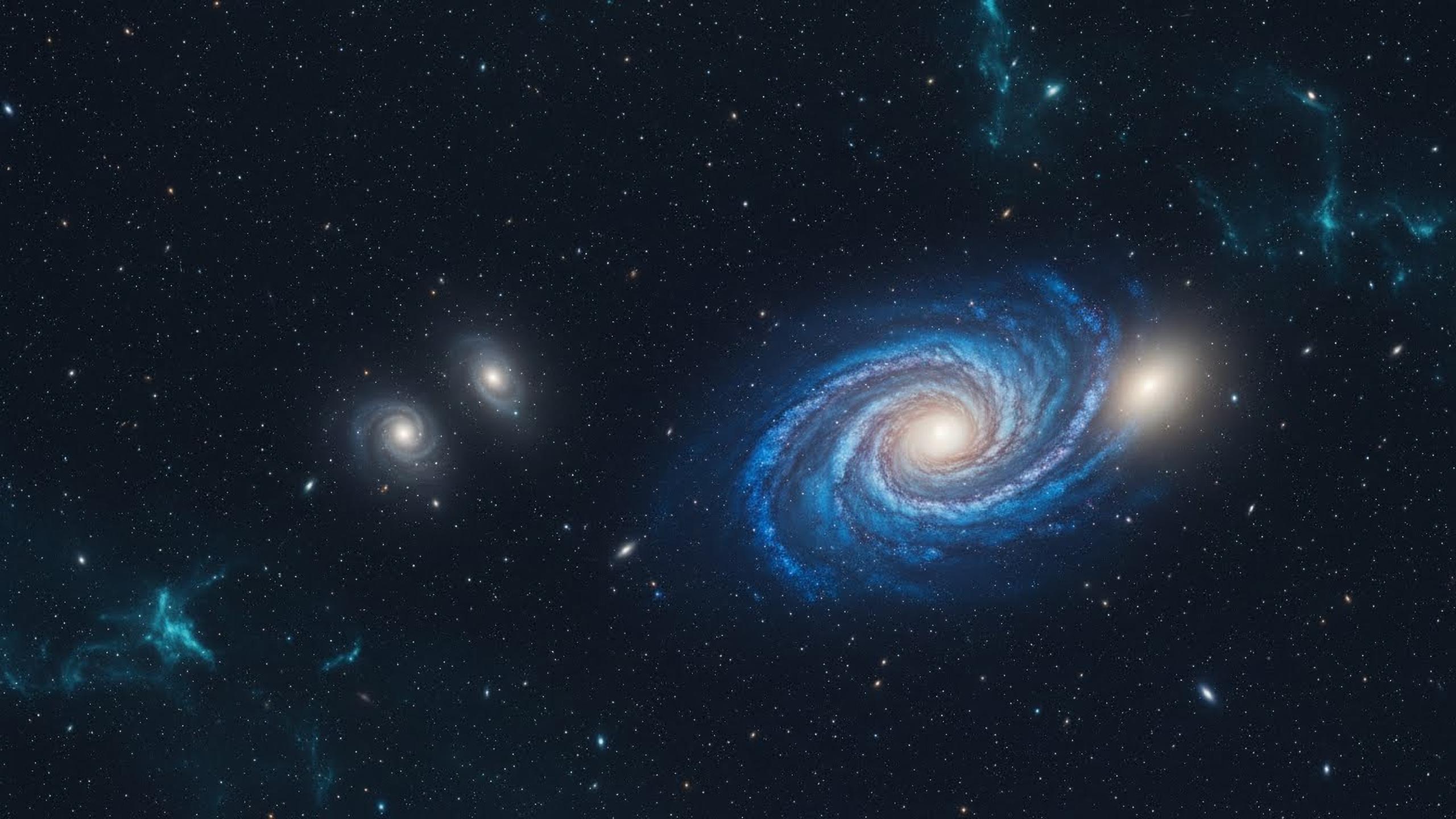
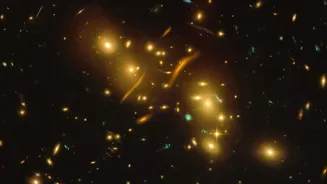
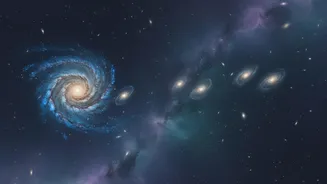
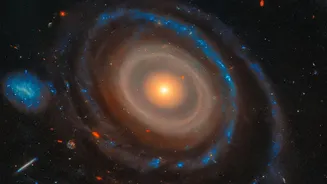
Imagine looking at a photograph with three sets of twins. At first glance, they might seem identical, but with a closer look, you notice key differences. That's the essence of a remarkable image released by NASA, showcasing three distinct pairs of galaxies
within the Centaurus Galaxy Cluster. This single view isn't about one phenomenon but several. Each pair tells a different story about proximity, interaction, and the grand, slow dance of cosmic evolution. By presenting these pairs together, astronomers offer a powerful visual lesson in how to interpret the complex relationships between the celestial objects we see.
Pair One: A Trick of Perspective
The topmost pair in the image features two galaxies that appear to be companions. However, this is likely a cosmic illusion. Much like holding a finger close to your eye can make it seem larger than a distant building, these two galaxies are probably not interacting at all. They just happen to line up from our vantage point on Earth. One of these, NGC 4650A, is a rare polar ring galaxy, its unusual structure possibly the remnant of a past galactic collision, but its apparent partner is just a passerby in the vastness of space. This pair serves as a crucial reminder that in astronomy, what looks close isn't always close at all.
Pair Two: Close, But Not That Close
In the middle of the frame, two more galaxies seem to be on the verge of a gravitational handshake. The larger galaxy, NGC 4650, is a spiral with a bright bar of stars at its core. While they appear to be interacting, analysis of their relative speeds suggests they are not gravitationally bound in a way that would lead to a merger anytime soon. This second pair demonstrates another layer of cosmic perspective: even when galaxies are relatively near each other in a cluster, their individual paths and velocities determine their fate. They are neighbors, but not yet dance partners.
Pair Three: A Cosmic Collision in Progress
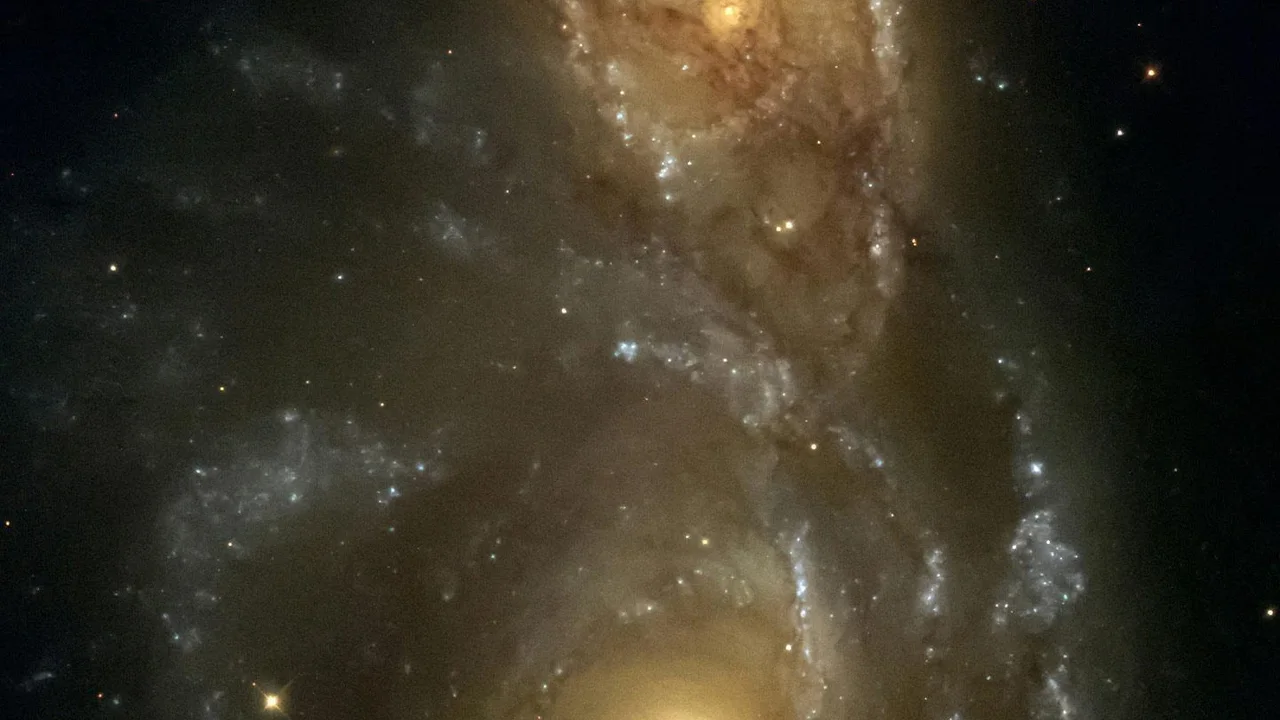
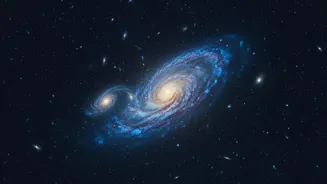
The third pair, at the bottom, is where the real action is. These two galaxies, NGC 4622A and NGC 4622B, are actively interacting. Pulled together by immense gravitational forces, they are in the slow-motion process of a galactic merger. Over the next billion years or so, they are expected to coalesce into a single, larger galaxy. This type of event is a fundamental driver of galaxy growth in the universe. Observing a merger in progress allows astronomers to test theories about how the largest galaxies, including our own Milky Way in the distant future, are formed.
One View, Multiple Lessons
This single image masterfully illustrates the challenges and rewards of measuring the universe. Distinguishing between a true interacting pair and a simple line-of-sight alignment is a fundamental task for astronomers. By studying the light, shape, and motion of galaxies, scientists can build a three-dimensional map of the cosmos from two-dimensional images. This composite view of the Centaurus Cluster acts as a perfect field guide, showing a chance alignment, a near-miss, and a direct hit all at once. It encapsulates how perspective is everything and that, in space, appearances can be deceiving, intriguing, or a clear window into cosmic destiny.