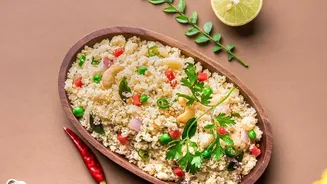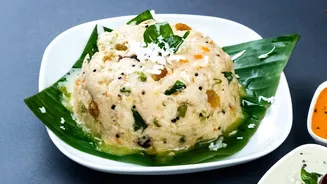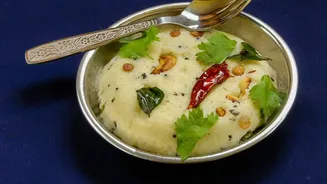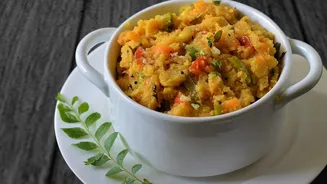



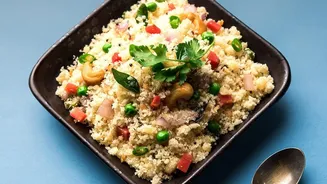
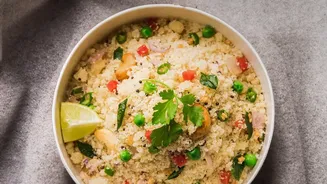
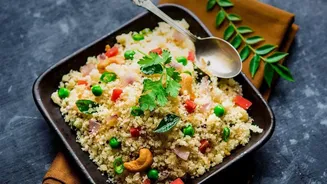
The Sooji Standard
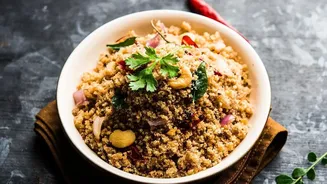
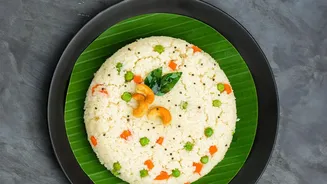
Before exploring its many forms, it helps to know the baseline. The most widely recognized version of upma is made with dry-roasted semolina, or rava, also known as sooji. The classic preparation involves a tempering of mustard seeds, lentils like urad
dal, curry leaves, and perhaps some chopped onion and green chillies in hot oil or ghee. Boiling water is then added to the roasted rava, which is cooked until it becomes a soft, fluffy porridge-like dish. This version is cherished for its simplicity and serves as a canvas for countless variations across the country. Every home might have its own small tweak, but this fundamental recipe is the starting point for a much larger culinary journey.
Karnataka's Spicy Sibling: Khara Bath
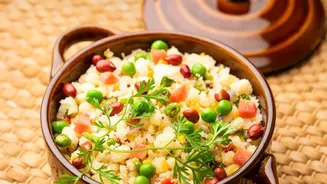
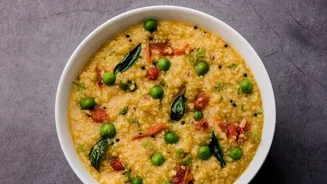
Travel to Karnataka, and you will find upma’s bolder, spicier sibling: Khara Bath. While often used interchangeably with the word 'upma' in cities like Bengaluru, Khara Bath is distinct. It features a more generous helping of vegetables like tomatoes, beans, and carrots, but its true signature is the addition of a fragrant spice powder. This is often vangi bath powder or a house-made masala blend containing spices like cinnamon, cloves, and coriander, which gives the dish a reddish-yellow hue and a complex, savoury taste that sets it apart from its simpler counterpart. It is famously served alongside a sweet semolina dish called Kesari Bath, a combination beloved as 'Chow Chow Bath'.
The Maharashtrian Method
In Maharashtra, the dish, often called Sanza, strikes a delightful balance of flavours. Maharashtrian upma often includes onions and a standard tempering, but a pinch of sugar is frequently added to balance the saltiness, creating a subtle sweet-and-sour profile that is rounded out with a final squeeze of lemon juice and a garnish of freshly grated coconut. The texture is also key; cooks aim for a 'suth-suthith' consistency, where each grain of rava is perfectly plumped and separate. Loaded with vegetables, this version makes for a hearty and nutritious meal that is both quick and filling.
Tamil Nadu's Tiffin Treasure
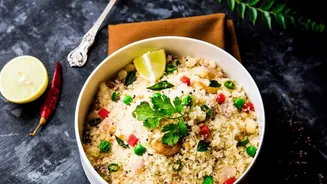
In Tamil Nadu, upma is a cornerstone of 'tiffin' culture. Here, the dish often has a soft, fluffy texture and can be simpler in its preparation. While vegetables can be included, a classic version might focus on the core flavours of ginger, green chillies, and curry leaves. A notable regional twist is the generous use of lemon juice, which gives the upma a bright, tangy finish that is incredibly refreshing. It is rarely served alone; instead, it is commonly accompanied by coconut chutney, sambar, or a spicy pickle, transforming a simple dish into a complete and satisfying meal.
A Universe of Grains
The adaptability of upma is not just limited to spices and vegetables but extends to the very grain it is made from. While semolina is most common, the fundamental technique of tempering and cooking a grain in salted water works with numerous alternatives. Vermicelli (semiya) upma is a popular light and fluffy version. In many households, you will find upma made from broken wheat (dalia), rice rava (arisi upma), or even flattened rice flakes (aval upma). Health-conscious cooks are also turning to millets like jowar (sorghum) and other whole grains, creating nutritious and flavourful variations that keep the spirit of the original dish alive while offering new textures and benefits.