








An Unrelenting Assault
The scale of the threat is immense. According to the Food and Agriculture Organization of the United Nations (FAO), an estimated 489 million hectares of forest were lost between 1990 and 2025. Today, more than 460 million hectares are considered degraded.
The primary driver of this destruction is agricultural expansion, which accounts for roughly 80% of all deforestation. The global demand for commodities like beef, soy, palm oil, and coffee continues to fuel the conversion of vibrant forests into farmland. Beyond agriculture, logging, infrastructure projects, mining, and increasingly frequent and severe wildfires add to the pressure, creating a complex web of threats that is pushing these vital ecosystems to their limits.
The Promise and Peril of Restoration
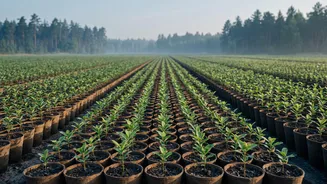
In response to this crisis, a global movement to restore degraded landscapes has gained momentum. The FAO's recent 'State of the World's Forests 2026' report highlights that 91 countries have committed to restoring over 190 million hectares. Forest and landscape restoration is championed as a powerful, cost-effective solution that can improve food security, combat climate change, and protect biodiversity. The potential benefits are staggering; estimates suggest that restoring degraded land could generate trillions of dollars in economic benefits annually through services like cleaner water and healthier soils. However, there is a vast and growing gap between these ambitious pledges and the reality on the ground. Progress is happening, but it is not at the scale or pace needed.
Why Restoration Is Falling Short
Several major barriers are hindering progress. A chronic lack of funding is arguably the biggest obstacle; a 2022 survey found that 95% of forestry teams worldwide do not have sufficient funds to carry out their work. This prevents them from securing land, staff, and essential resources like a reliable supply of native seeds. Furthermore, restoration is a complex, long-term process that requires deep engagement with local and Indigenous communities, who are often the most effective stewards of the land but may lack secure legal rights to it. Without coherent policies, sustained political commitment, and inclusive governance that empowers local people, even the best-intentioned projects are likely to fail.
The View from India
While India has reported national gains in forest cover, the picture is more complicated. Much of this increase is attributed to plantations, which do not offer the same biodiversity benefits as natural forests. At the same time, ecologically crucial areas like the forests of the Northeast are experiencing significant losses, impacting everything from local water sources to the intensity of floods in the Brahmaputra basin. India has made substantial commitments, pledging to restore 26 million hectares by 2030 under the Bonn Challenge. However, the country also faces the challenge of balancing development needs, with hundreds of thousands of hectares of forestland approved for diversion for mining and infrastructure projects in recent years. This mirrors the global tension: the simultaneous push for restoration and the continued destruction of existing forests.