



Location, Location, Subduction
Japan's unique geological position is the primary reason for its high frequency of earthquakes. The country is situated on the western edge of the Pacific Ring of Fire, a massive horseshoe-shaped arc stretching around the Pacific Ocean that accounts for about
90% of the world's earthquakes. This zone is not just a line on a map; it's a dynamic area where several of the Earth's massive tectonic plates meet, grind against each other, and collide. For Japan, this is an everyday reality, as it sits at the complex junction of four major plates: the Pacific, Philippine Sea, Eurasian, and North American plates. This makes the ground beneath the country one of the most tectonically active and complex spots on the planet.
A Four-Way Tectonic Collision
Imagine a constant, slow-motion collision happening right under your feet. That’s what’s happening beneath Japan. The heavier oceanic plates, the Pacific and the Philippine Sea plates, are moving westward and sliding under the lighter continental plates on which Japan rests. This process, known as subduction, is not a smooth slide. The plates can get stuck, causing immense stress and pressure to build up over years or even decades. When the pressure becomes too great, the rock fractures and the plates lurch forward in a sudden release of energy. This sudden movement is what we feel on the surface as an earthquake. The Pacific plate, for instance, is pushing under northern Japan at a rate of about 8 to 9 centimetres per year. This constant movement guarantees a steady supply of seismic energy, resulting in the roughly 1,500 noticeable earthquakes the country experiences annually.
From Shakes to Tsunamis
The consequences of this intense geological activity are not limited to ground-shaking. When a powerful earthquake occurs offshore, as many of Japan’s do, it can cause the seafloor to abruptly move upwards or downwards. This displacement shoves a massive volume of water, creating powerful waves that can travel across the ocean at incredible speeds. These waves are known as tsunamis. The devastating 2011 Tohoku earthquake, a magnitude 9.0 event, was a tragic example of this. The quake was caused by the sudden slippage of the Pacific plate under the North American plate, which not only caused immense shaking but also generated a towering tsunami that resulted in widespread destruction along Japan's northeastern coast.
A Nation Built on Resilience
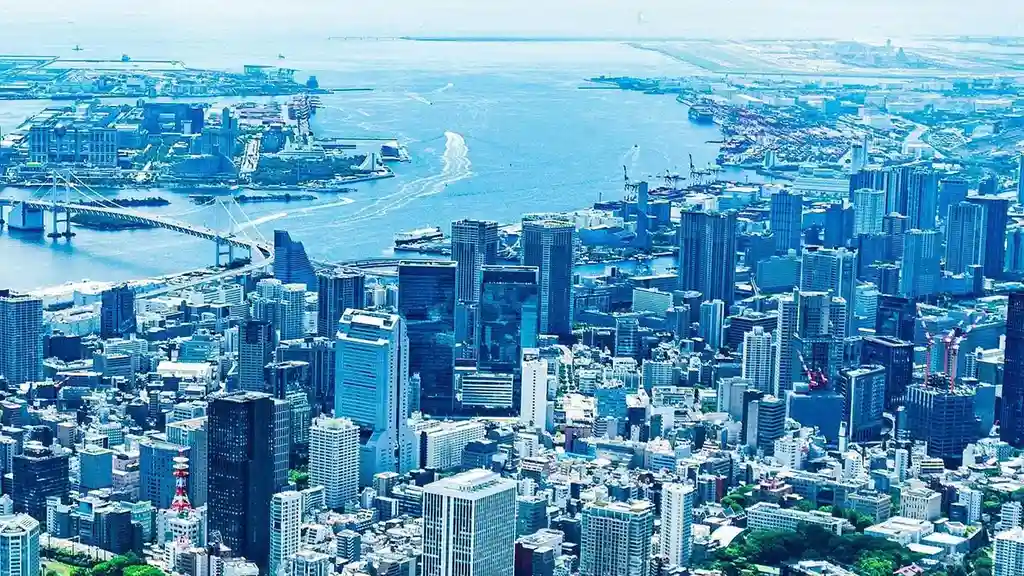
Living with such a constant threat has forced Japan to become a world leader in earthquake preparedness and engineering. The country has developed some of the most stringent building codes on the planet. Since 1981, all new buildings must be able to withstand strong tremors. Modern Japanese skyscrapers are marvels of engineering, designed not to rigidly resist an earthquake but to sway with it. Technologies like base isolation (menshin), where buildings sit on rubber pads to absorb shocks, and vibration control (seishin), which uses dampers like shock absorbers, are common. The iconic Tokyo Skytree, for example, uses a central concrete pillar that acts like a counterweight to absorb seismic energy. This commitment extends beyond construction. The nation has a sophisticated early warning system that sends alerts to phones moments before a quake hits, and regular disaster drills are a part of life for everyone from schoolchildren to office workers.