




What is the Station Mahotsav?
The Railway Board has launched a nationwide celebration called 'Station Mahotsav' to honour the founding anniversaries of 103 heritage stations. Taking place between August and November 2026, the festival is designed to showcase the deep historical and cultural
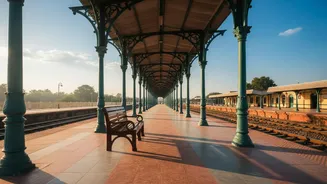
significance of these British-era structures. Rather than being just transit points, these stations are being reimagined as centers for local celebration and heritage appreciation. The initiative aims to connect the public with the stories behind these architectural marvels, many of which have been serving communities for well over a century. The Mahotsav serves as a reminder of the railways' foundational role in connecting India and fostering social, economic, and cultural growth since its inception.
A Journey Back in Time
The list of 103 stations is a veritable journey through Indian history, spanning from 1854 to the 1930s. Of these, 72 stations were built in the 19th century, with the remaining 31 constructed in the early 20th century. The selection represents a small but significant fraction of the roughly 8,000 stations that dot the country's vast rail network. The oldest stations on the list, Kalyan in Maharashtra and Howrah in West Bengal, both trace their origins back to 1854, just one year after the first passenger train ran in India. They are closely followed by other mid-19th century stations like Bally and Bardhaman in West Bengal (1855), and Khopoli in Maharashtra (1856), highlighting the rapid expansion of the railways in its earliest days.
Spotlight on Howrah and Kalyan
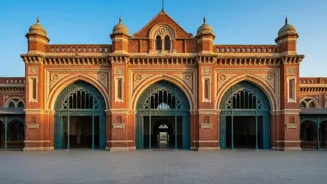
Howrah and Kalyan, both established in 1854, are two of the most prominent stations in this celebration. Howrah, one of India's busiest and largest railway complexes, has been a gateway to eastern India for generations. Its inclusion in the Mahotsav underscores its immense architectural and historical value, serving as a living museum of India's railway journey. Similarly, Kalyan Junction in Maharashtra has been a critical hub on the Central Railway line, witnessing Mumbai's growth from a colonial port to a bustling metropolis. Both stations began as modest structures but evolved to handle immense passenger traffic, reflecting the industrial and social development of their respective regions. The festival will put a special focus on their unique stories.
What to Expect at the Celebrations
The Railway Board has outlined a standardized program to ensure a rich and engaging experience for visitors at each station. Festivities are set to include historical photo exhibitions, displays of vintage railway equipment, and the unveiling of a special 'Virasat Smarika' magazine. Many locations will feature short films on the heritage of the station, laser shows, and regional food festivals celebrating local cuisine. A key component of the Mahotsav is the promotion of local art and handicrafts, providing a platform for artisans to showcase their work. These events are not just about looking at the past; they are interactive experiences designed to make history come alive for a new generation of Indians.
From North to South, A Nationwide Affair
The celebration is geographically diverse, with stations selected from across the country. Central Railway leads with 15 heritage stations, followed by 14 each in the Northern and Southern Railway zones. Other notable stations include Lucknow Charbagh (1926) in Uttar Pradesh, renowned for its magnificent Indo-Saracenic architecture, and Thiruvananthapuram (1931) in Kerala. The list even includes the charming 'Malgudi' station (Arasalu) in Karnataka, made famous by the stories of R.K. Narayan, which was established in 1934. By including stations like Pune (1925), Old Delhi (1867), and Dera Baba Nanak (1927) in Punjab, the Mahotsav truly represents the pan-India legacy of the railways.