
One Snack, Many Identities
Across the length and breadth of India, you'll find a shared love for crunchy, savory snacks. From the bustling streets of Mumbai to the historic lanes of Delhi, snacks are a unifying cultural thread. Yet, this unity is beautifully deceptive. A 'samosa'
isn't just a samosa; a 'chaat' is not a singular dish. The same basic concept—a fried pastry, a medley of savories, a potato fritter—can have dozens of distinct regional personalities. The secret to this diversity lies in the accompaniments and the foundational spice mix. It is the local 'masala' and the specific 'chutney' that take a universally understood snack and turn it into a fierce point of local pride and identity, telling a story of the region's agriculture, history, and palate.
The Samosa vs. The Shingara
Let’s start with the king of Indian snacks: the triangular, potato-filled delight. In North India, particularly Punjab and Delhi, the samosa is a hearty affair. Its thick, crisp crust holds a spicy filling of mashed potatoes, peas, and a robust blend of spices like cumin, coriander, and garam masala. It's typically served with a tangy duo of tamarind chutney and a fresh, zesty mint chutney.Travel east to Bengal, and you meet its more delicate cousin, the 'shingara'. The shingara is often smaller, with a flakier, thinner crust. The filling is subtly sweet, featuring diced potatoes instead of mashed, often with cauliflower and peanuts for crunch. The spice profile is gentler, and it’s served with a simple, often sweet, tamarind sauce. Down south in Hyderabad, the concept morphs into 'lukhmi', a flat, square pastry often filled with minced meat, offering yet another regional interpretation of a stuffed, fried snack.
Chaat: A Symphony of Sauces
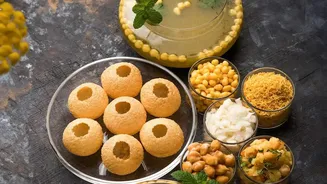
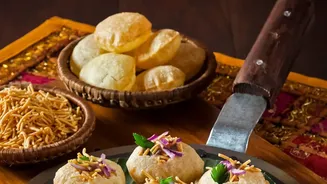
The word 'chaat' itself, meaning 'to lick,' hints that the sauces are the main event. In Delhi, chaat is often rich and layered. Think of Aloo Tikki Chaat, where a potato patty is crushed and lavishly topped with thick yogurt, sweet tamarind chutney, and spicy green chutney, creating a perfect trifecta of sweet, sour, and spicy.In Mumbai, chaat is about texture and speed. Bhel Puri is a light, crunchy mix of puffed rice, sev, onions, potatoes, and a quick toss of chutneys, designed to be eaten fast before it gets soggy. Sev Puri features flat discs topped with similar ingredients, where each bite is a self-contained explosion of flavour. Head to Kolkata, and you find Jhalmuri, a version of bhel where the defining flavour is the sharp, pungent hit of raw mustard oil mixed with puffed rice and spices, a taste entirely unique to the East.
Vada Pav's Secret Weapon
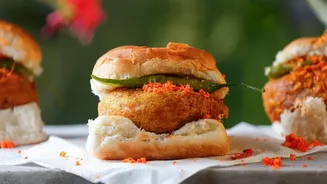
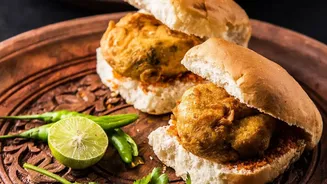
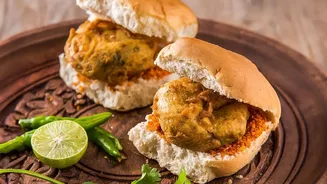
Mumbai's Vada Pav is more than a potato fritter in a bun; it's a perfectly engineered system of flavours. The 'batata vada' itself is spiced, but the true magic comes from the 'sukha lasun chutney' or dry garlic chutney. This fiery, coarse powder of garlic, coconut, and red chillies is sprinkled inside the pav, providing a powerful punch that defines the snack. While green and tamarind chutneys can be added, the dry garlic chutney is non-negotiable for an authentic Mumbai experience. In South India, a similar potato fritter, the 'bonda', is often served not in a bun, but on a plate with cooling coconut chutney, completely changing its character.
The Foundation: Regional Masalas
Before any chutney is added, the snack's filling is defined by its core spice blend. North Indian snacks lean heavily on 'garam masala', a warming blend of ground spices like cinnamon, cloves, and cardamom that are often added towards the end of cooking. In contrast, Bengali cooking, which influences snacks like the shingara, starts with 'panch phoron' or five whole spices—fenugreek, nigella, cumin, black mustard, and fennel seeds—tempered in hot oil at the beginning. This technique infuses the entire dish with a complex, aromatic base that is completely different from the Northern approach. Similarly, South Indian blends often feature curry leaves and mustard seeds as the primary flavour-starters, while Maharashtrian 'goda masala' introduces a nutty, slightly sweet profile with roasted coconut. These foundational blends ensure that even with identical main ingredients, the final product is a distinct reflection of its origin.