




The Essence of Tai Chi: Power from the Core
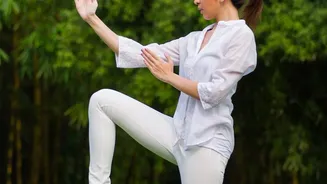
Tai Chi is often described as 'meditation in motion', but beneath its calm exterior lies a sophisticated system of biomechanics. A core principle is that all movement originates not from the limbs, but from the body's centre, or 'dantian'. Power is generated
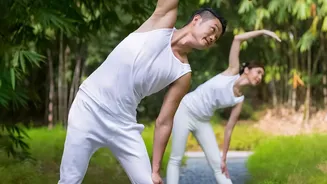
by rooting the feet to the ground, and then initiating movement from the waist and hips. This rotational force travels up through a relaxed, aligned spine and is finally expressed through the arms and hands. The classic Tai Chi saying, ‘the power is rooted in the feet, controlled by the waist and expressed in the hands,’ captures this perfectly. The arms and shoulders are meant to be relaxed and loose, acting as conduits for the energy generated by the torso's rotation. This emphasis on slow, continuous, and connected movement builds internal strength, balance, and whole-body coordination.
The Kayaker’s Engine: It's Not About the Arms
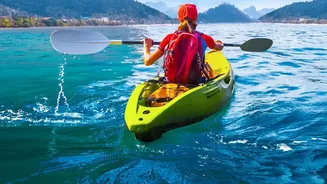
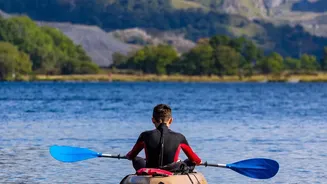
A common mistake for beginner kayakers is to 'arm paddle', pulling the blade through the water using only the strength of their biceps and shoulders. This leads to rapid fatigue and inefficient strokes. Elite paddlers know the real engine for kayaking is the core. Proper technique involves planting the paddle blade in the water and then rotating the entire torso to pull the kayak past the paddle. This movement engages the large, powerful muscles of the back, abdomen, and hips. Much like in Tai Chi, the arms and shoulders are simply the connection point; the power comes from core rotation. An effective kayaker learns to 'wind up' their torso before a stroke, creating potential energy that is then released in a smooth, powerful unwinding motion. This technique not only provides more power and endurance but also protects the shoulder joints from strain.
The Surprising Overlap: Rotation and Fluidity
Here is where these two disciplines merge. Both Tai Chi and kayaking are fundamentally about using torso rotation to generate fluid, powerful movement. The turning of the waist in a Tai Chi form like 'Cloud Hands' is biomechanically similar to the torso rotation used in a forward kayak stroke. In both activities, the goal is to keep the upper body relaxed while the core does the work. Furthermore, both require a constant, subtle negotiation with an external element. In Tai Chi, the practitioner learns to 'root' to the ground, feeling the connection and drawing stability from it. In kayaking, the paddler must constantly adjust to the water's movement, maintaining balance and stability on a dynamic surface. This requires a heightened sense of body awareness, or proprioception, which both activities are renowned for developing.
A Shared State of Mind: Mindfulness in Motion
Beyond the physical mechanics, Tai Chi and kayaking share a profound mental component. Both are excellent for cultivating mindfulness—a focused state of presence in the moment. The slow, deliberate movements and coordinated breathing of Tai Chi quiet the mind and reduce stress. Similarly, the rhythmic, repetitive nature of paddling can induce a meditative 'flow state', where the paddler is completely absorbed in the act of moving across the water. In both practices, you must pay close attention to your body, your breath, and your environment. This focus pulls you away from daily anxieties and into the present, fostering a sense of calm and mental clarity that lasts long after the session is over.