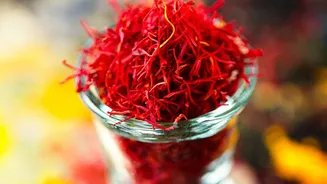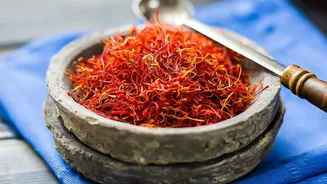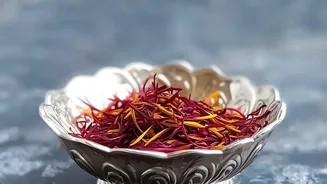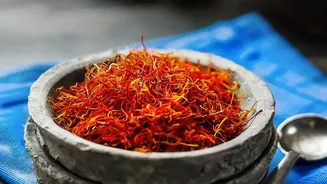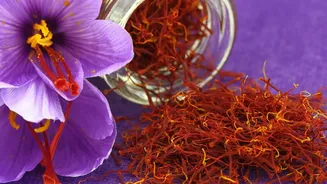



Saffron and honey feels like a magic potion, touted online as a golden elixir for all that ails you. But while both ingredients are impressive on their own, the real magic isn't in unsubstantiated health claims, but in its incredible flavour.
Deconstructing the 'Miracle Cure'
Let's be
clear: both saffron and honey have well-documented individual properties. Honey is known for its natural antibacterial qualities and has been used for centuries to soothe sore throats. Saffron is a powerhouse of antioxidants like crocin and safranal, which research suggests may have mood-lifting and anti-inflammatory potential. Some studies have even explored saffron's effect on symptoms of mild-to-moderate depression and anxiety. So, when you combine them, you are certainly consuming two beneficial ingredients. However, the narrative often spun online—that this combination creates a synergistic super-cure for serious diseases—lacks robust scientific backing. A review of studies noted that while individual results for saffron are promising, the research often has weaknesses. Enjoying them together is part of a healthy lifestyle, but it is not a replacement for medical treatment or a balanced diet.
The Real Magic: A Symphony of Flavour
So, if it’s not a cure-all, why bother? Because the combination is exquisite. The true value of saffron-infused honey is culinary. Saffron imparts a complex, luxurious flavour that is floral, earthy, and slightly bittersweet, with an aroma often described as being like honey and hay. When paired with a light, neutral honey like acacia, which won't overpower its delicate notes, the result is a sophisticated flavour enhancer. Acacia honey is ideal because it is naturally high in fructose, meaning it stays liquid and provides a clean, sweet canvas for the saffron to shine. The honey's sweetness perfectly balances saffron’s subtle bitterness, creating a rounded, harmonious taste that can elevate a simple dish to something truly special. This pairing is best appreciated not as a medicine, but as a gourmet ingredient.
The Art of Infusion: Unlocking Saffron’s Essence
To get that incredible flavour, you can't just toss saffron threads into honey and expect immediate results. Saffron needs time and the right conditions to release its key compounds. The vibrant colour comes from crocin, while the distinct aroma is primarily from safranal. These compounds are best extracted through a process called blooming or infusing. Gently crushing the threads and steeping them in a small amount of warm—not boiling—liquid for at least 15-20 minutes is crucial. Boiling water can actually destroy the delicate aromatic compounds. This warm liquid, now a potent golden essence, can then be stirred into your honey. Alternatively, for a more subtle, water-free infusion, you can add the threads directly to a jar of honey and let it steep in a cool, dark place for several days or weeks, allowing the flavours to meld slowly.
Bringing Saffron Honey to Your Kitchen
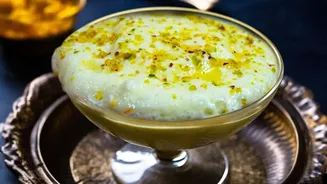
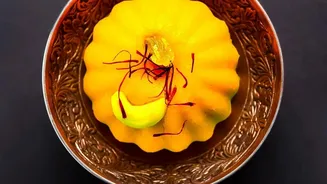
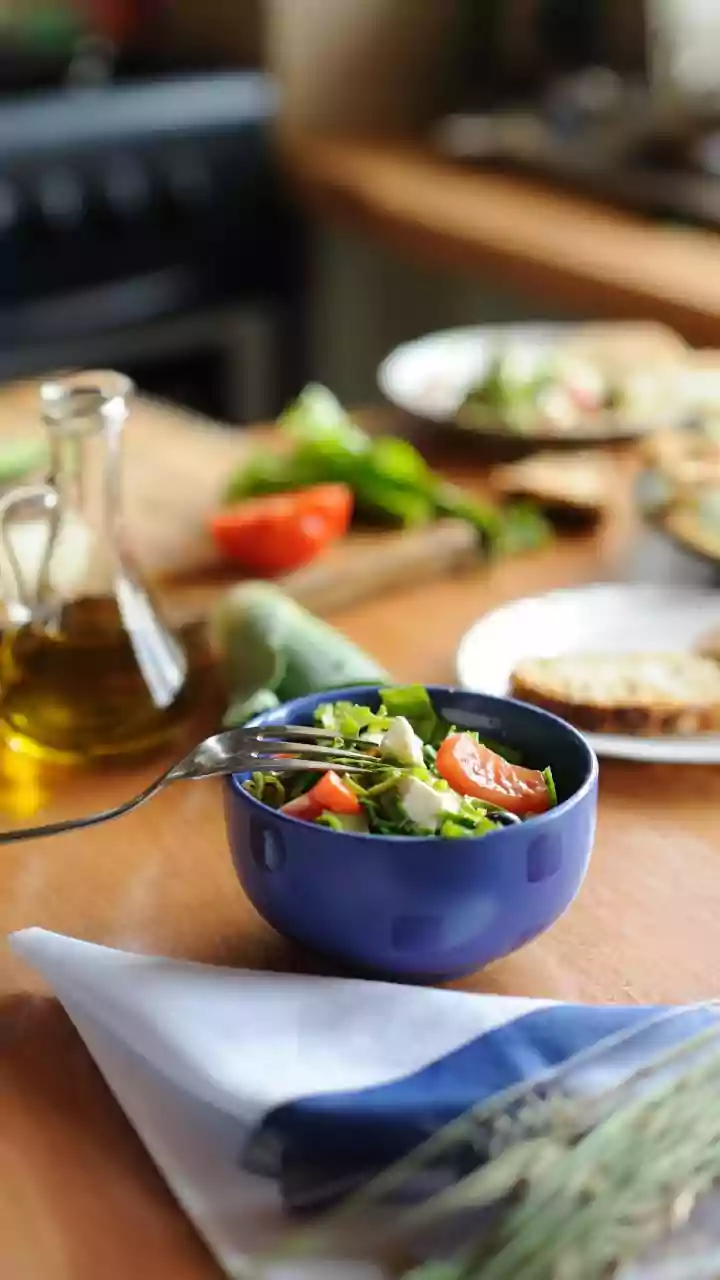
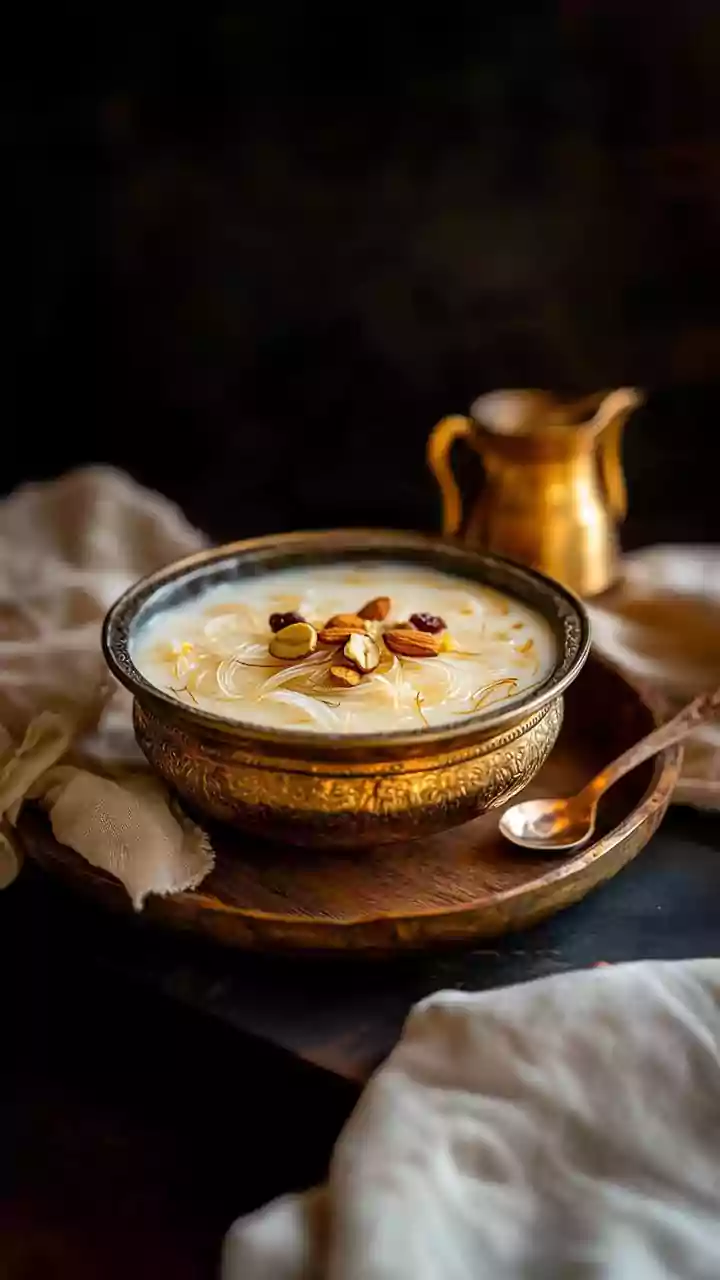
Once you have your fragrant, golden honey, the uses are nearly endless. Treat it as a finishing touch to preserve its delicate flavour. Drizzle it over a bowl of thick Greek yogurt or warm oatmeal for a luxurious breakfast. A small spoonful can transform a simple cup of warm milk or tea into a calming evening ritual. In cooking, it can be used to make a 'golden vinaigrette' for salads or as a final glaze for roasted chicken, paneer, or carrots, applied near the end of cooking to protect its aroma. It's also heavenly spooned over desserts like kheer, panna cotta, or vanilla ice cream. The key is to use it where its unique flavour can be the star. Don’t waste it in preparations where it will be masked by stronger ingredients.