



A World-Record Bloom
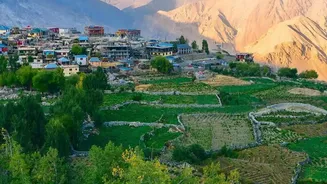
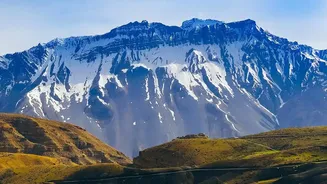
In a region famed for its majestic mountains and serene monasteries, a spectacular new man-made wonder has taken root. The administration of Ladakh has inaugurated what are being called the world's highest-altitude twin flower fields. Situated at an elevation
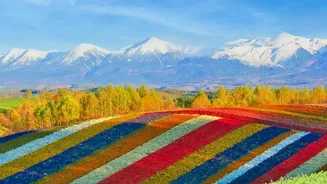
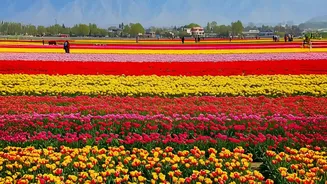
of 10,600 feet, these two sites—located at Choglamsar and Stakna near Leh—cover a combined area of 40 acres. The ambitious project features over 2.5 million flowers, transforming the cold desert landscape into a breathtaking canvas of colour. This initiative is not just a visual treat but a pioneering experiment in high-altitude commercial floriculture, the first of its scale in the region.
The Flowers of the High Desert
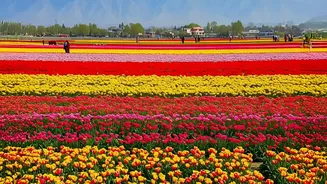
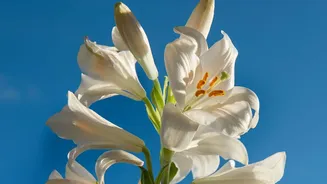
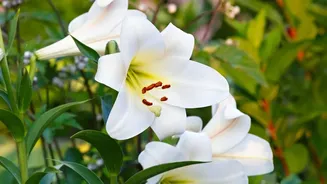
The fields are dominated by high-value ornamental flowers chosen for their beauty and market demand. The plantation includes approximately 2.4 million Lilium stems and around 100,000 Gladiolus plants. These species were selected for their ability to thrive in Ladakh's unique climate, which offers a short but intense growing season. The Choglamsar field was developed in a record time of just two months, with plantation starting in mid-July and the first blooms appearing by early September. At the Stakna site, where planting began in August, blooms are expected towards the end of October, extending the flowering season for visitors and for the market.
More Than Just a Tourist Spot
While the fields are undoubtedly a major new attraction for tourists, their purpose is twofold. The project was conceived as a milestone in agricultural diversification for Ladakh, aiming to empower local farmers and create new livelihood opportunities. By demonstrating the viability of commercial floriculture, the administration hopes to create a sustainable source of income for the region's farming community, particularly through local Self-Help Groups (SHGs) and cooperative societies. The Choglamsar park will also function as a model floriculture centre, providing training in scientific cultivation, modern farming techniques, and post-harvest management to local farmers and youth. The plan includes cultivating other in-demand flowers like Tulips for national and international markets.
Boosting the Local Economy
The economic potential is significant. High-quality Lilium stems can fetch between ₹60 and ₹70 per stick in wholesale markets, with retail prices being even higher. The initiative capitalises on Ladakh's climate to grow flowers that can be sold in off-season markets elsewhere in the country. In a significant step, the first commercial consignment of 15,000 A-grade Liliums was recently airlifted from Leh to Delhi, marking the successful connection of Ladakh's floriculture to national markets. This logistical success is crucial for transporting the time-sensitive produce and ensuring its profitability, creating a convergence between agriculture and sustainable tourism.
Planning Your Visit
For travellers looking to witness this stunning display, the fields add a completely new dimension to a Ladakh itinerary. The Choglamsar garden officially opened to the public on September 18, 2026. A nominal entry fee has been set at ₹25 for adults and ₹10 for children, with the revenue generated being used for the site's maintenance. Given the staggered planting schedules, visitors have a window from September through late October to see the flowers. The fields at Choglamsar and Stakna not only offer a unique photo opportunity but also a chance to see a pioneering agricultural project in action, one that promises to reshape the region's economic and aesthetic landscape.