








The Problem with the Chair
The human body isn't designed for hours of sitting. When you're seated at a desk, your hip flexors shorten, your glute muscles can weaken, and your spine often loses its natural curve as you slouch toward the screen. This places increased pressure on
the discs in your lower back and can lead to a cascade of issues, from stiffness and pain to poor posture that follows you even after you stand up. Experts note that sitting, especially with poor posture, is a primary culprit behind spine discomfort for office workers. The good news is that you can counteract these effects without leaving your workspace.
The Latest Thinking: Dynamic vs. Static
The 'latest picture' on stretching has shifted. While holding a deep stretch (static stretching) has its place, particularly after activity to increase flexibility, many physical therapists now emphasize dynamic movement during the workday. Dynamic stretches, which involve moving through a range of motion, are excellent for warming up muscles, increasing blood flow, and gently preparing joints for movement. For desk workers, this means focusing on gentle, repetitive motions that wake up dormant muscles and mobilise stiff joints, rather than forcing a deep, prolonged stretch on cold tissues.
Seated Cat-Cow: Mobilise Your Spine
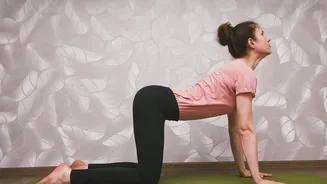
This classic yoga-inspired move is one of the best for waking up a stiff spine and can be done easily in a chair. Sit at the edge of your seat with your feet flat on the floor and hands on your knees. As you inhale, gently arch your back, push your chest forward, and look slightly up toward the ceiling (Cow Pose). As you exhale, round your spine, tuck your chin to your chest, and let your shoulders curve forward (Cat Pose). Repeat this fluid movement 5 to 10 times, matching the motion to your breath. It helps to counter the static, flexed position the spine often holds during the day.
Chair Pigeon Pose: Release Tight Hips
Tight hips are a major contributor to lower back pain for desk workers. The seated Figure-Four or 'Pigeon' stretch targets the deep hip rotator muscles. While seated, cross your right ankle over your left knee, keeping your right foot flexed to protect the knee joint. Sit up tall to lengthen your spine, and then gently lean forward from your hips until you feel a stretch in your right hip and glute. Hold for 20 to 30 seconds, breathing deeply. Do not force the movement; ease into the stretch. Then, switch sides.
Seated Spinal Twist: Gently Decompress
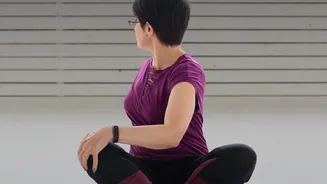
A gentle twist can help relieve tension along the spine. Sit tall in your chair with your feet firmly on the floor. Place your left hand on the outside of your right knee and your right hand on the back or armrest of the chair. As you inhale, lengthen your spine, and as you exhale, gently twist your torso to the right. Keep your hips facing forward as much as possible. Hold for 15 to 30 seconds, then slowly return to the center and repeat on the other side. The key is to move gently and avoid any sharp pain.
Shoulder Blade Squeeze: Undo the Hunch
Hours spent typing can cause the shoulders to round forward and the upper back to ache. A simple shoulder blade squeeze helps strengthen the muscles that support good posture. Sit tall with your arms relaxed at your sides. Squeeze your shoulder blades together as if you are trying to hold a pencil between them. Hold for 5 seconds, making sure to keep your shoulders down and away from your ears, then release. Repeat this 10 to 15 times. This movement is discreet and can be done multiple times throughout the day to combat the 'desk hunch'.