
More Than Just Melting Ice
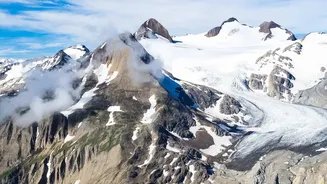
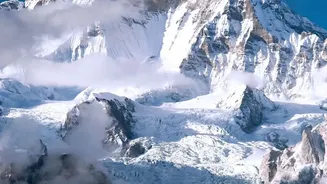
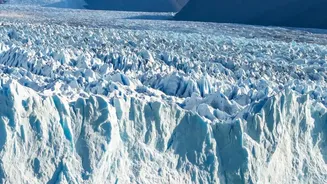
When we think of climate change in the Himalayas, we often picture retreating glaciers. While this is a critical part of the story, the reality is far more complex. The immediate danger isn't just the loss of ice, but what that loss sets in motion. As
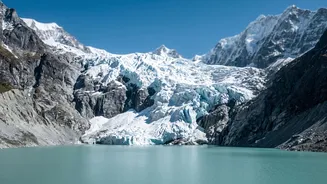
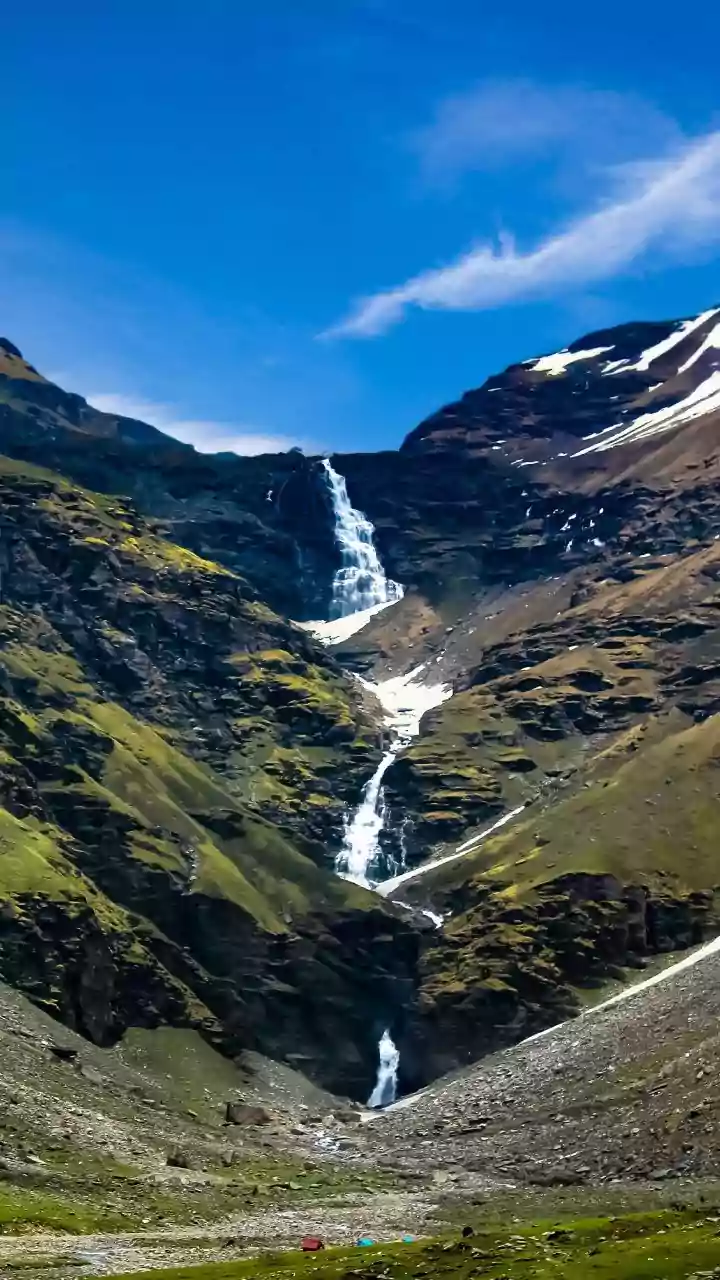
glaciers shrink, they expose unstable valley walls and leave behind vast quantities of loose rock and debris. At the same time, meltwater pools into enormous glacial lakes, often held back by nothing more than unstable mounds of this same debris, known as moraines. This creates a volatile combination where rock, ice, and water are locked in a precarious balance, primed for disaster.
The Anatomy of a GLOF
The most well-known of these hazards is the Glacial Lake Outburst Flood, or GLOF. These events occur when the natural dam containing a glacial lake fails suddenly. This failure can be triggered by several factors: the sheer pressure of the growing lake, erosion within the dam, or a sudden displacement of water caused by a landslide, rockfall, or glacier calving event plunging into the lake. The result is a catastrophic release of millions of cubic metres of water, mud, and boulders that can travel over 100 kilometres downstream, destroying everything in its path, from villages to critical infrastructure like hydropower plants. The 2023 disaster at South Lhonak Lake in Sikkim, which caused a devastating flood in the Teesta river basin, is a stark reminder of this threat.
When the Mountainside Unravels
An equally critical, though less discussed, element is the thawing of permafrost. Permafrost is soil or rock that has remained frozen for years, acting like a cement that holds steep mountain slopes together. As global temperatures rise, this frozen ground begins to thaw, weakening the ice that binds rock and soil. This dramatically increases the likelihood of rockfalls and landslides. These landslides are not only a direct threat but can also be the trigger for a GLOF if they collapse into a glacial lake. In some cases, as seen in the 2021 Chamoli disaster in Uttarakhand, a massive rock and ice avalanche can itself generate a devastating debris flow without even involving a lake.
A Cascade of Dangers
These events rarely happen in isolation. Scientists now increasingly refer to them as 'cascading hazards,' where one disaster triggers a chain reaction. An ice avalanche can crash into a glacial lake, causing a GLOF. This flood then scours the river valley, picking up loose sediment and turning into an even more destructive debris flow. The debris might then temporarily dam a river downstream, creating another short-lived lake that can burst, causing a secondary flood. This domino effect means that a hazard originating high in the mountains can have devastating consequences for communities located many kilometres away, often with terrifyingly little warning time.
Facing an Unstable Future
The Himalayan region is warming faster than many other parts of the world, accelerating these processes. Glacier retreat and permafrost thaw are making the landscape fundamentally less stable. In India alone, there are thousands of glacial lakes, with nearly 200 identified as high-risk. The rapid expansion of infrastructure, such as hydropower projects and roads, also increases the region's vulnerability. Addressing this hidden risk requires a multi-pronged approach: robust monitoring of high-risk lakes and slopes, developing effective early warning systems that can provide precious minutes for evacuation, and implementing new strategies for infrastructure planning that account for these complex, cascading hazards. Cross-border cooperation on data sharing is also crucial, as many of these hazards originate in one country and impact another.