
2002: Mount Nyiragongo, DR Congo
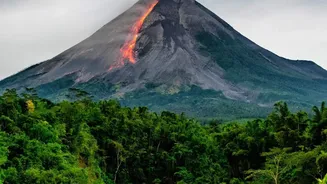
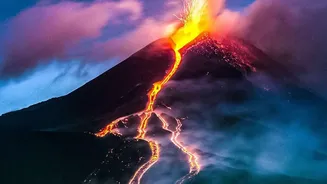
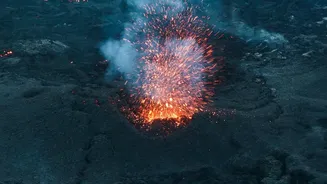
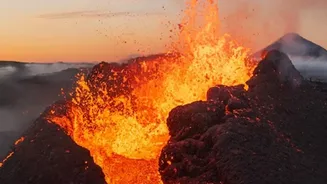
The 21st century had barely begun when Mount Nyiragongo, a highly active volcano in the Democratic Republic of Congo, unleashed a devastating eruption on January 17, 2002. Fractures opened on its southern flank, sending rivers of fast-moving lava directly
into the city of Goma, a major commercial hub with a population of hundreds of thousands. The lava flows destroyed roughly 13% of the city, including homes, businesses, and critical infrastructure. While the immediate death toll was estimated at around 140 to 245 people, largely from CO2 asphyxiation or explosions as lava ignited fuel depots, the humanitarian crisis was immense. About 120,000 people were left homeless, and 80% of the city's economic assets were destroyed. The eruption created a massive displacement crisis, with up to 400,000 people fleeing into neighbouring Rwanda and surrounding areas, compounding an already complex humanitarian situation in the region.
2010: Eyjafjallajökull, Iceland
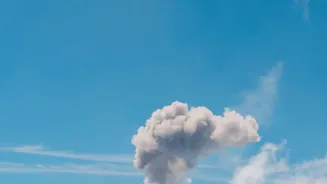
The eruption of a volcano with a name few could pronounce had an impact almost everyone felt. In April 2010, Iceland's Eyjafjallajökull volcano erupted under a glacier, creating a plume of fine volcanic ash that was injected high into the atmosphere. The location was critical: directly under the busy jet stream corridor between North America and Europe. Fearing the abrasive ash could cause jet engine failure, authorities implemented a no-fly zone over much of Europe. The result was the largest shutdown of airspace since World War II. Over a period of about eight days, more than 100,000 flights were cancelled, affecting around 10 million passengers and creating chaos for travellers worldwide. The economic fallout was staggering. The airline industry lost an estimated US$1.7 billion, with daily losses pegged at around $200 million. But the impact rippled outwards, crippling industries dependent on air freight. Kenya’s flower and vegetable industry, for example, lost millions per day as produce rotted, unable to be shipped to European markets.
2011: Puyehue-Cordón Caulle, Chile
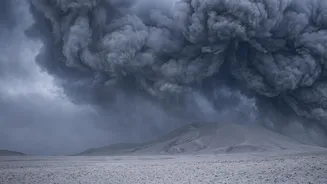
A year after Eyjafjallajökull, the Southern Hemisphere experienced its own aviation nightmare. On June 4, 2011, the Puyehue-Cordón Caulle volcanic complex in Chile began a powerful eruption, spewing an enormous cloud of ash and pumice up to 15 kilometres into the atmosphere. Propelled by the strong westerly winds of the jet stream, the plume embarked on a global journey. Within two weeks, the ash cloud had circled the entire globe. It caused widespread and repeated travel chaos across South America, South Africa, Australia, and New Zealand. Flights were grounded in major cities like Buenos Aires, Montevideo, Cape Town, Perth, Melbourne, and Wellington, sometimes for days at a time. The eruption’s local impact was also severe. It forced the evacuation of 3,500 people, contaminated rivers, killed millions of fish, and covered vast areas of Patagonia in a thick layer of ash, devastating local agriculture.
2022: Hunga Tonga-Hunga Haʻapai, Tonga
The eruption of the Hunga Tonga-Hunga Haʻapai underwater volcano on January 15, 2022, was the largest of the 21st century and the most powerful recorded by modern instruments. The blast was hundreds of times more powerful than an atomic bomb and was heard as far away as Alaska. It sent a plume of ash, gas, and water vapour soaring into the mesosphere, the highest volcanic plume ever recorded. The explosion generated atmospheric shockwaves that circled the planet multiple times. It also triggered a devastating tsunami that struck the islands of Tonga with waves up to 20 metres high, destroying villages and affecting over 80% of the nation's population. Unlike most tsunamis, these waves were also generated by the atmospheric pressure wave, allowing them to travel across the Pacific and cause damage and fatalities as far away as Peru. The event severed the undersea communication cable that connects Tonga to the rest of the world, plunging the nation into silence for days.