





The Most Ambitious Goal in Rocketry
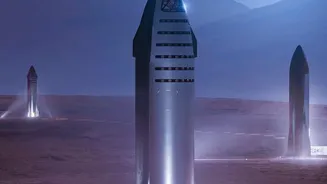
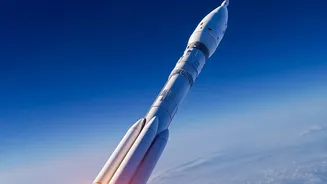
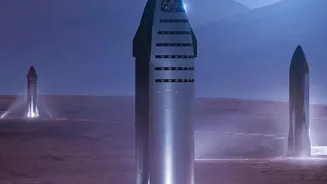
At the heart of SpaceX's forward-looking strategy is a concept that sounds like science fiction: launching the world's most powerful rocket and then catching both of its massive stages out of the air. The goal is full and rapid reusability, a game-changer
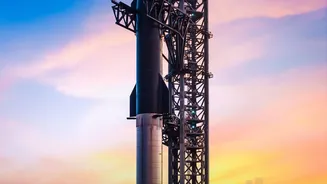
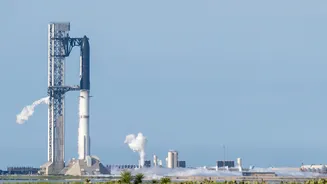
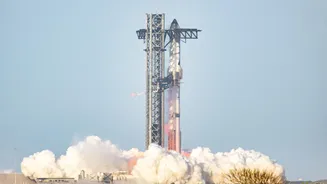
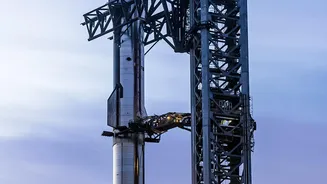
that promises to dramatically slash the cost of accessing space. This is accomplished by 'Mechazilla', a launch tower equipped with two giant mechanical arms, nicknamed 'chopsticks'. Instead of landing on legs, the Super Heavy booster and the Starship upper stage are designed to fly back to the launch site and be caught by these arms, ready for a quick turnaround. This process is key to enabling the high-frequency launch schedules needed for deep space exploration, including missions to the Moon and Mars.
What Happened on Flight 15?
On November 13, Starship Flight 15 lifted off from Starbase, Texas, on a mission to achieve the first-ever 'double catch'. The launch and stage separation went smoothly, and the Starship upper stage, Ship 42, successfully entered orbit to begin its 22-hour journey. However, the plan for the Super Heavy booster went differently. After separating, the booster initiated its boostback burn to return to the launch site. During this phase, its automated systems detected an anomaly and aborted the catch attempt. The booster's guidance system, doing exactly what it was programmed to do in such a situation, diverted its course for a controlled splashdown in the Gulf of Mexico. While the booster was lost, the decision prioritised the safety of the ground infrastructure.
Why Was the Catch Aborted?
Initial reports were unclear, but SpaceX commentators later clarified the reason for the abort. Early indications pointed to a low fuel mass alarm that triggered during the booster's boostback burn. This suggests the booster's engines may have slightly underperformed, leaving it with insufficient propellant to safely guarantee a precise return and catch. The onboard guidance, navigation, and control (GNC) system correctly identified that the booster was not in the ideal position to attempt the high-risk manoeuvre. Consequently, the system defaulted to the contingency plan: a soft water landing away from the launch tower. The booster's flight termination system was activated just before it hit the water.
A Partial Success, Not a Failure
Despite the loss of the booster, Flight 15 was widely hailed as a major step forward. The day after the booster's splashdown, the Starship upper stage successfully completed 14 orbits, re-entered the atmosphere, and was caught for the first time by the Mechazilla tower arms. This achievement was called 'the holy grail of spaceflight' by a SpaceX spokesperson and marked a historic first for the recovery of an orbital upper stage. This partial success aligns with SpaceX's iterative development philosophy, where each flight serves as a data-gathering exercise. Even the aborted booster attempt provided invaluable information about engine performance and abort system logic that will inform future attempts. Elon Musk later stated the recovered Ship 42 looked to be in great shape and brought back a 'motherlode of data'.
What's Next for Starship?
With the successful catch of the upper stage, SpaceX has proven that half of its ambitious recovery plan is viable. The focus will now shift to analysing the data from Flight 15 to understand the root cause of the booster's fuel issue and engine underperformance. While this was the fourth V3 booster to be lost, the data from its flight is crucial for refinement. Successfully recovering the booster is a key financial and logistical hurdle to overcome. Elon Musk has said that Ship 42 could potentially be refurbished and flown again within weeks, bringing the company closer to its goal of rapid reusability. The next flights will build on the lessons from this mission as SpaceX continues to push towards the first fully and rapidly reusable launch system in history, a technology essential for its long-term plans with NASA's Artemis program and beyond.