





Meet the Astronaut-Physician
Dr. Anil Menon is not your typical astronaut. Born in Minneapolis, Minnesota, to Indian and Ukrainian immigrants, his career has been a masterclass in operating under pressure. He is a practising emergency medicine physician and a Colonel in the U.S.
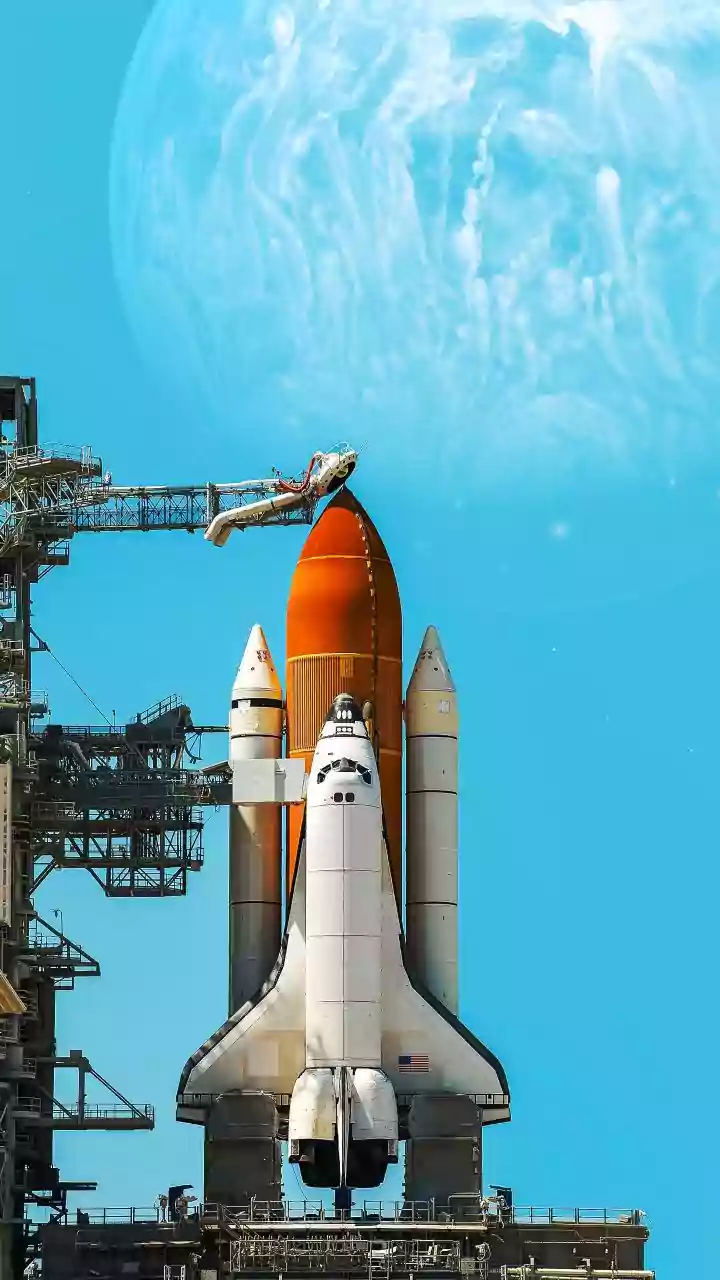
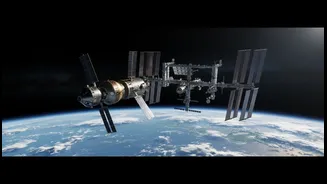
Space Force, with a resume that includes serving as a first responder at disaster sites like the 2010 Haiti earthquake and providing medical care in the high-altitude extremes of Mount Everest. Before being selected as a NASA astronaut in 2021, Menon was a crucial figure in the commercial space boom, serving as SpaceX's first flight surgeon. In this role, he helped launch the company's first human missions and built the medical organisation to keep future crews safe. His journey to the International Space Station (ISS) began on July 14, 2026, launching aboard a Soyuz spacecraft for an eight-month mission.
The Ultimate Medical Supply Challenge
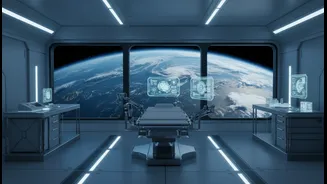
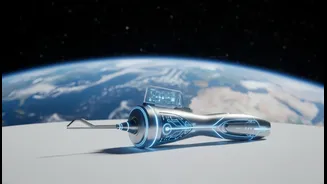
For missions in low-Earth orbit, resupply is relatively straightforward. But for long-duration journeys to the Moon or Mars, packing enough medical supplies for every contingency is impossible. Medical supplies, particularly complex biologics and fluids, have a limited shelf life. They are also heavy and take up valuable space and mass on a spacecraft, a critical constraint for any mission. A medical emergency that would be manageable on Earth could become catastrophic millions of miles away without the right tools. This is why NASA is aggressively pursuing technologies for on-demand medical production, creating a pharmacy in space instead of trying to pack one.
A Pharmacy in the Stars
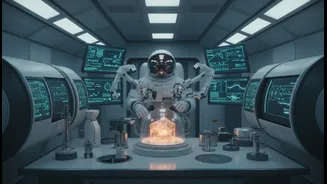
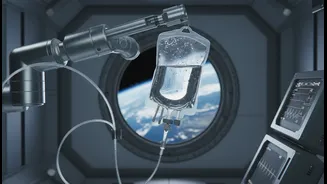
One of the most critical needs in an emergency is intravenous (IV) fluids, used to treat dehydration, blood loss, and administer medication. Menon's mission includes a key experiment: testing a system that can generate sterile IV fluids using the station's existing supply of potable water. This technology, known as the Intravenous Fluid Generation (IVGEN) system, aims to purify and mix water with a concentrate to produce medical-grade saline on demand. Proving this can be done reliably in microgravity would be a paradigm shift, solving a major logistical hurdle for deep space exploration. It is one of several experiments exploring in-space manufacturing, which takes advantage of how the lack of gravity can allow for the creation of more perfect crystalline structures in pharmaceuticals, potentially leading to more stable and effective drugs.
What the Experiment Entails
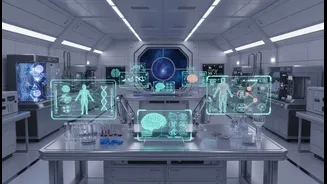
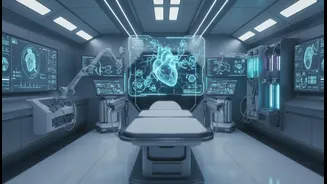
Aboard the ISS, Menon will be responsible for setting up and running the IVGEN hardware. He and his crewmates will operate the device, test the purity and sterility of the fluids produced, and provide crucial feedback on the system's performance in a real-world microgravity environment. This isn't just a technical test; it's part of a broader suite of medical research on his mission. Menon will also be studying the physiological effects of long-term spaceflight on the human body, particularly on blood flow and vascular health, and testing augmented reality systems to help non-physician astronauts perform complex medical procedures like ultrasounds. The data from these interlocking experiments will help build a comprehensive system for autonomous medical care for the Artemis generation and beyond.
Impact for Earth and Beyond
The technologies being proven on the ISS have profound implications not just for future astronauts, but for healthcare on Earth. Developing portable, low-resource systems for creating medical supplies could revolutionize disaster relief, military medicine, and healthcare in remote and underserved communities. The insights gained from studying how microgravity affects drug stability and formulation could lead to new manufacturing techniques for the pharmaceutical industry, creating more effective medicines for everyone. Ultimately, Menon's work on this experiment is a small but vital step. It represents the bridge between our current reliance on Earth and a future where humanity can safely and sustainably live and work in deep space, confident in its ability to care for itself no matter how far from home.