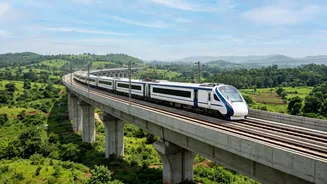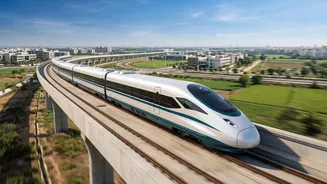


The Big Picture in 2026
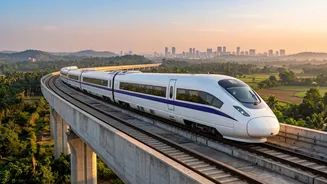
The Mumbai-Ahmedabad High-Speed Rail (MAHSR) project, a 508-km corridor, is designed to slash travel time between the two financial hubs to under two hours with trains running at 320 kmph. After overcoming initial delays, particularly with land acquisition
in Maharashtra, construction has gained significant momentum across Gujarat and Maharashtra. Recent reports from September 2026 confirm that the project is now advancing rapidly, with coordinated efforts across civil construction, track laying, and system installation. This progress has transformed the narrative from one of delays to one of tangible milestones.
A Tale of Two States: Gujarat and Maharashtra
The project's journey has been marked by a stark contrast in progress between the two states it traverses. The Gujarat portion has seen faster advancement in civil works, with viaducts and station structures rising at a steady pace. In Maharashtra, initial challenges in land acquisition and navigating difficult terrain, including the construction of mountain tunnels and an undersea tunnel, caused delays. However, reporting in 2026 indicates major breakthroughs, including the completion of multiple mountain tunnels in the Palghar district, signaling that the most complex engineering hurdles in Maharashtra are now being actively overcome.
Key Milestones Achieved
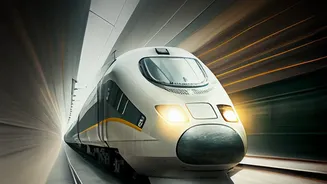
The year 2026 has been pivotal for the project, marked by several significant engineering achievements. In Ahmedabad, massive portal beams have been successfully launched over active railway lines, a complex feat of engineering. Track installation work is now underway on completed viaduct sections. Perhaps most notably, the first test coach for the bullet train is ready, a crucial step towards the eventual testing and commissioning phase. Additionally, significant progress has been reported on India's first undersea rail tunnel near Mumbai and the completion of several river bridges along the route.
The Revised Timeline: When Will It Run?
The most pressing question for many is the final operational date. According to Union Railway Minister Ashwini Vaishnaw, the project is on track for a phased launch. The first section, a stretch between Surat and Bilimora in Gujarat, is targeted for commissioning in 2027. Recent official statements in September 2026 reiterate this goal, with the first high-speed service expected to commence in August 2027. While this marks a significant step, the completion of the entire 508-km corridor, including the complex sections in Maharashtra, is anticipated to be between 2028 and 2029. Civil construction on the Vapi-Surat section is expected to finish by December 2026, paving the way for track and systems work.
Challenges and the Road Ahead
While progress is evident, the project is not without remaining challenges. The final outturn cost is still being determined and will only be clear once all major work is completed. Integrating complex Japanese Shinkansen technology, from signaling to rolling stock, requires meticulous execution. There is also a push for indigenous manufacturing to reduce long-term dependency on imports, with the first India-made bullet train prototypes expected to begin testing in 2027. The focus now shifts from purely civil construction to the intricate task of integrating electrical, signaling, and telecommunications systems to meet the 2027 target for the first operational section.